

FableVision Learning Spotlight Blog
Categories
- Animation-ish 42
- Books 21
- Civics! 2
- Classroom Spotlight 17
- Conferences and Events 20
- Creative Educator 3
- Creativity 25
- Distance Learning 13
- Dot Day 22
- FabClassroom 28
- FabFriday 19
- FabMaker Studio 66
- FabMaker Studio Classroom 13
- FableFive 7
- FableVision Games 3
- Free Educator Resources 36
- HUTCH 1
- Home Activities 5
- In the Classroom 34
- In the News 11
- International Dot Day 23
- Ish 1
- Library 1
- Mapping the World by Heart 7
- Paul Reynolds 10
- Peter H. Reynolds 54
- Professional Development 9
- STEM/STEAM 20
- Storybook Academy 2
- Teacher Spotlight 14
- The Dot 17
- The North Star 2
- Words and Their Stories 1
- Zoombinis 3

Teacher Spotlight: Christine Eaves, Animation and Technological Innovation at Village School
This blog post was written by Patrick McDonagh & Adrienne Poon, FableVision Learning marketing interns.

Christine Eaves is the Innovation & Academic Technology Coordinator at Village School in Pacific Palisades, CA, where she designs curriculum to equip her students with skills to become lifelong learners and makers. She is using FableVision Learning’s Animation-ish to guide student inquiry, quickly connect STEAM educational concepts, and help kids create bravely.
“I sometimes have kids who are reluctant to begin because they don’t think they are great artists, and they’re embarrassed to try,” she says. “I remind them [students] that the program is called Animation-ish for a reason. It doesn’t have to be perfect. In fact, the less perfect it is, the more it usually ‘animates,’ and is even more fantastic. Kids are always surprised at how great their work turns out when they ignore their fears and just try.”
The FableVision Learning team connected to Christine to learn more about her school, the work her students are doing with Animation-ish, and how she incorporates STEAM concepts into projects.
1) How have you incorporated Animation-ish into your curriculum?

Over the years, I’ve tied Animation-ish lessons around lots of curricular areas. I sent Peter [H. Reynolds] some cool 2nd grade Advanced-ish projects last year, in which kids took Van Gogh's Starry Night as a background layer, and then animated it in a foreground layer.
I’ve also had students do animations about different science lessons in which cycles take place (life cycle, caterpillar to butterfly cycle, water cycle, seasons, etc.). Right now, my students are just learning how to use Animation-Ish, so they currently are just creating stories of their own design.
Soon, I’ll be starting an after-school class here at Village called Flipbook-it. In this class, students build a motorized device that runs a flipbook that the children create themselves, either with 24 frames of photography (or 5 seconds of video), or 24 frames of animation. Many of the kids use Animation-ish to create their Flipbookit content. We decorate the Flipbook-it housings as well, so it’s really quite a wonderful maker project.
2) Do you have any tips for teachers to introduce Animation-ish? How should they start?
I think I’m successful at Animation-ish because I actually use it myself. The more you use it, the better you can teach it. Start creating some of your lessons in Animation-ish. Export those to movies and put them on your teacher webpage. Add animations to your presentations for Open House or Back To School Night. Animate your own personal logo. There’s so many ways to gain experience before teaching your students. They’ll learn better if they truly see you as an expert.
3) How has Animation-Ish affected your students’ conceptual interpretation of design?
Creating an animation is more than just being able to draw something others will recognize and appreciate. The animation artist has to first think of a story, or come up with a cycle or sequence of events that they want to animate. Then, they have to think about HOW they will achieve that animation ... There’s a lot of preparation and thought involving animation creation prior to getting started. I like seeing my students plan out their work and then get started.
4) Can you describe a memorable moment in the classroom using Animation-ish?
My second graders recently learned how to use the tablets and Animation-Ish for the first time. I had them try the tablets on the desks first. Then, when they seemed comfortable, I asked them to try holding the tablet against their chest or in their laps to see if it felt more natural drawing from that angle. One of my students was so comfortable with the tablet in his lap, that he put his feet up on another chair, leaned back, and just drew. He looked so cute like that and so at-ease. I told him he looked like a professional artist who’s been doing that for years. Later, I heard him tell a classmate that he was a professional. I liked his confidence and I liked that he believed me.

5) Can you share tips and tricks for getting students excited about animation?
In my experience, it’s not hard to get students excited about something that I’m truly excited about. We all would prefer to learn from teachers who love what they’re teaching … I’m lucky that I teach a field that changes all the time. It never gets stale and my lessons always feel new to my students and to me, even when I’ve taught them for years.
I think that brings a natural enthusiasm that’s easy to create and maintain … I’m lucky to have a job that really makes me feel fulfilled at the end of every school day and I can honestly say that I truly love what I do because it lets me be my best self. My school sees the value in having teachers with varied skills and talents, and we try to help children discover that they are the same way.
Get Involved
Already creating your own Animation-ish masterpieces? Share your work on social media with #AnimationIsh and send us a message at info@fablevisionlearning.com if you want to be featured in a blog post too!
But Wait, There's More!
Want to learn more about Animation-ish? Fill out the contact form below and a FableVision Team member will get back to you.

Peter H. Reynolds to Be Honored with the Distinguished Eagle Scout Award

The Boy Scouts of America and National Eagle Scout Association have announced that FableVision founder and renowned children’s book author/Illustrator, Peter H. Reynolds, is being honored with the Distinguished Eagle Scout Award (DESA)
The award ushers Reynolds into an elite cadre of fellow Distinguished Eagle Scouts, which includes political, business and creative luminaries such as President Gerald R. Ford, Neil Armstrong, Steve Fosset, Gov. Dukakis, James Lovell, Sam Walton, James Brady, William Hanna, J. W. Marriott Jr., and Steven Spielberg.
Reynolds earned the award for his “extraordinary national eminence in his field, as well as his strong record of voluntary community service.”
In addition to writing and illustrating nearly 50 influential children’s books (his most famous book The Dot has been published in over 30 languages, and is celebrated each year in a global event called International Dot Day, which has reached over 10 million students and teachers in 170 Countries), Peter H. Reynolds also founded FableVision Studios to help fosters creativity and self-expression and move the world to a better place through “stories that matter, stories that move.”

“As a quirky, creative kid, scouting gave me a safe, supportive environment where I could develop my skills, talents, strengths and leadership,” Peter shared. “I really can credit the Scouting program for giving me the confidence to pursue my dreams, which is why I’m so happy to see so many supporting these critical programs for boy – and now girls. Every child deserves this kind of solid foundation to help them navigate their future success.”
FableVision will proudly cheer our creative champion as The Boy Scout of America Spirit of Adventure Council present the award to Peter at the 41st annual “Salute to Scouting” gala at The Westin Copley Place.
WCVB TV Anchor Randy Price, himself an Eagle Scout, will serve as master of ceremonies. This signature Boston event attracts hundreds of scouting supporters, including business and civic leaders who aim to expand Boy Scout youth development programs throughout the Greater Boston area.
41st Annual Salute to Scouting
When: Thursday, November 30th at 6 p.m.
Where: The Westin Copley Place
Register to attend!

FableVision Learning Intern Spotlight: Patrick's Fab@School Maker Studio Journey
Hello FableVision Learning friends and fans,
Allow me to introduce myself - I am Patrick McDonagh, a marketing intern at FableVision Learning studying English Creative Writing at Endicott College. The gamut of work at FVL challenges my formal degree skills in a fun professional learning environment.
Now at the end of my internship, it’s time to put the lessons I’ve learned into action. I have been challenged to create an easy-to-build Fab@School Maker Studio project for kids ages 5-11 for construction in a library setting. The result of this challenge, after many iterations, is a turkey mask designed in Fab@School Maker Studio and ready to debut at the Dedham Public Library.
Make A Mark

I will be honest, my first iteration of the mask did not resemble a turkey. I set out to work on my laptop early in a Peet’s Coffee tinkering with the software tools for hours trying to find shapes to form my vision. Coffee fueled my design, frustration, and perceived failure - my goal was perfection. I used the oval shape tool for feathers, then dragged and manipulated shapes for the turkey's snood. I asked a neighbor what animal they thought I had made. The response was unflattering.
Create Bravely
![TurkeyMaskDesign2 [Crop].png](https://images.squarespace-cdn.com/content/v1/54a08126e4b038053fec29c3/1510764141186-K1BYIFV1WQ0JEX3KL380/TurkeyMaskDesign2+%5BCrop%5D.png)
For my next iteration, I focused on what I had done well. In my hours of welding and manipulating shapes in Fab@School Maker Studio I grew more familiar with the tools. I made a first mark in the creative process. I paused to assuage my initial frustration by focusing on what I had learned. These were my notes:
I achieved a stylized and symmetrical 2D turkey shape by modifying Shapes with the Reflect, Align, and Weld features.
Used the Ruler, Grid, and Magnetize tool to visually interpret dimensions and distance between objects and snap them together.
Developed an understanding of each individual piece’s form and assembly across a project with multiple sheets of paper.
I saved helpful design elements for later by positioning them on the outer edges of the edit area.
Fabricated often and attempted assembly to refine project design across multiple iterations.
The first test mask I fabricated measured five inches in width. Only after I fabricated a mask that barely covered my face did I know it needed resizing. Supplies for Fab@School Maker Studio are inexpensive enough that I was able to incorporate fabrication into my prototyping process. I realized it didn’t need to be perfect right away.
Perfect-Ish
![TurkeyMaskDesign3[Crop].png](https://images.squarespace-cdn.com/content/v1/54a08126e4b038053fec29c3/1510764951816-5PW0RJE3BG780TIR7M0B/TurkeyMaskDesign3%5BCrop%5D.png)
![TurkeyMaskDesign4[Crop].png](https://images.squarespace-cdn.com/content/v1/54a08126e4b038053fec29c3/1510764979993-0IHBD24T1X4L0AZHLV5N/TurkeyMaskDesign4%5BCrop%5D.png)
I felt more at ease creating without the inhibiting goal of perfection, and instead shifted focus to simplifying the design. Each remaining shape needed a critical purpose. Project refinement is a productive exercise for students forming foundational knowledge of iterative design and fabrication with Fab@School Maker Studio. Transitioning from concept to a recognizable design was exciting.
This is the final product. I am proud to share my mask in Fab@School Maker Studio as a 3D Ready-Made project for students, teachers, and makers to fabricate.
Get Involved
Are you in the Dedham area? Join us on Thursday, Nov. 16, at 3:30 p.m. at 43 Church St. for a hands-on Fab@School workshop. Remember to #CreateBravely!

Classroom Spotlight: The Cannaday Elementary Community Make Their Mark on Dot Day

Rochelle “Ro” Menendez is both an innovative librarian at Cannaday Elementary School and an avid Dot Day enthusiast. As a dedicated teacher-librarian on a mission to “prov[e] to readers that the reading experience is a gift, not a heavy load, through our shared experiences in a safe and inspiring environment,” Ro does everything from curating the library’s collection to providing access to a makerspace to leading the Dot Day festivities at her school! After seeing Ro’s creative tweets and Instagram pictures on Dot Day 2017, we reached out to Ro to connect the dots.

1) How did you first learn about Dot Day?
In 2015, I started my journey as a school librarian, and missed the opportunity to celebrate Dot Day because I didn’t know about this amazing celebration! I learned of it after the fact, when my Twitter PLN (Professional Learning Network), composed of new and seasoned librarians, were sharing their wonderful and inspiring activities! I was sad, but vowed not to miss it ever again, that is why during my second year, and this my third year, we have celebrated the magic of creating and believing in ourselves on September 15-ish!
2) Based on your dot-filled Instagram, it seems like Cannaday Elementary School really made their mark! Would you please describe a memorable moment from your dot filled celebration in 2017?
As each grade level created their dot using particular materials or techniques, the excitement of creating was infectious. When they saw the result of their efforts, hearing them gasp and exclaim “It’s so beautiful!”, “Look what I made!”, and “WOW!” confirmed what the message of The Dot is all about, taking a chance, giving it your best, and marveling at the results. I feel so privileged to have been able to provide them with this experience, regardless of the mess we created in the library!
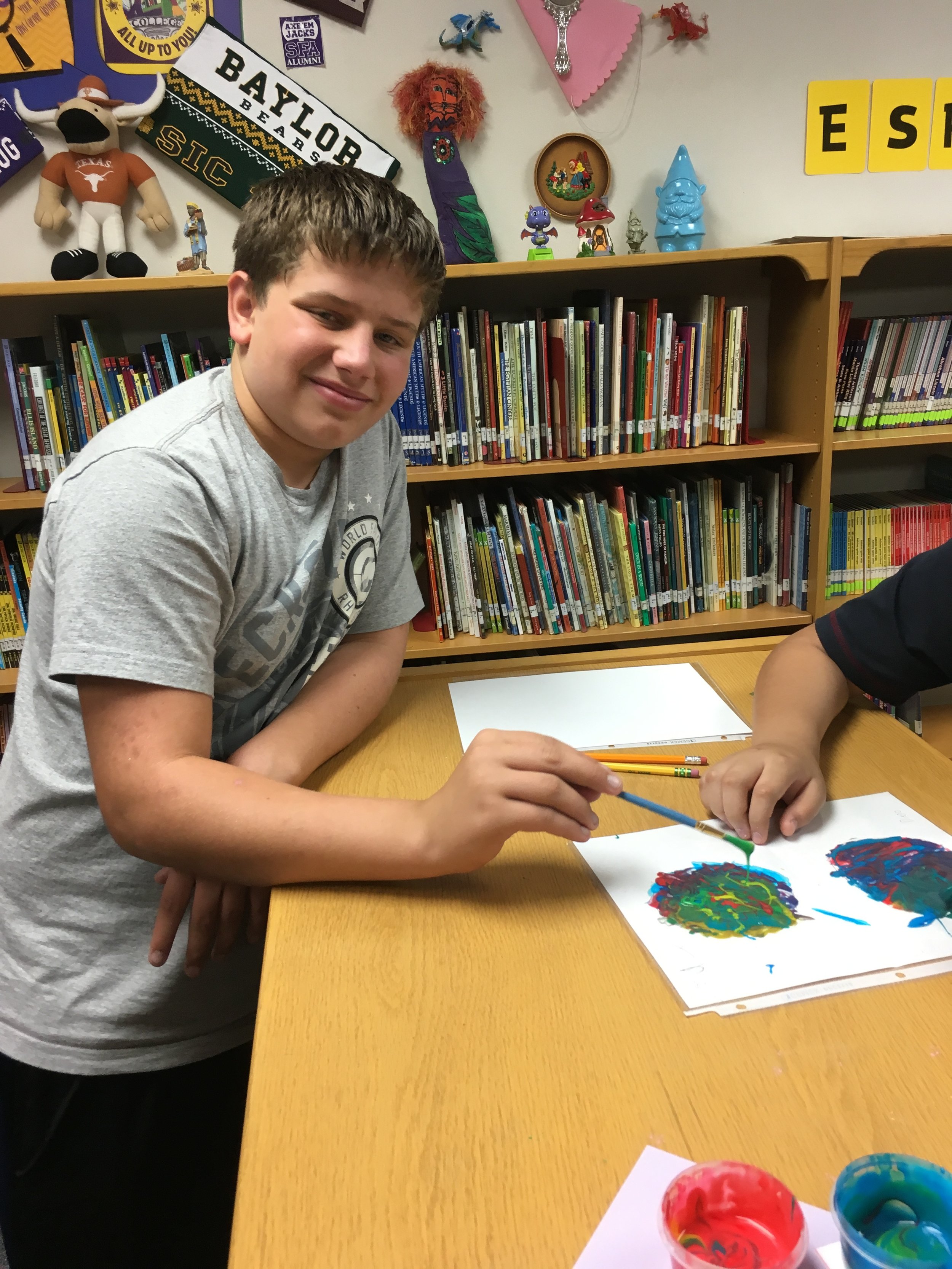
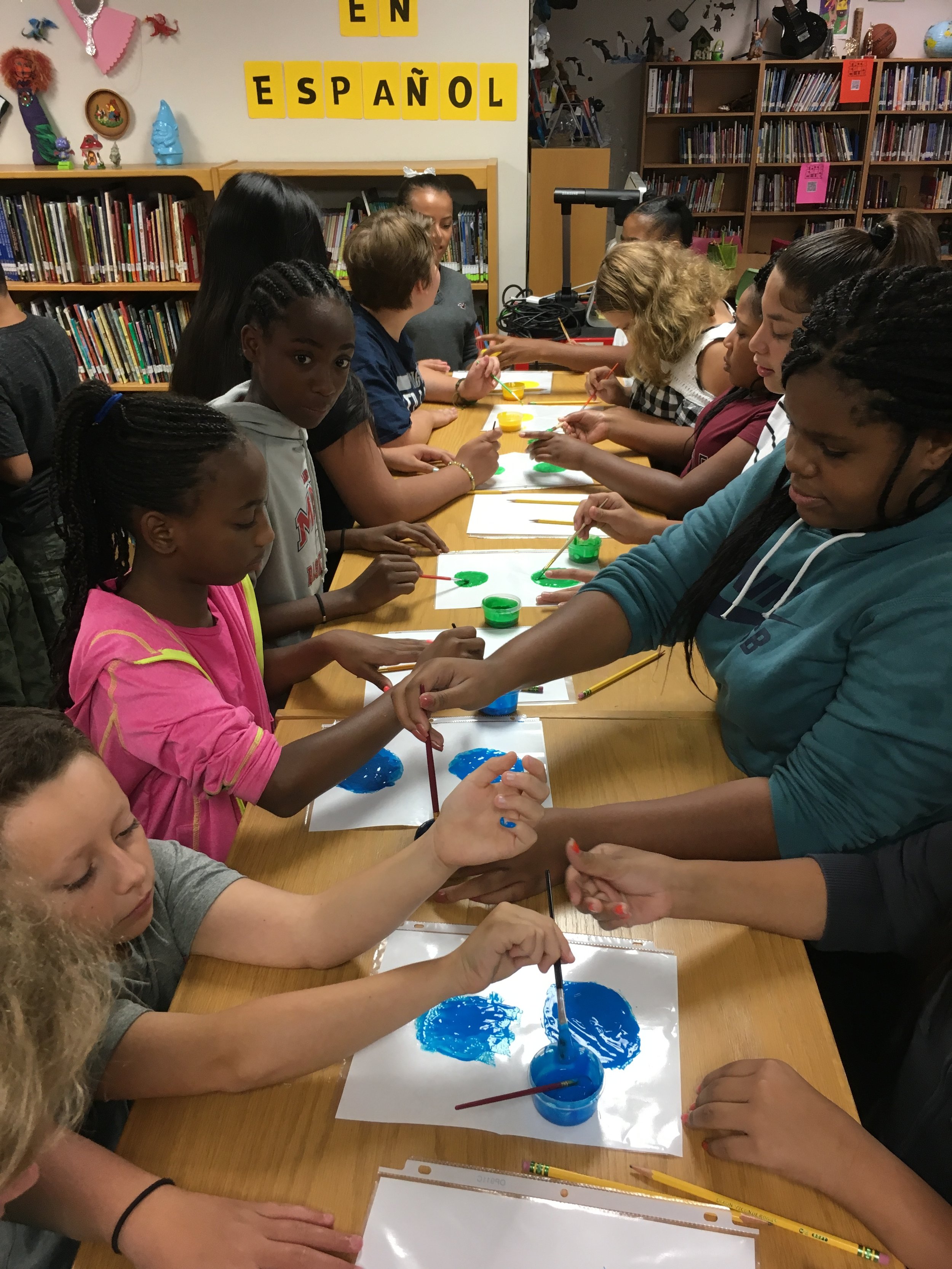

I also have to mention our Dot Day Family Event - it fills my heart with joy to see readers coming after school with their favorite adult … and providing a space where they can bond, create, take risks, laugh, and live memorable experiences that make the home-school connection a valuable one.

3) Can you share more about the Family Dots and expanding the Dot Day experience beyond the classroom?
I love displaying the work readers create in the library throughout the year and our hallway was filling up with dots, and it looked spectacular. I had asked for the second year in a row that faculty create dots for a Faculty Wall, but as I was looking at our hallway I felt something was missing. It all starts and ends with family, I heard someone say that once, and it is oh so very true! So I decided to take a risk and invite families to create dots together, I wasn’t sure they’d take a chance to “make their mark,” but I thought it was worth it to give them the opportunity. So many families sent their dots! I intermixed them with the faculty dots, and placed them next to student created ones to give the full picture of how together we can make an even greater mark on our readers’ and each others’ lives!
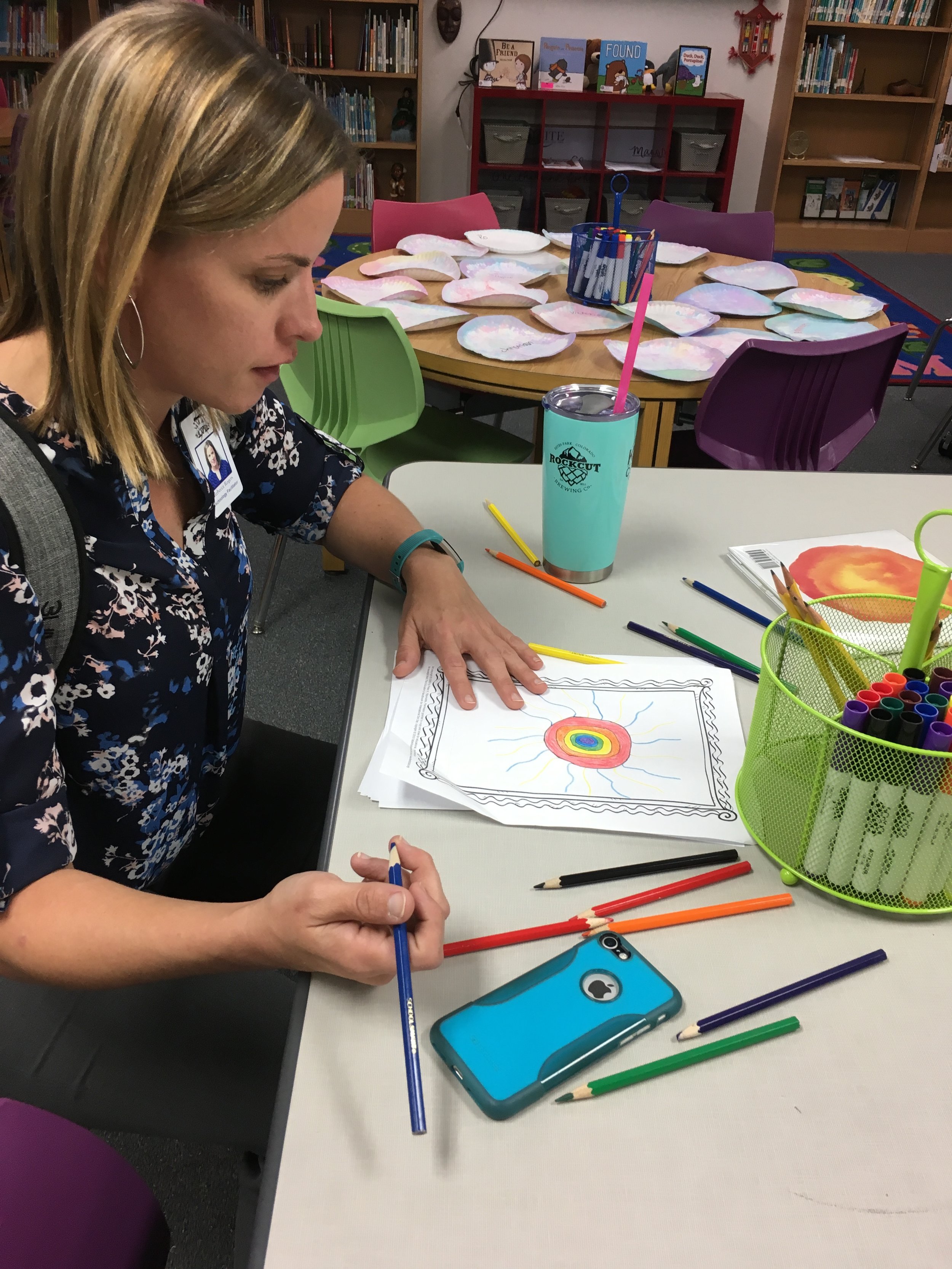
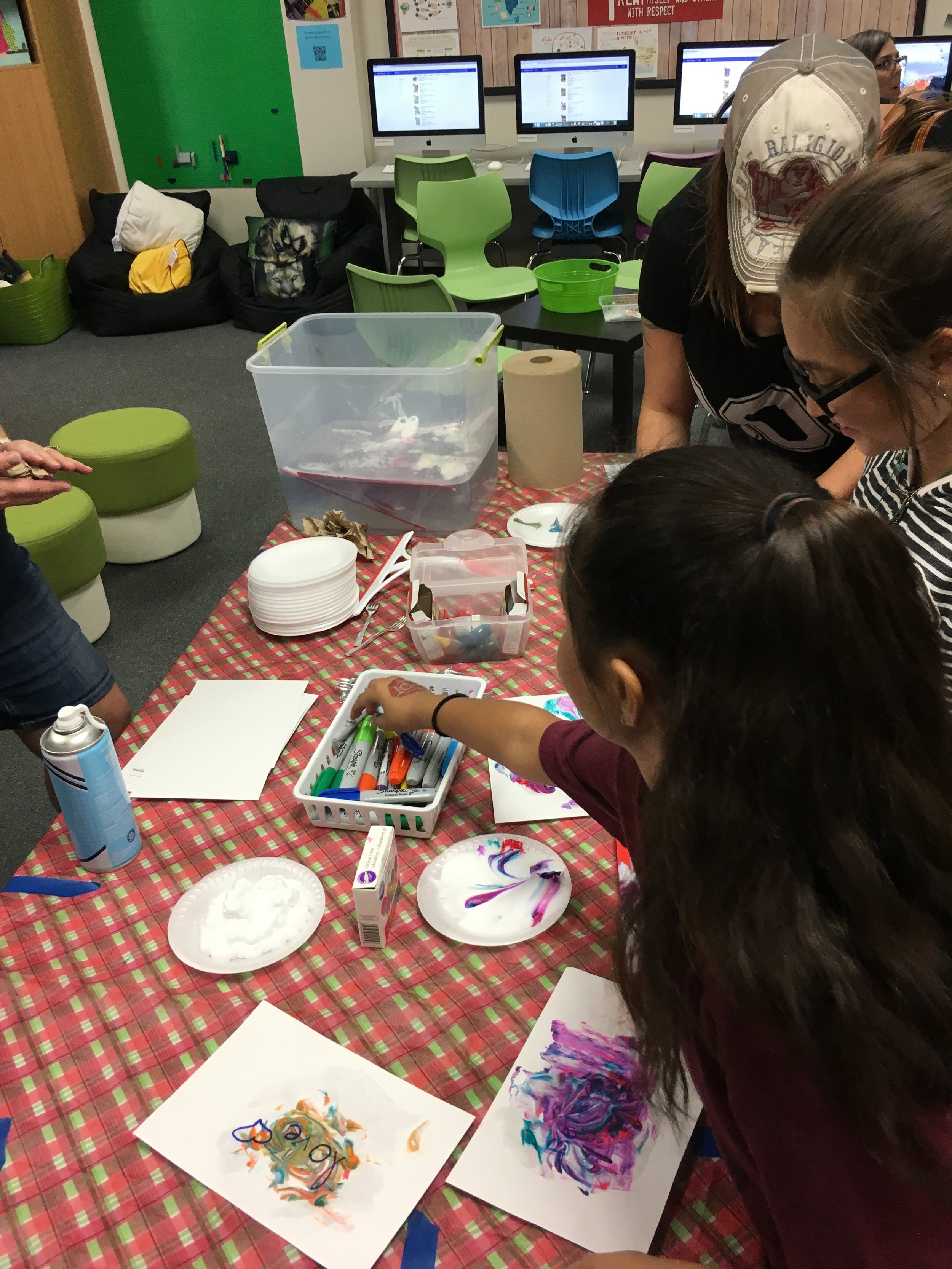
Some families made a dot for each member, some did a side by side, their child made a dot and an adult made another. I could just imagine the conversations, excitement, laughter and fun they had creating them! I made sure they were all displayed for our Family Event. I saw some of our kids taking their adult to the wall to find their Family Dot. One mom even told me “The first thing I did was go to the Family Dot Wall to see if it was true, to see if our family’s was up there, and it was! We loved working together on this!”


When I sent home the Family Dot request, I included two YouTube links; one of Peter H. Reynolds reading The Dot, and another of the story being read in Spanish, because we have many Spanish speaking families. Kids and parents shared with me that they had listened to the story at home. This connected the experiences we had in the library, the discussions of what we thought the message of the story was, with more personal discussions at home. As a parent, I know how hard it can be to get kids to talk about what’s going on in school. Sometimes it’s hard to visualize what kids, that are more willing to share, describe about their day. Hopefully being able to listen to the story facilitated those conversations!

4) On your blog, you mentioned creating a script and having students act for Dot Day 2016. That is an awesome idea! Did this come to fruition?
It’s still one of my goals, but it didn’t happen this year. Thinking about how crazy busy the beginning of the year is, I’m hoping that it is a project 4th and 5th graders can work on during the end of Spring Semester, that way when the new school year comes around in August, we will have a script, props, and most of the actors in place, then we will make it happen! #GOALS !


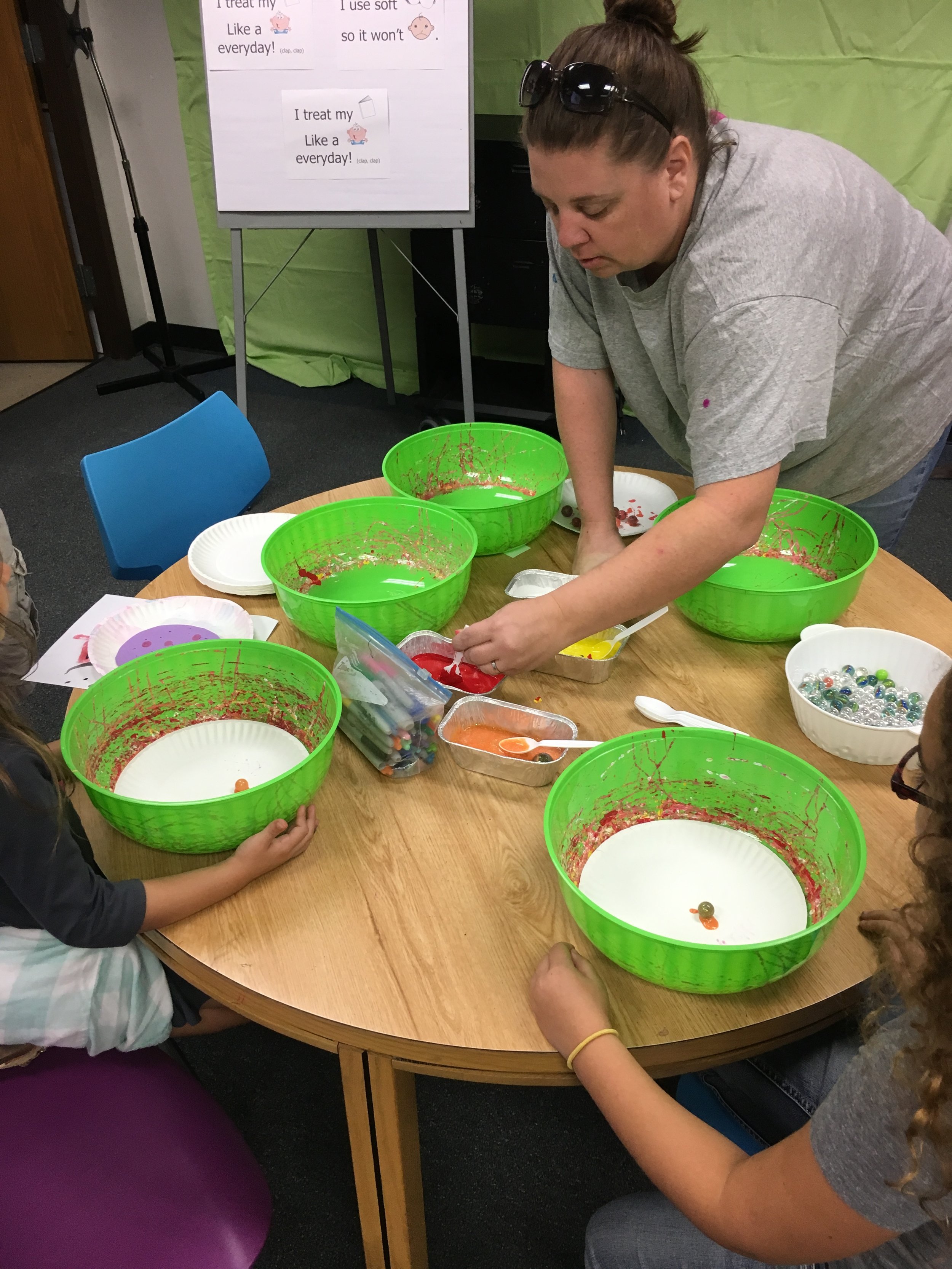
5) You seem to be an inspiration for young dot makers in your community. Who or what inspires you to make your mark every day?
My biggest inspiration is my father. He was so influential in whom I am today, that I always try, in everything I do, to make him proud. He is kind, compassionate and so giving to everyone he meets. He taught me that reading is magical and powerful. He made sure I understood that you never give anything less than your best at everything you do. He showed me by example that I must answer the call to serve others, even at personal cost.


My drive and dedication comes from my students, my readers. They are so willing to trust, to learn, to be vulnerable even when their lives sometimes have been so much harder than anything I have lived through, that I cannot fathom showing up with anything but my full heart to teach and to learn with them, every day.

How did you Make Your Mark on Dot Day?
We love seeing all the Dot activity on social media! Share your Dot Day celebration and tips by using #DotDay and #MakeYourMark.
If you would like to be featured on our blog, send us a message: info@fablevisionlearning.com.
Classroom Creativity Contest with LilySarahGrace and FableVision Learning
The following blog post was written by the team at LilySarahGrace. FableVision Learning is honored to partner with the nonprofit for the Classroom Creativity Contest.

LilySarahGrace is incredibly excited to collaborate with FableVision Learning on the Classroom Creativity Contest. Knowing firsthand how important the arts and creativity are to learning, this is a wonderful opportunity for teachers to showcase the magic that happens when children are allowed to express their understanding of curricula through methods that come naturally to them.
LilySarahGrace is a national nonprofit that works to infuse the arts and creativity into everyday classroom learning experiences, based on the belief that all children learn differently. Through our work, we seek to transform public elementary school classrooms into child-centered learning environments that meet the needs of ALL learners.
Our goal is to bring the Arts and Creativity back into classrooms through a method of teaching we have designed based on best practice and a unique pairing of the power of arts integration and the depth of inquiry. AIIBL™ (Arts-Infused Inquiry-Based Learning) is dynamic, highly engaging, and - most importantly - inclusive to each and every learner. Additionally, we also provide the supplies for integrated AIIBL™ experiences to the neediest classrooms across the nation through our grants program.
LilySarahGrace was founded in 2012 by Matthew Badger and Abby Ballin in loving memory of Lily, Sarah and Grace Badger in order to celebrate what the girls loved most in life – the Arts. In their name, we have become a organization that works to ensure every student receives the best education they can; because all children have the ability – and the right – to succeed. Today, LSG’s professional development program has engaged with over 175 teachers in continuous coaching and on-site training in implementing AIIBL™ practices into everyday classroom experiences and our grants have provided much-needed classroom supplies to 2,250 classroom projects, reaching more than 190,000 students in all 50 states.
The Classroom Creativity Challenge runs through Nov. 15, at 8 p.m. EST. For more information, visit the site, here.

I Am Peace: Ideas to Share and Spread Positivity With the World


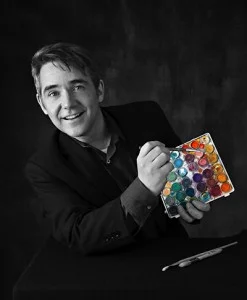
FableVision founder and New York Times picture book author/illustrator Peter H. Reynolds has teamed up once again with author Susan Verde who shares our mission to share "stories that matter, stories that move."
Their new book I AM PEACE: A BOOK OF MINDFULNESS (Abrams Books for Young Readers) is a sequel to the book "I AM YOGA." It celebrates the power of connecting to our inner peace and sharing that positive energy with others to inspire world peace.
Share Your Peace!
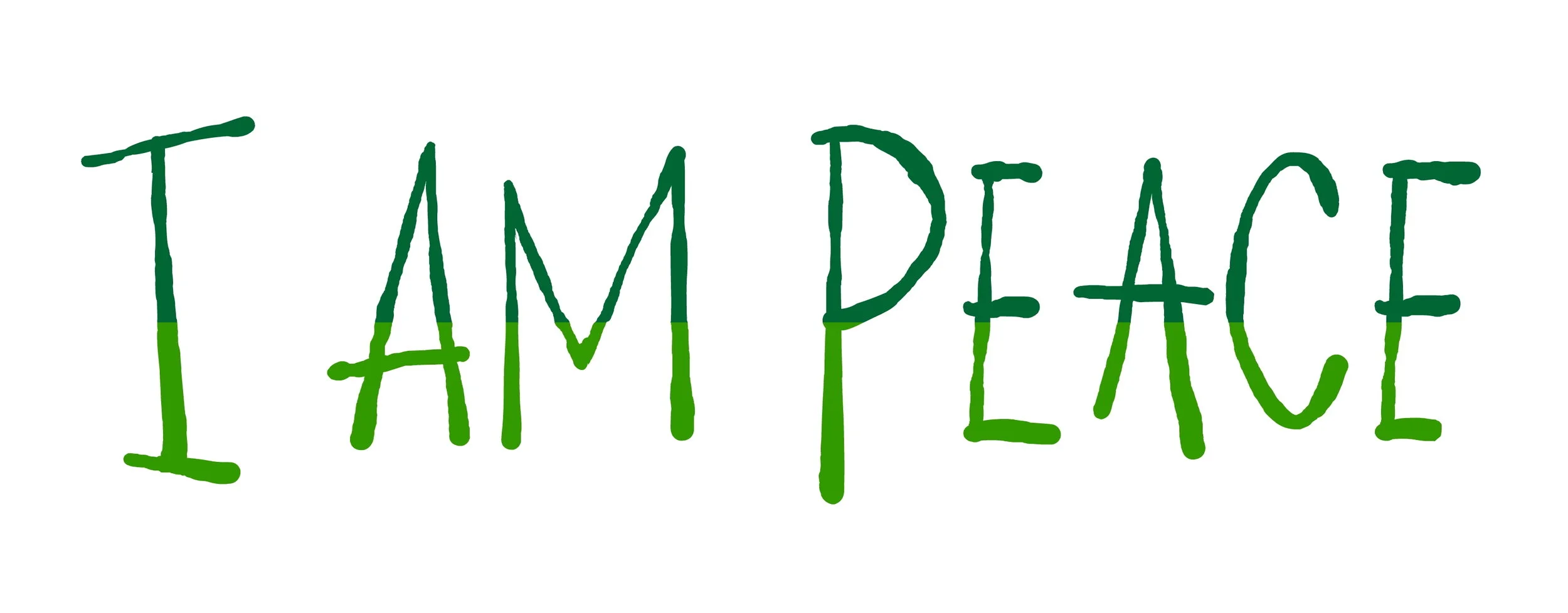
We are providing free downloadables for you to print and share with your young readers, just click on the images below to download. Students can hold the sign and take a selfie or make a video declaring "I AM PEACE!" to share with the world. We have also included "WE ARE PEACE" if you would like to do a group shot to share on social media. Be sure to use the hashtag #IAMPEACE and #WEAREPEACE


Put your peace in action! With Animation-ish it’s never been easier to bring your ideas to life. We would love to see an I AM PEACE video created with Animation-ish!
Design your peace! Fab@School Maker Studio is a perfect tool for cultivating your inventive spirit! With this paper prototyping and fabrication software, flex your design muscles to create your own I AM PEACE pop-up card. Maybe your students can use the card to write to local, state, national, and international leaders to share their concern that peace should be a priority.
For more about I AM PEACE, head over to Peter's blog, The Stellar Cafe.

Classroom Spotlight: Dammam, Saudi Arabia Makes its Mark on Dot Day
This blog post was written by Patrick McDonagh, FableVision Learning marketing intern.
On Sept. 16, Nouf Arar Aldossary a 7th and 8th grade math teacher in Dammam, Saudi Arabia celebrated International Dot Day. For Nouf, it was a special celebration.
“Dot Day 2017 is a special day for me for two reasons” Nouf said. “First: It is the first Dot Day I celebrated. Second: It is the last days for me in The Sixteenth Intermediate School in Dammam. I will be moving to teach in a small village for primary school - a new community, a new school level, a new life!”
The school joined over 10 million dot makers in 170 countries for International Dot Day, a truly global celebration of creativity and courage. To learn more about Dot Day, celebrated every Sept. 15-ish, click here.
We were excited to connect the dots with Nouf to learn more about the school’s first Dot Day celebration. Read on!
How did you bring the Dot Day experience to the classroom?
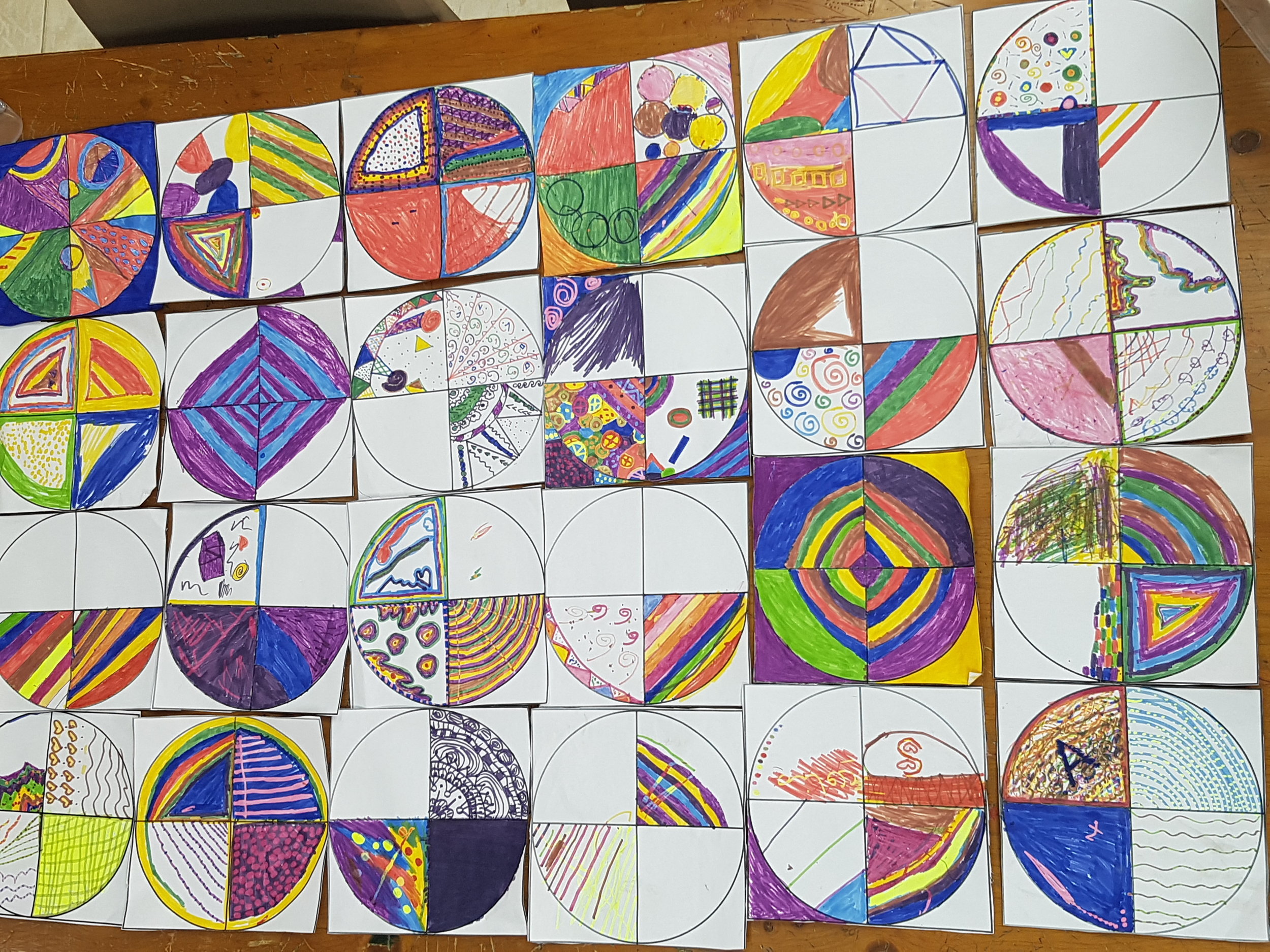
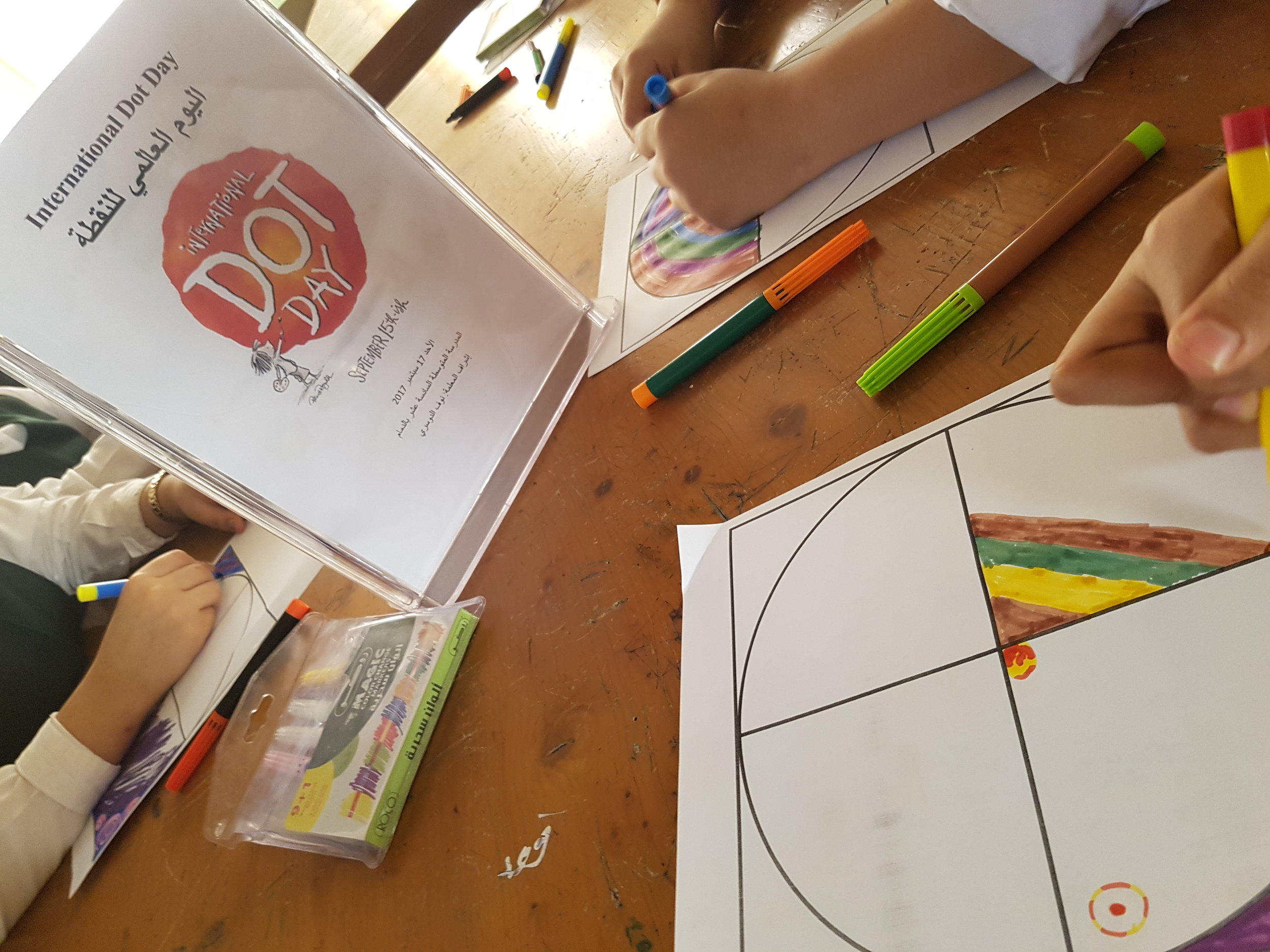
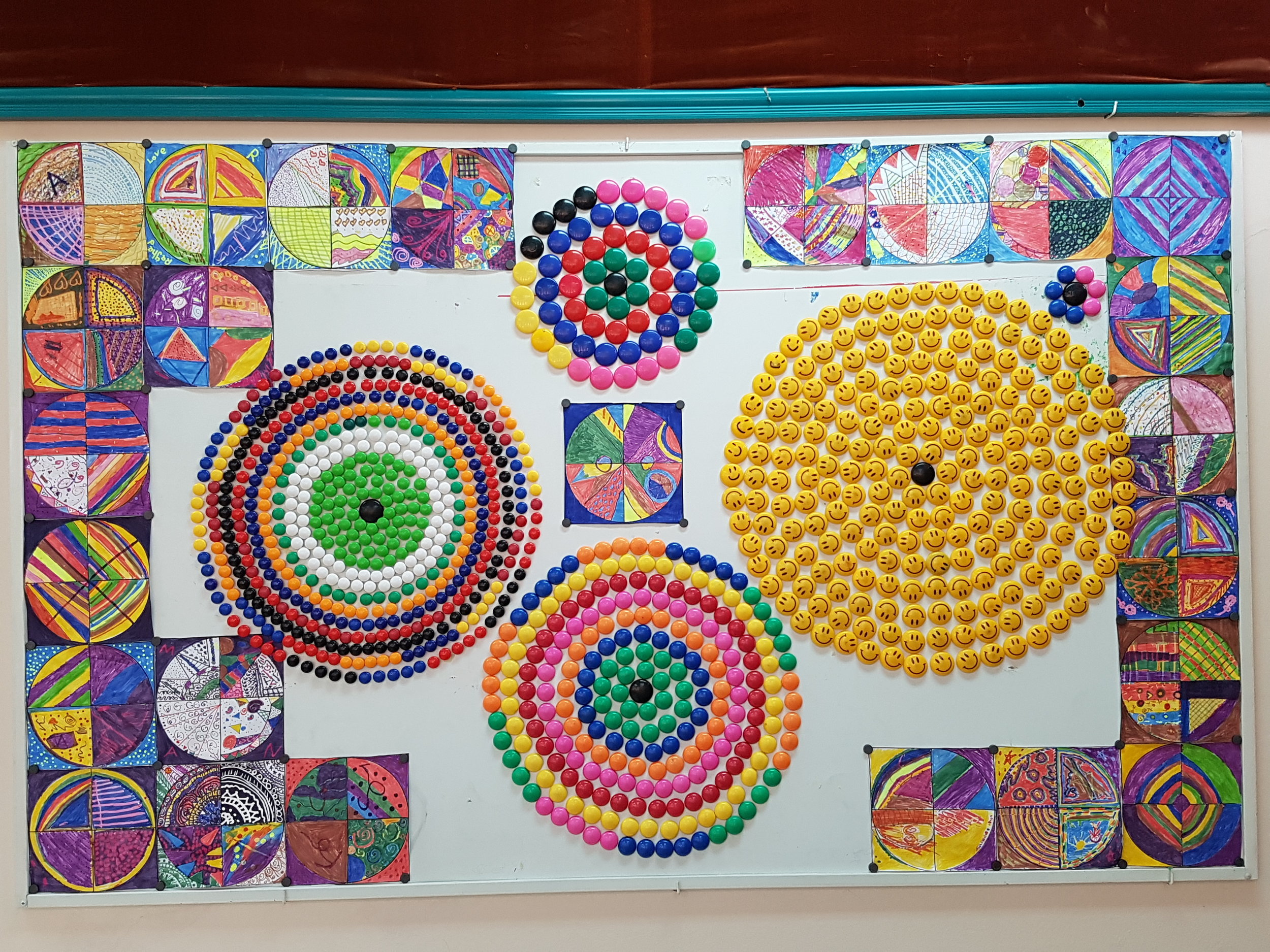
I gave 7th graders worksheets with a circle divided to 4 sectors, and told them to make their mark - just begin with dot and see where will take you.
For 8th graders, I gave them a large amount of colorful magnetic circles (400 pieces), and asked them to design a creative artwork on the whiteboard.


Then, students asked me to continue to celebrate Dot Day on the next Sunday Sept. 24; to celebrate the national day of Saudi Arabia (it was on Friday 23 September 2017). They put a black magnetic circle on the whiteboard, then put the green magnetic circles surrounded by white circles, and put colorful magnetic circles around it. They mean that Mecca (black circle) is the heart of Saudi Arabia (white and green circles), and Saudi Arabia is the heart of the Arab and Islamic worlds (colorful circles), the investment powerhouse, and the hub connecting three continents, which align with 2030 vision. We spent another 3 hours to complete the creative art work. The students and I are so proud of our work!
How did you use Dot Day themes in your mathematics teaching?
When I introduced Dot Day to students, I first asked the students: “In mathematics, what does a dot mean? Is it an important concept?”
They said that a dot is so important in mathematics because everything consists of a dot. A straight line can be drawn between any two dots ( Euclid's elements).
Then I asked them: “what about life? is the dot an important symbol in our life?” they said that the dot refers to the beginning of everything, the beginning of success, the beginning of creativity, the beginning of our journey into life.
Who or what inspires you to make your mark every day?
Because a dot of blood saves a human, a dot of water quenches thirst, and a dot on the letter gives meaning to the word; so the dot deserves to be celebrated. It inspired me and inspired my students to make our mark in our community. In future, I will do another Dot Day with students in grade 1 and grade 3 in the new school to inspire me to a new happy life.
How did you Make Your Mark on Dot Day?
We love seeing all the Dot activity on social media! Continue to share your #DotDay celebration with by using the #DotDay and #MakeYourMark.
If you would like to be featured on our blog, send us a message: info@fablevisionlearning.com

Mapping the World by Heart Teacher Spotlight: Jessie Jung
This week’s FableVision Learning Teacher Spotlight was written by Jessie Jung, a teacher at Andrews Academy. For the past eight-years she has intermediate social studies.
“Teaching in an independent school affords a lot of curricular freedom, and our social studies program is ever evolving,” she explains. “We have chronologically organized our topics to span from the Age of Exploration in second grade all the way to the Civil Rights Movement in fifth grade. We have also worked to align our geographical studies with these concepts.”
In this post, Jessie shares a bit about how she uses David Smith's Mapping the World by Heart in the classroom and offers a few tips on how to get started.

How were you introduced to Mapping the World by Heart?
My friend and colleague, Nikki McGuire, brought the Mapping the World by Heart curriculum to our school a few years ago. She introduced the concept to her fourth grade social studies classes by having them map the United States by heart. The maps turned out beautifully, and we decided that just like our linear social studies curriculum, we would ultimately like to spread and spiral the mapping through several grade levels; mapping Missouri in third, the U.S. in fourth, Europe in fifth, and Latin America and the Caribbean Islands in sixth.
What makes the program different than other geography curriculum?
Mapping the World by Heart is a unique curriculum. It is very flexible and you can tailor it to your teaching style. You can make it belong to you and your students.
Every now again you get the “but do students really need to know this?” question. First of all, yes. I want my students to be globally focused. I realize we are only mapping Europe, but looking at life outside of our country makes us more aware that there are others inhabiting this planet. Secondly, being able to map requires using a totally different way of thinking than students are used to. It gives their visual-spatial intelligence and problem solving skills a workout. Think process not product! That being said…the finished product is something that students are extremely proud of.
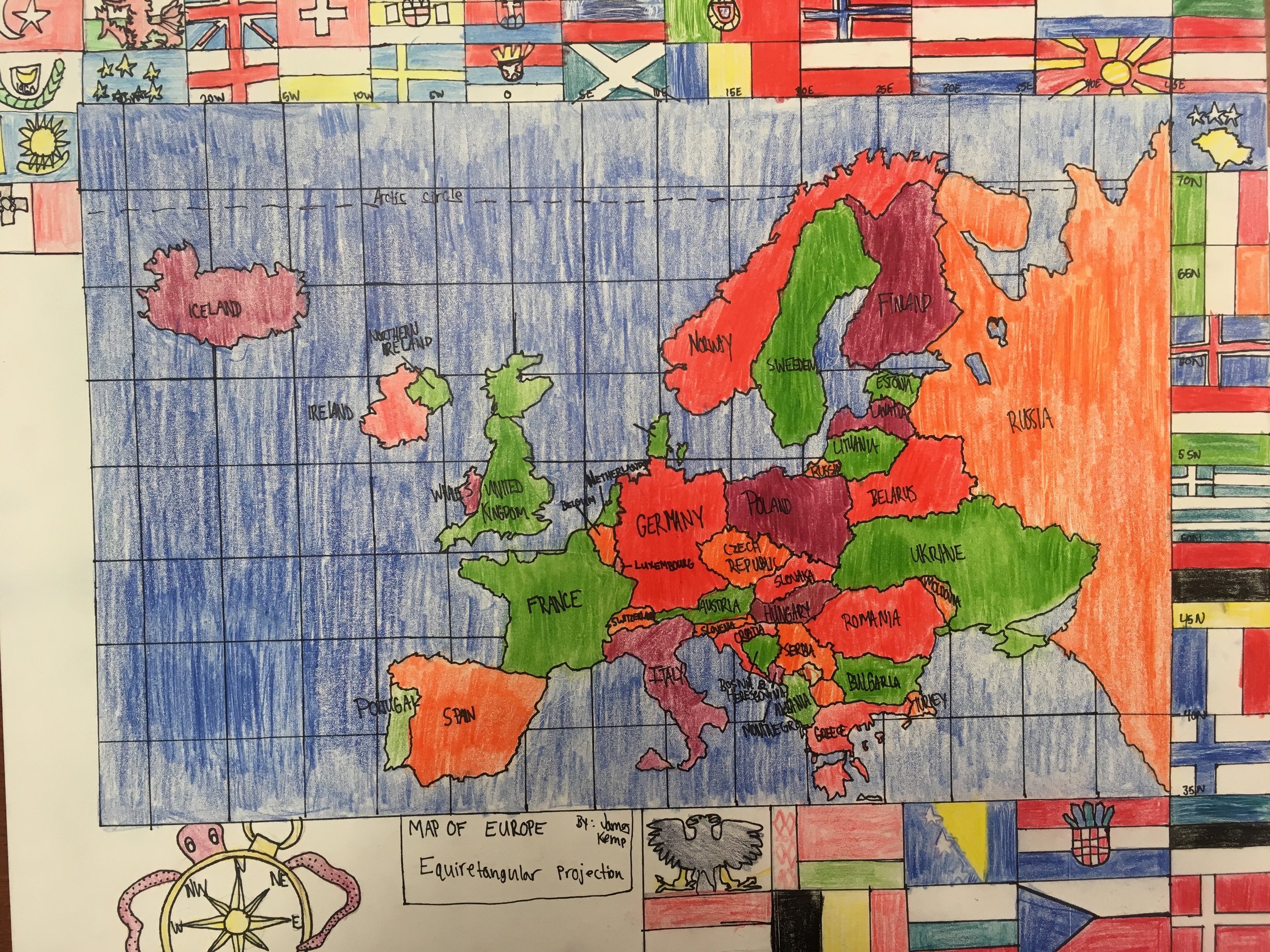
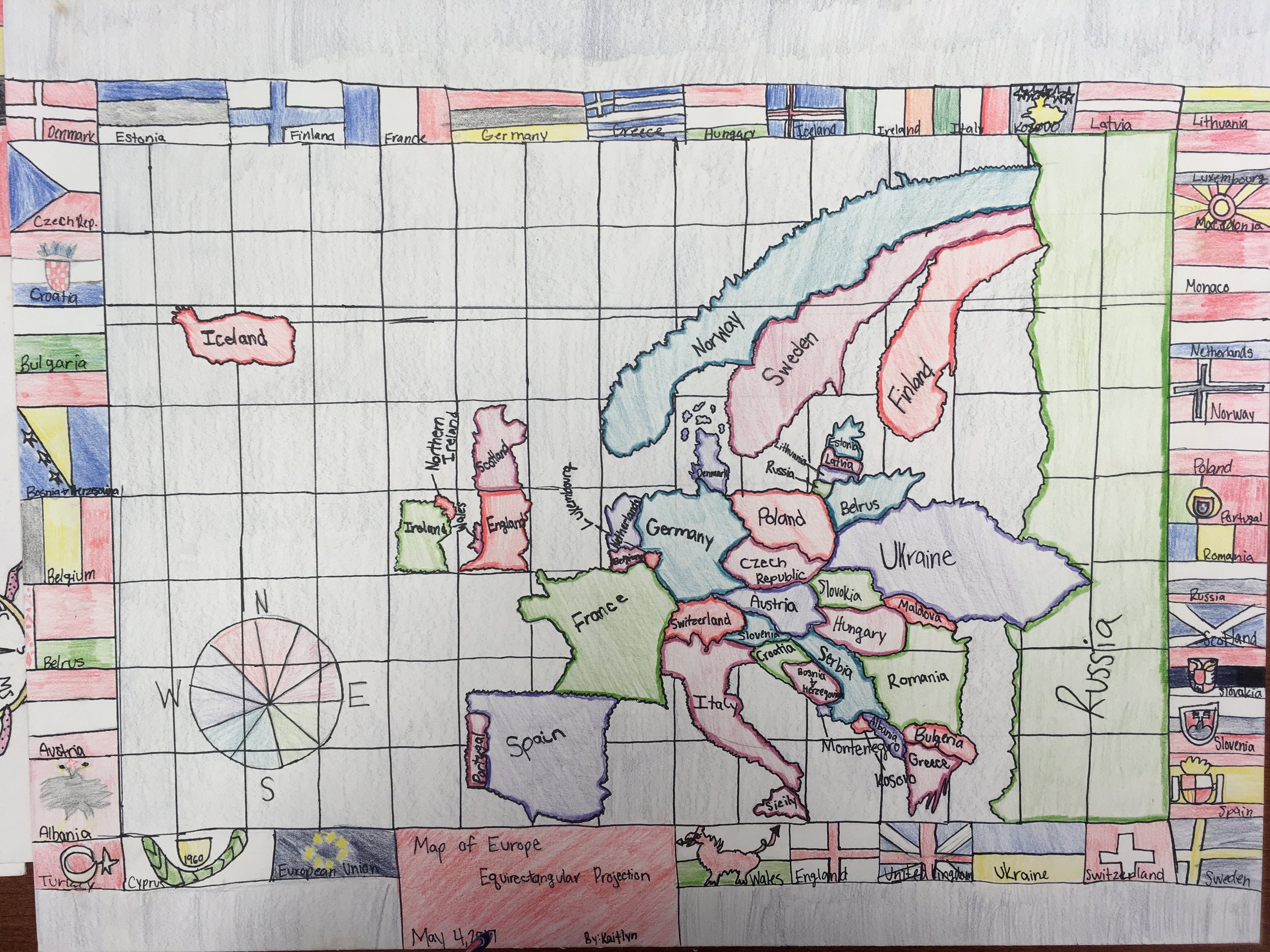
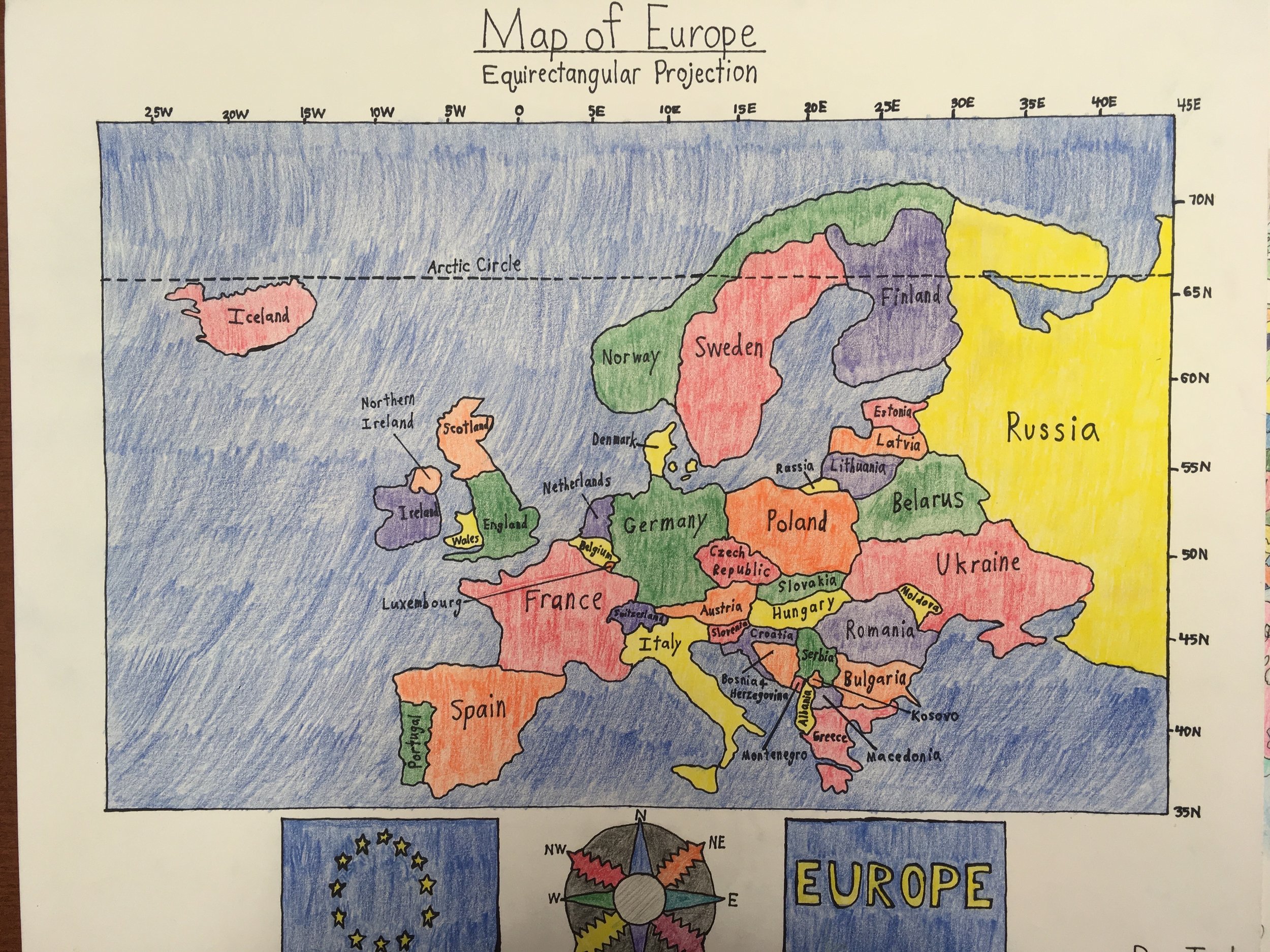
Many of my students channeled their artistic skills into their maps. A few students created a border of European flags around their map. Instead of coloring the countries a single color, another student drew a national symbol on each country. Some students included sea monsters, ships, and castles on their maps. Mapping was definitely one of the most memorable things that we did this year. In fact, several of the graduating sixth graders named mapping as one of their favorite things that they did in their school careers thus far.

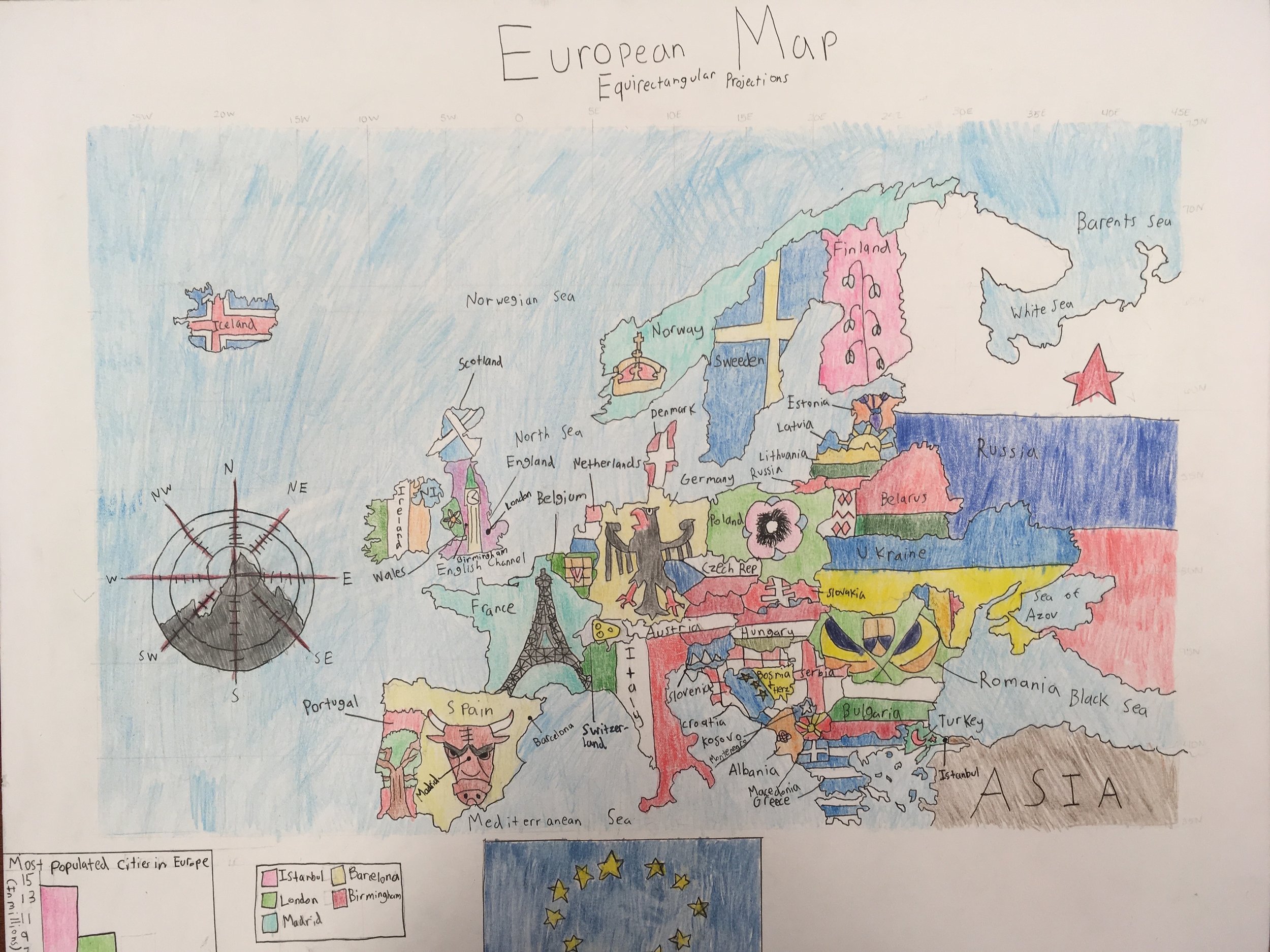
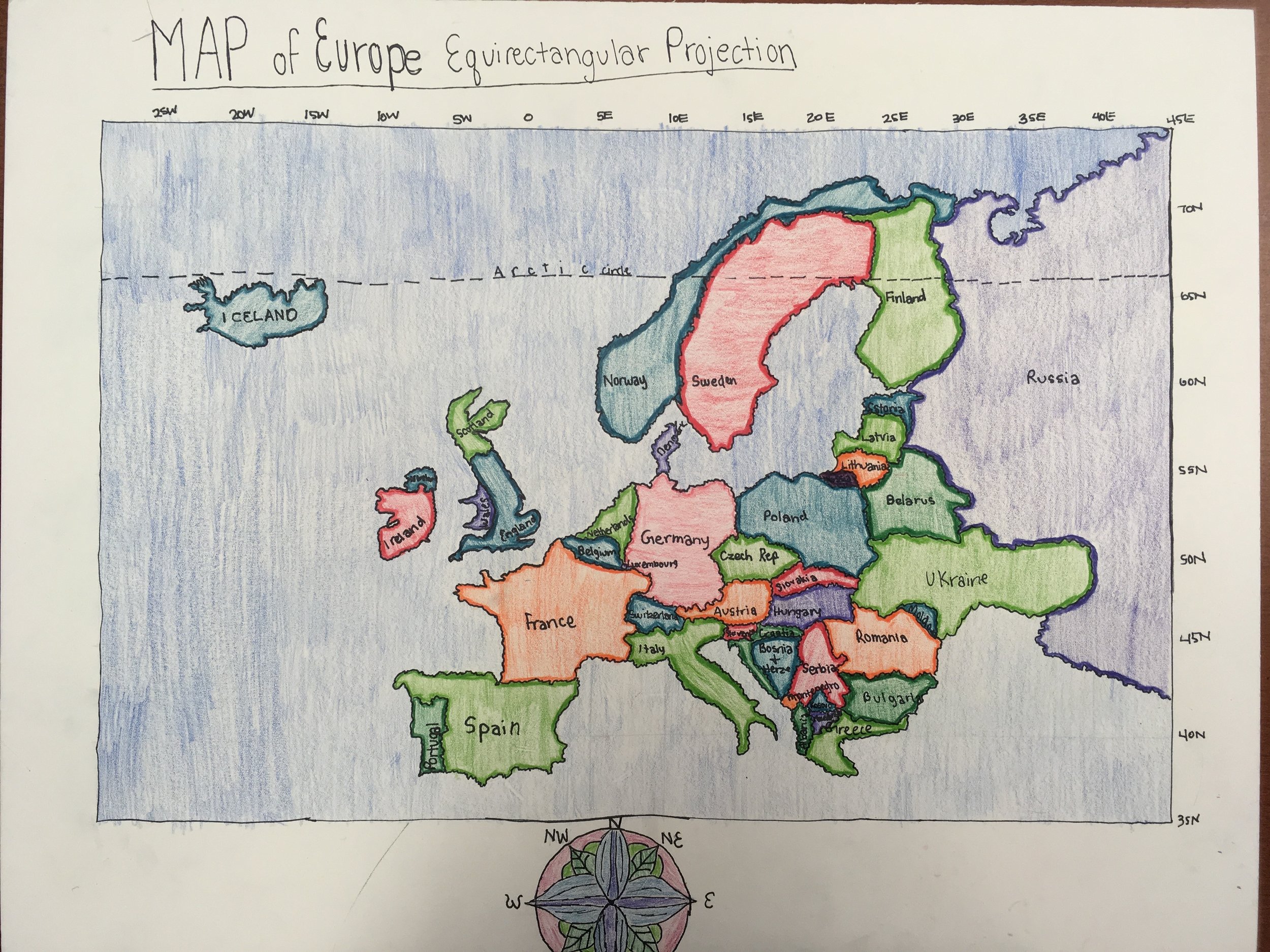
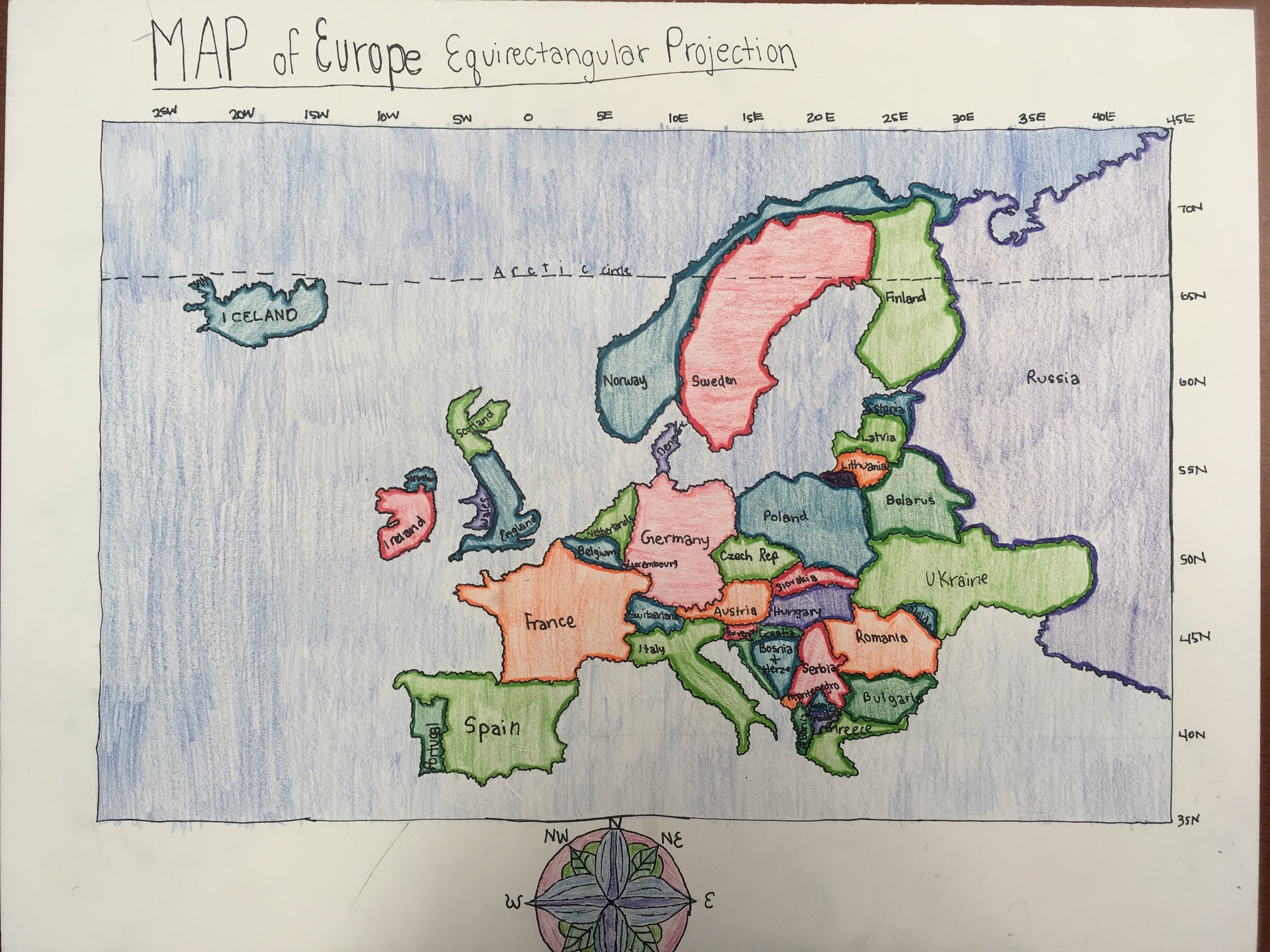
How are you using the program in your classroom?
We decided that fifth grade would map Europe, which would dovetail into our units on World War I and World War II. The 2016 - 2017 school year was my first year mapping with my students. I had a couple of secret weapons in my arsenal; I had Nikki as a mentor, and my students had already mapped the U.S. the year before, so they had some serious prior knowledge. We began by memorizing the locations of the countries of Europe. We spent a couple of weeks splitting up the countries and creating memory devices to help us remember the shapes of the countries (Finland looks like a Fancy dress).
Then a few things became clear:
This was helpful for a handful of countries, but a lot of the European countries were pretty similarly blobby
The cost (time) was outweighing the benefit
I was stalling - it was time to jump into the deep end!
So we started with Iceland and the Arctic Circle, and we moved east. In the beginning, I really tried to cling to steering wheel, and have each student map each country together, but I had some students flying on ahead and other students still trying to perfect Iceland’s northern coast. So I let go. I circulated the classroom, looking for the key longitudinal and latitudinal markers to help keep the students on track. We broke the forty countries that we would be mapping into groups of ten, and then we mapped that section 3 times. Ten countries three times, followed by twenty countries three times, then thirty countries three times, and finally forty countries three times. We penciled and inked our final maps, created a color path, and transferred the color path to the final map.
What tips can you offer to a teacher starting out?
For teachers who are just starting off with Mapping the World, I would say, don’t be intimidated, it doesn’t need to be perfect. Your students will inevitably come out the other side of the program with more geographic awareness, refined problem solving skills, and a better sense of being a global citizen. For me, letting the program flow and evolve was key. Set manageable goals, and step them up each year. Get your students involved. Let them help you work out the logistics of the map.
What was one aha moment using Mapping the World by Heart?
Letting go was a big aha moment in this process. I am not necessarily a detail person, and I was stressing about using the curriculum as an exact science. Then I realized, I need to mold the curriculum to work with my strengths and my students’ strengths. I thought about what I realistically wanted for my students in this first year pilot program. I wanted them to know the European countries and their general shapes and locations. I also wanted them to surprise themselves and feel confident and proud of their maps. Realizing that this curriculum would be a process that would become more polished every year was key.
What is next?
Some of my fellow teachers test the students over their final map of Europe. This year, our maps were more of a project, and less of a memorized assessment. Next year, I plan to have students create three maps of Europe, a modern map, a map of Europe on the eve of WWI, and a map of Europe under Nazi occupation during WWII. The original map will be on tag board, and the WWI and WWII maps will be on tracing paper pages, laying over the tag board, illustrating the evolution of the continent.
Using FableVision’s books, media, and/or software in creative or interesting ways? Click here to nominate someone for the FableVision Creative Educator Spotlight and complete your submission electronically.

HUTCH Magazine NOW Accepting Submissions

What Is HUTCH?
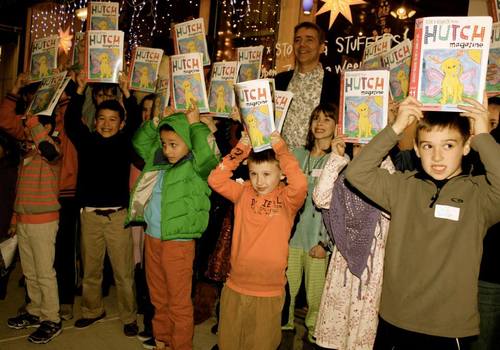
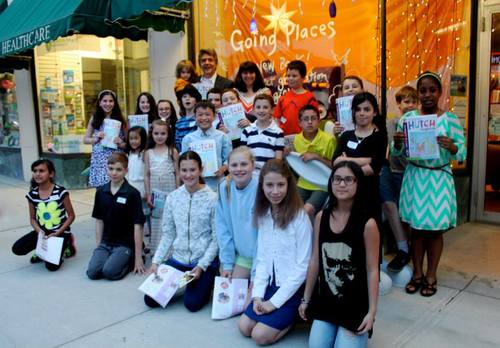
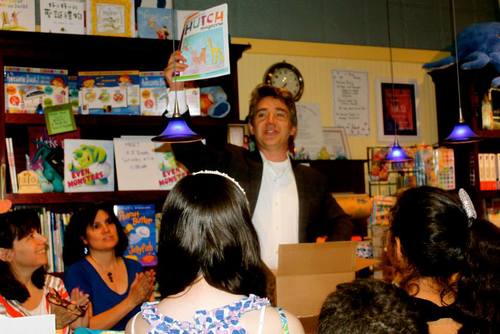
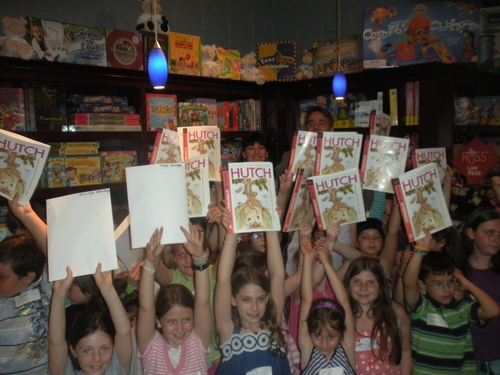
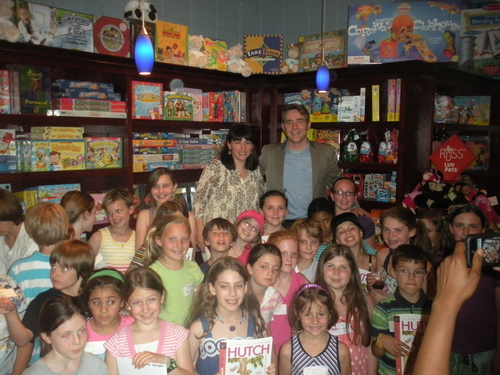
HUTCH is a kids’ literary and creativity magazine, published semi-annually under the direction of Peter H. Reynolds, with the help of The Blue Bunny Bookstore, and his non-profit foundation, The Reynolds Center for Teaching, Learning, and Creativity.
The magazine is seeking student submissions. Submission details can be found, here. Deadline is Oct. 15.
The magazine features stories, art, poetry, book reviews, travel logs and interviews submitted by students. The first issue of HUTCH was published in June of 2008.
Each Spring and Fall, The Blue Bunny invites children ages 5-12 to submit art, poetry, stories, book reviews, photos and other journalistic pieces for consideration. Each issue starts with a central theme, and all submissions are requested to be focused toward positive values.
The magazine is produced with help from a volunteer editing staff and The Reynolds Center, where the layout and design is enhanced with original illustrations and art direction by Peter H. Reynolds. The 40-page magazine is published in a high-gloss professionally-printed format, and is also available as a online download.
Every new issue is welcomed with a publication party at The Blue Bunny Bookstore, where all of the children who have contributed can celebrate with their families. Every child whose submission is accepted receives an invitation to the party, along with a free copy of the magazine and a certificate. Peter always addresses the group of children with a encouraging speech and a crowd-pleasing countdown as he opens the box of freshly printed magazines. After the magazines are distributed, a group photo in front of the Blue Bunny Bookstore has been a tradition.
All children in grades K-6 are invited to submit their creative work for consideration for publication. Printed copies of the magazine may be ordered online or through The Blue Bunny Bookstore by calling the store directly at 781-493-6568. Printed copies may also be purchased in store at 577 High St, in Dedham, MA.
HUTCH Mission:
HUTCH magazine provides a validating forum for young learners to share their ideas and focus on positive values. HUTCH is an accessible resource for child educators wishing to encourage meaningful learning through the unique experience of being published.
How to Submit:
If you have interest in having kids published in an actual magazine (for kids) this is your chance! Email nrothmarsh@yahoo.com if you're interested
Next Issue (19):
The suggested theme for the next issue is: "I Was Brave, I Am Brave, I Will Be Brave!"
The deadline for submissions is Oct. 15, 2017.
Issue 19 will be released in December.

2017 Dot Day Newsmakers

On September 15-ish, over 10 million people in 170 different countries celebrated International Dot Day. A celebration of creativity, courage, and compassion, Dot Day encourages everyone to #MakeYourMark - so it comes as no surprise that many Dot Day celebrations ended up making their mark in the news! Here’s a peek at the newsworthy Dot Day celebrations around the world.
Akron Public Schools on Akron.com
In Ohio, students in Akron public schools made their mark by raising money to benefit victims of Hurricanes Harvey and Irma in partnership with local chapters of the American Red Cross as part of International Dot Day. Students earned money through their own efforts, taking responsibility for running lemonade stands, walking dogs, weeding gardens, and more!


Make Your Mark on Cozad Award on Lexch.com
The Wilson Public Library in Cozad, Nebraska, awarded their annual Make Your Mark on Cozad Award to Ila Davenport and her late husband Gerald Davenport. The Make Your Mark on Cozad Award, presented as a part of the Wilson Public Library’s Dot Day celebration, recognizes Cozad community members who are active supporters of Cozad, its library, and the arts. Congratulations to the Davenports - talk about making your mark!
NIFT-TEA College of Knitwear Fashion in The Hindu
Students at the NIFT-TEA College of Knitwear Fashion in the Kongu Nadu region of the Indian state of Tamil Nadu designed colorful clothing, wall hangings, and decorated bottles based on a Dot Day theme of dots! Up to 202 students worked on their designs over the course of four days until they were finally displayed by students on the college campus in a dot formation. More beautiful photos of the NIFT-TEA students' Dot Day masterpieces can be found here.
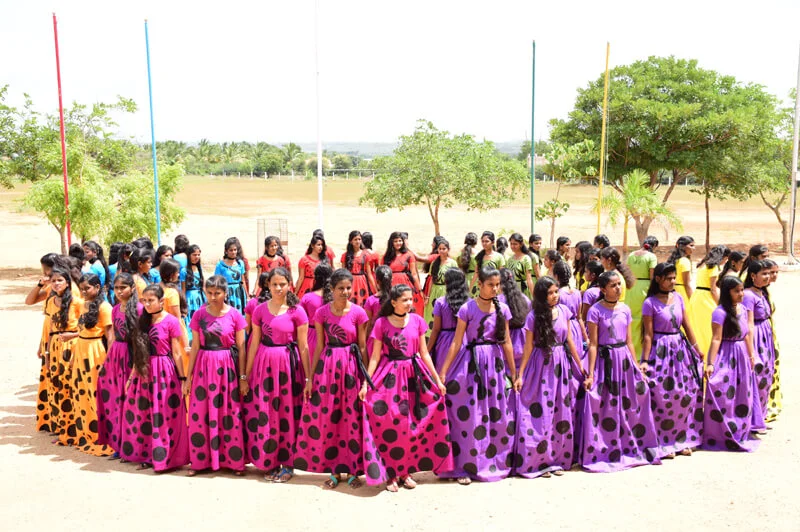
Szczecin's Elementary School no. 7 on Głos Szczeciński 24
Students in Szczecin, Poland’s Elementary School no. 7 decorated little trees together for Dot Day, using a variety of materials from paper dots to yarn! This is the school’s third year in a row celebrating Dot Day and these little trees can now be seen brightening up the school’s hallway.

Porter Elementary School in The Daily Times
The Porter Elementary School in Tennessee celebrated Dot Day school-wide - from the classroom to the cafeteria! Students learned Braille, dot balloons floated around the school, and even the cafeteria had a round-food themed menu.

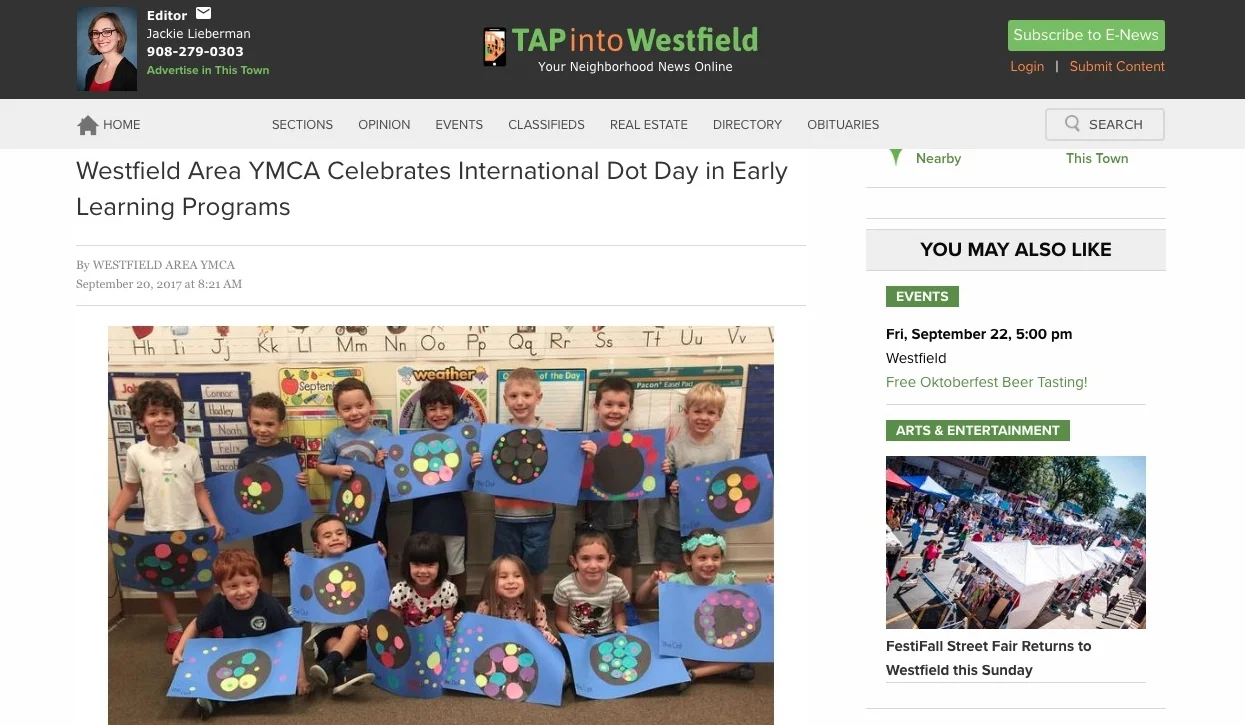
Westfield Area YMCA on Tap Into Westfield
In New Jersey, children from the Westfield Area YMCA Early Learning programs read The Dot and engaged in fun activities such as creating their own paint and paper dots, playing Twister, and participating in a scavenger hunt for dots!
Ready to join in on the International Dot Day media frenzy? Register at The Dot Club if you're still celebrating Dot Day this year or to prepare for next year, and share your mark across social media with #MakeYourMark and #DotDay. You can also stay connected on Twitter @DotClubConnect and Facebook!

A Special Dot Day Message from Boston Mayor Marty Walsh
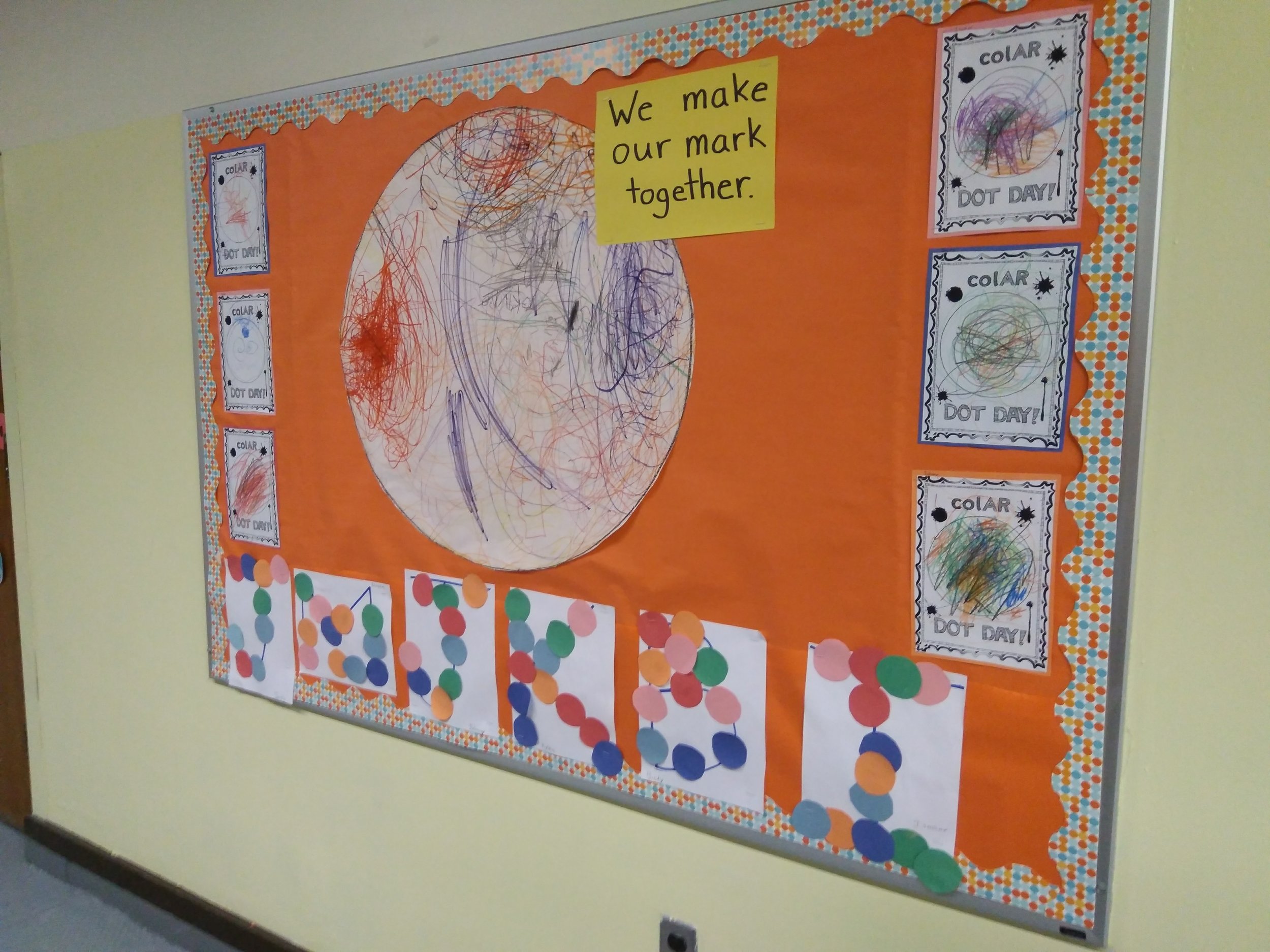
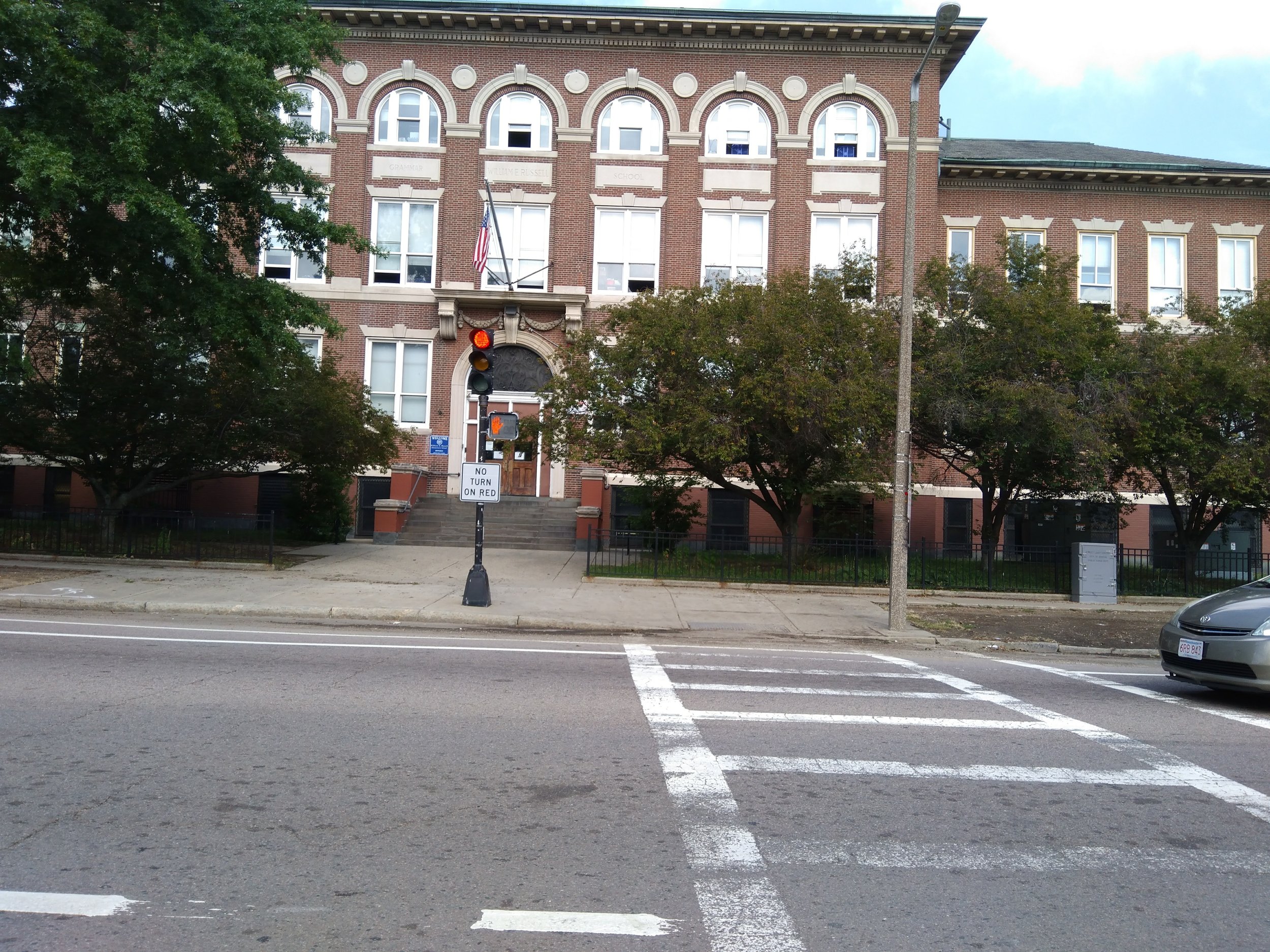
Boston Mayor Marty Walsh has a special message to the students and teachers at Russell Elementary School in Dorchester, MA, as well as to the other nearly 10 million celebrating #DotDay in 169 countries!
How are you making your mark this #DotDay? Sign up for a FREE Dot Day guide & resources.
Dot Day 2017 in Pictures
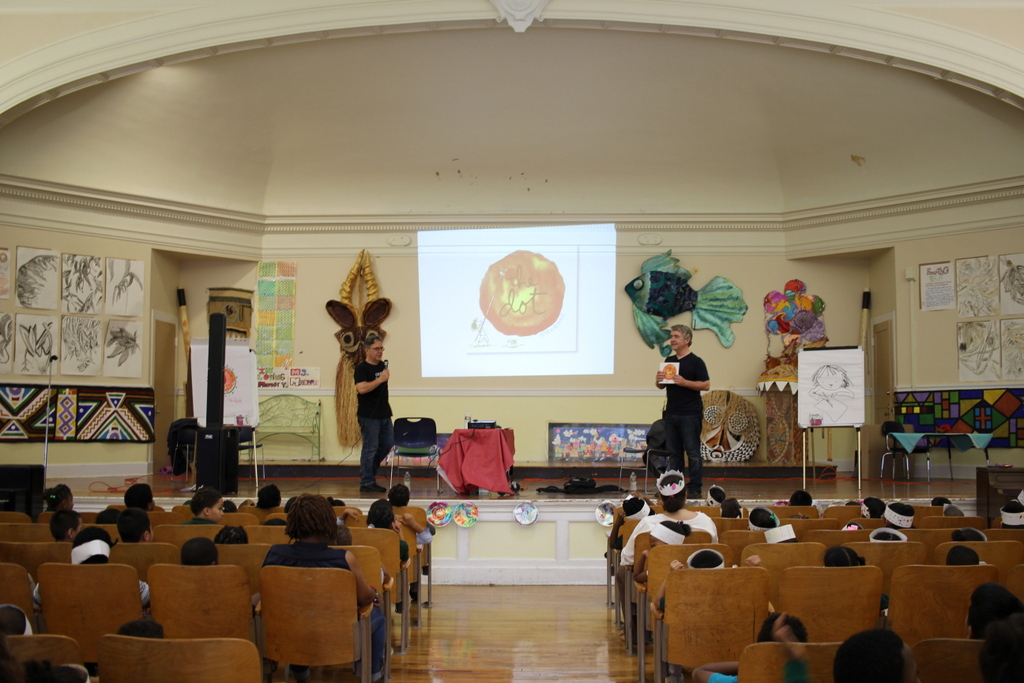
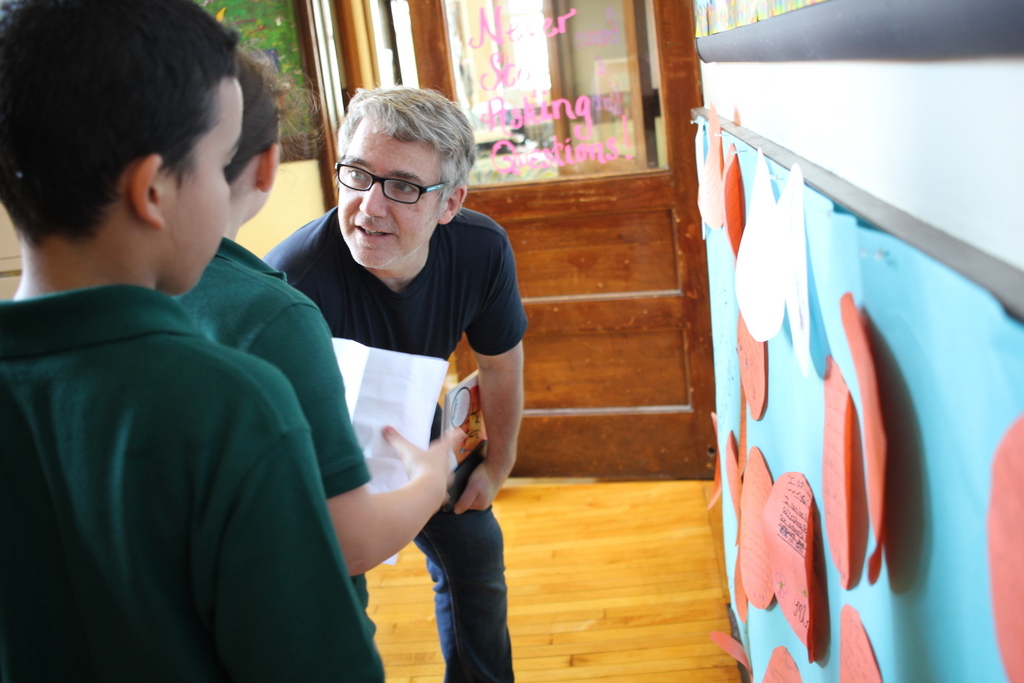
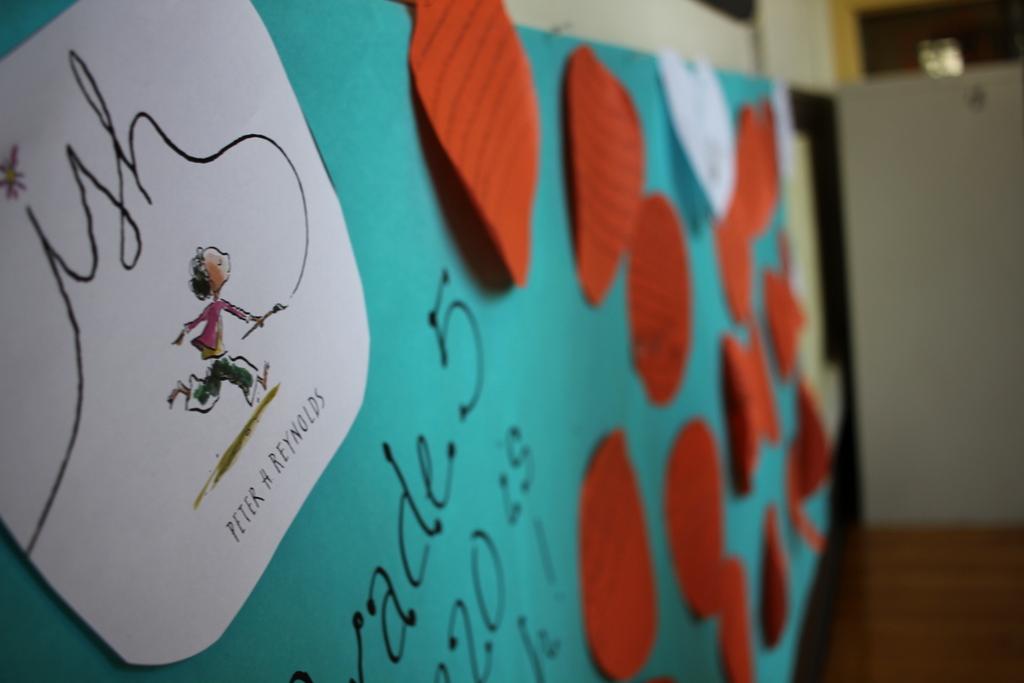
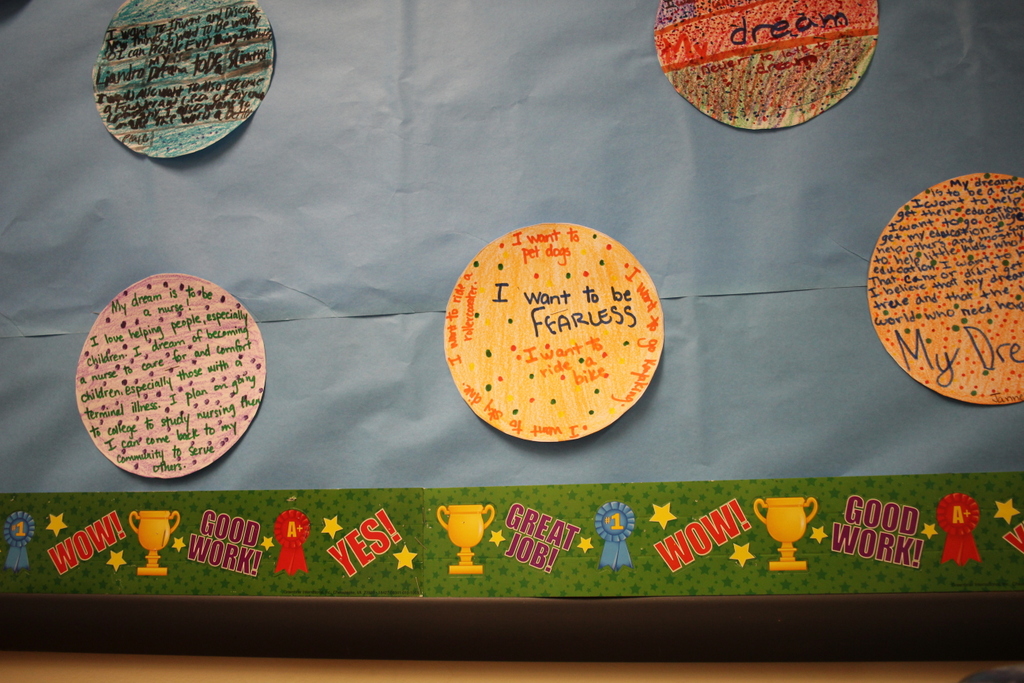
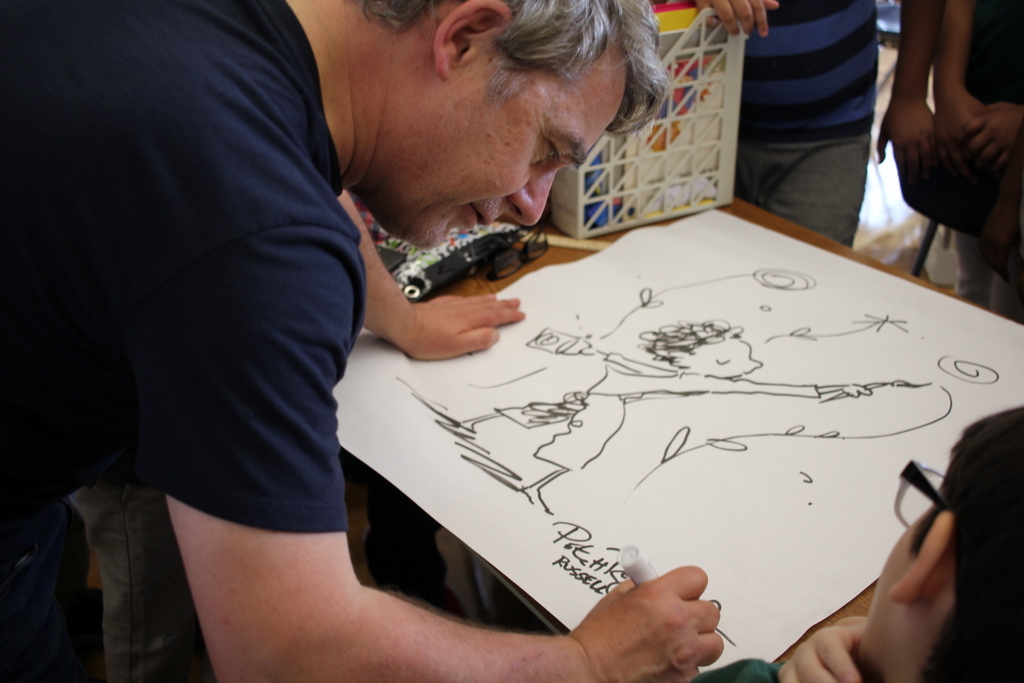
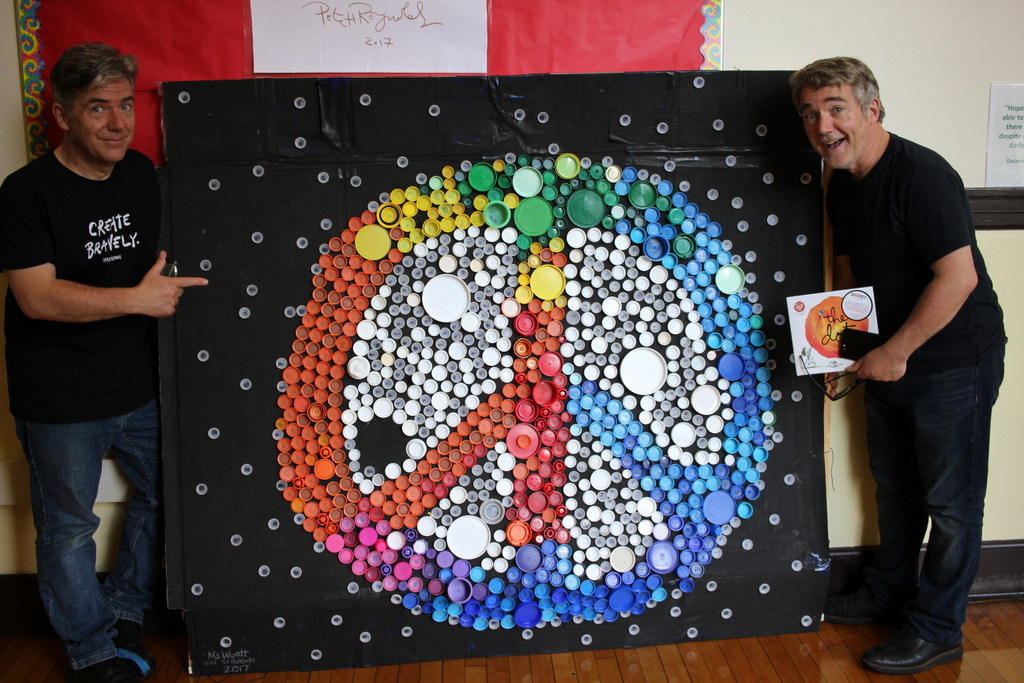
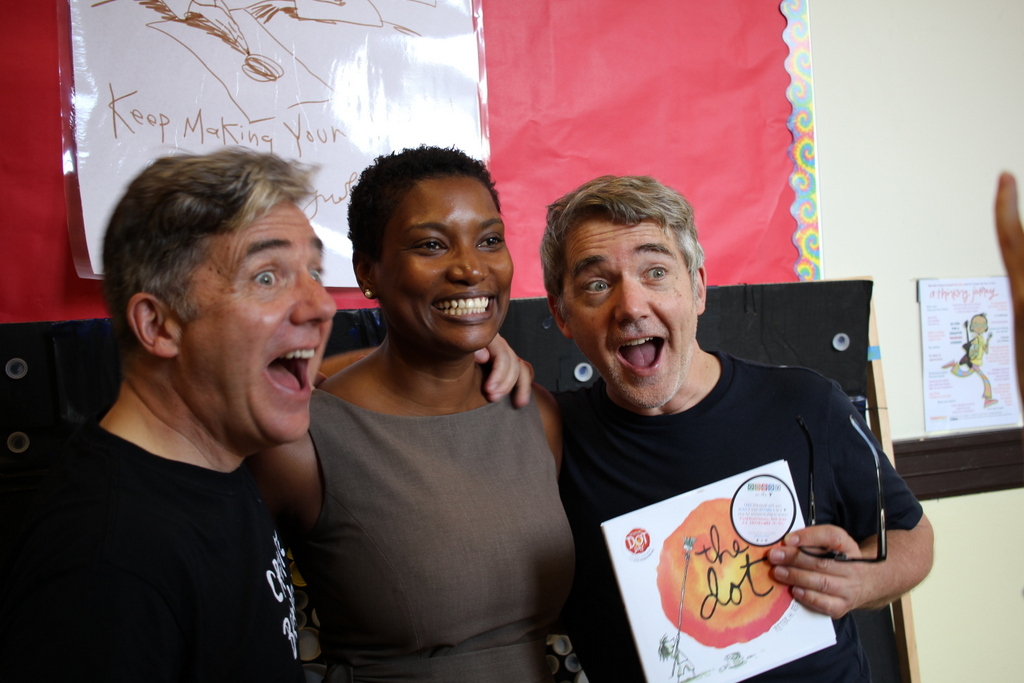
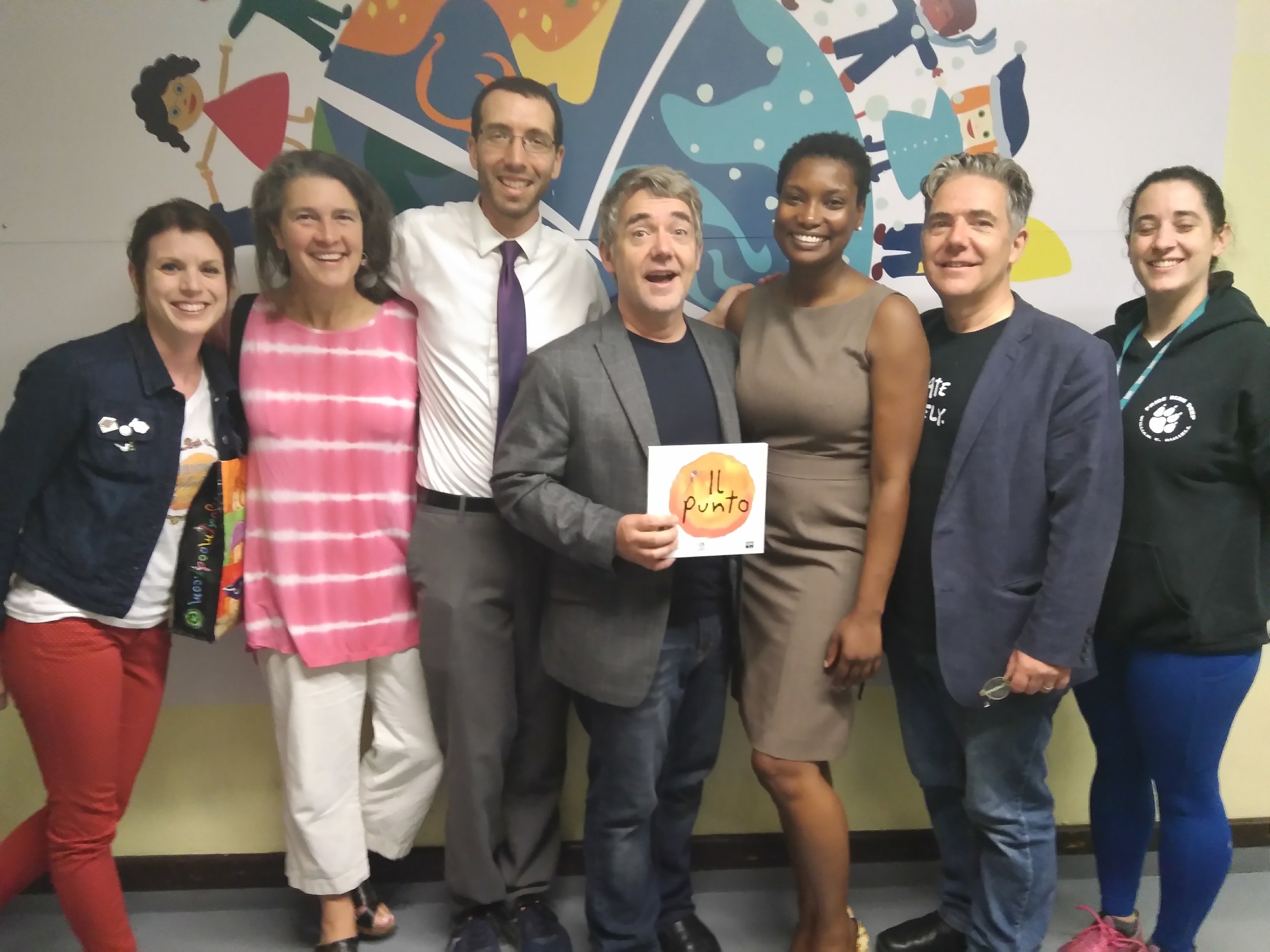
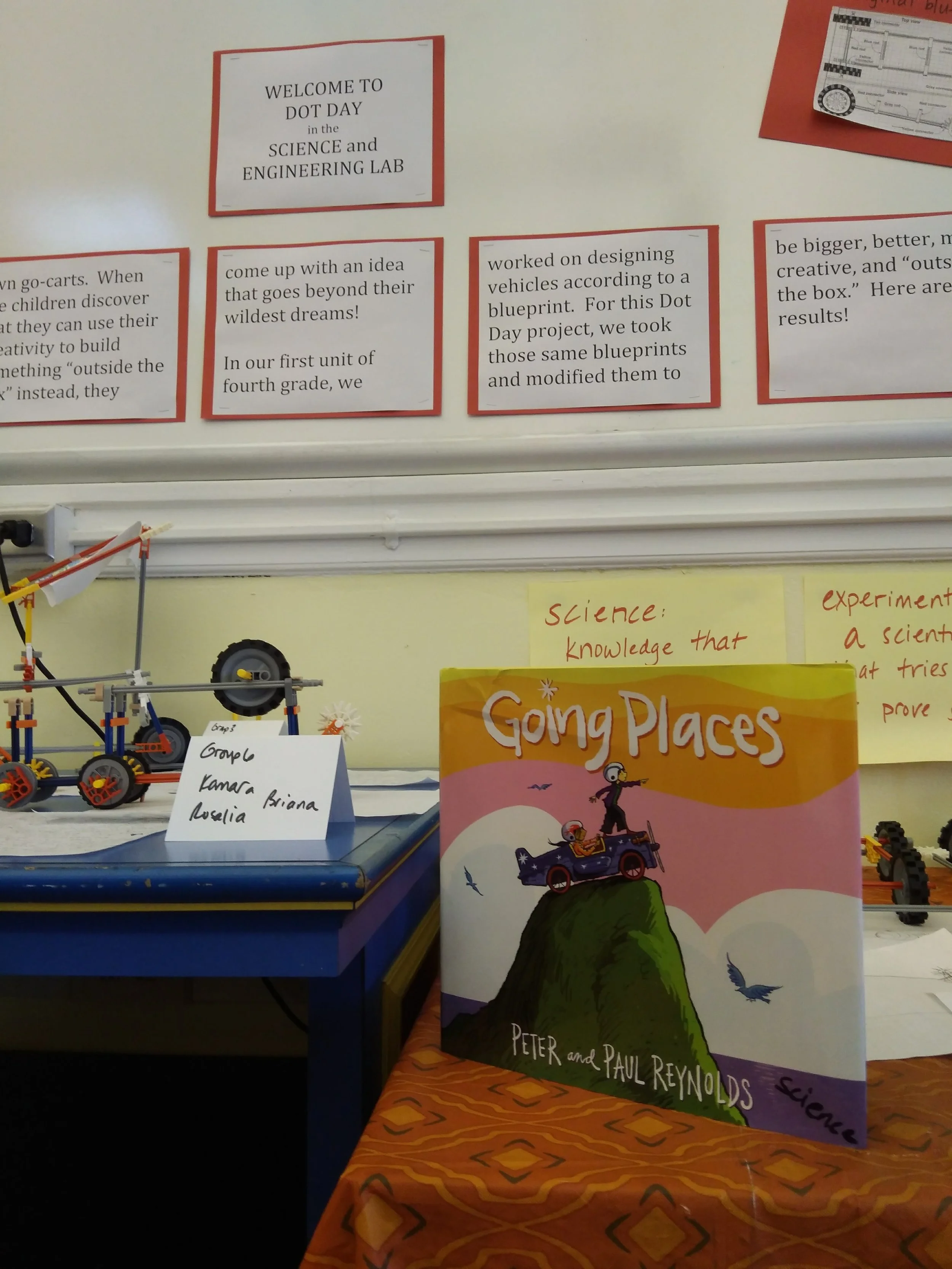
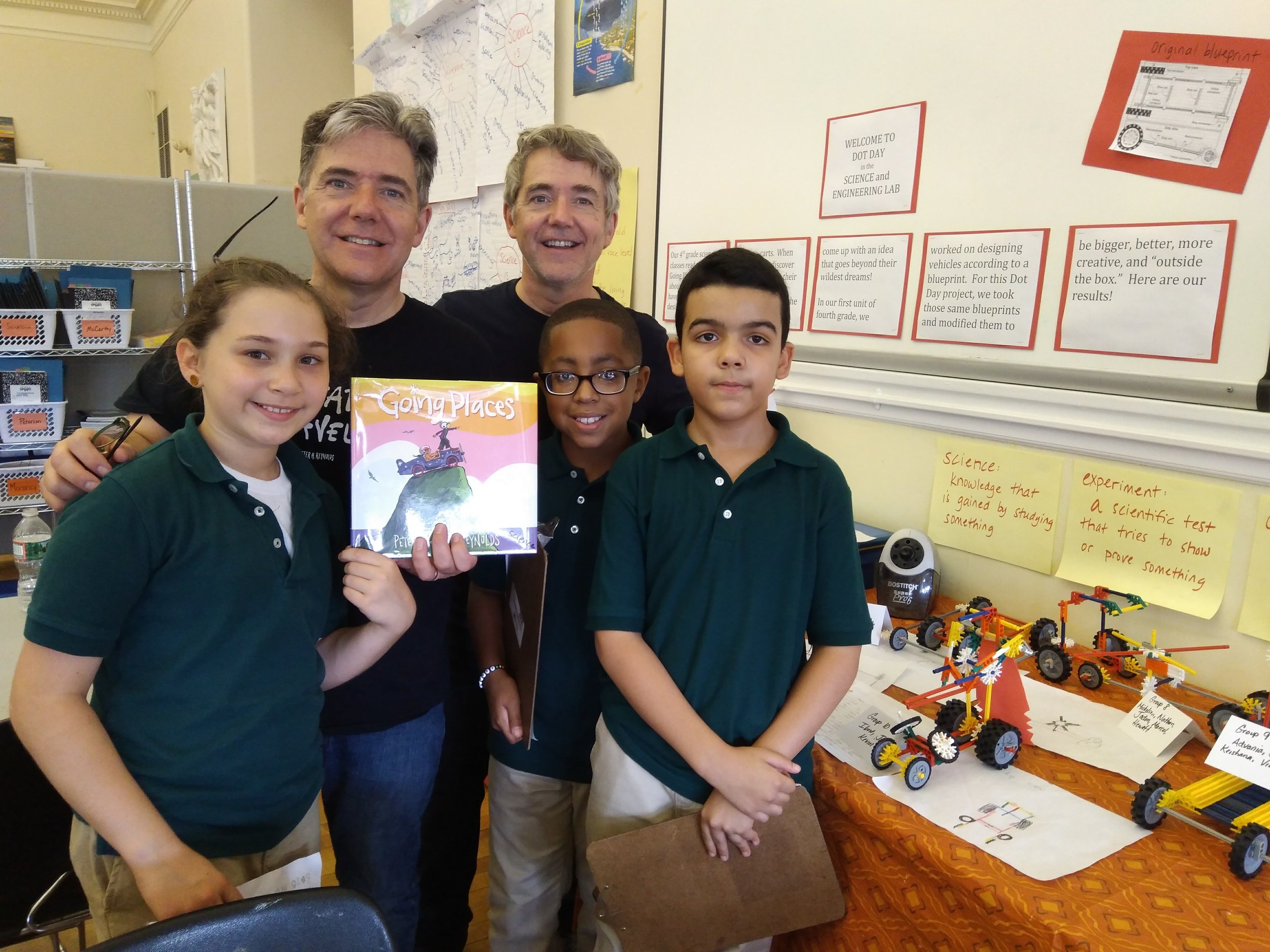
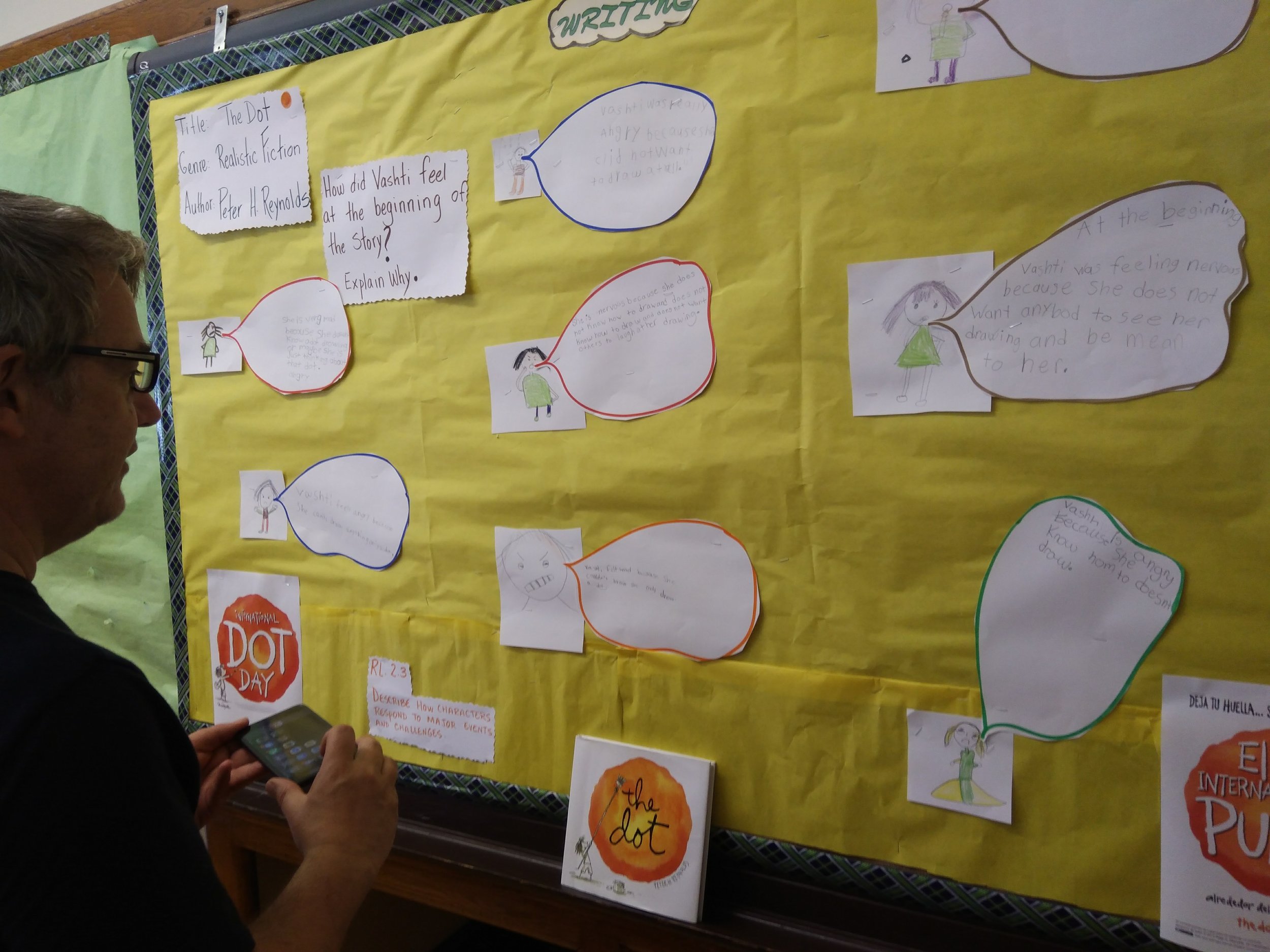
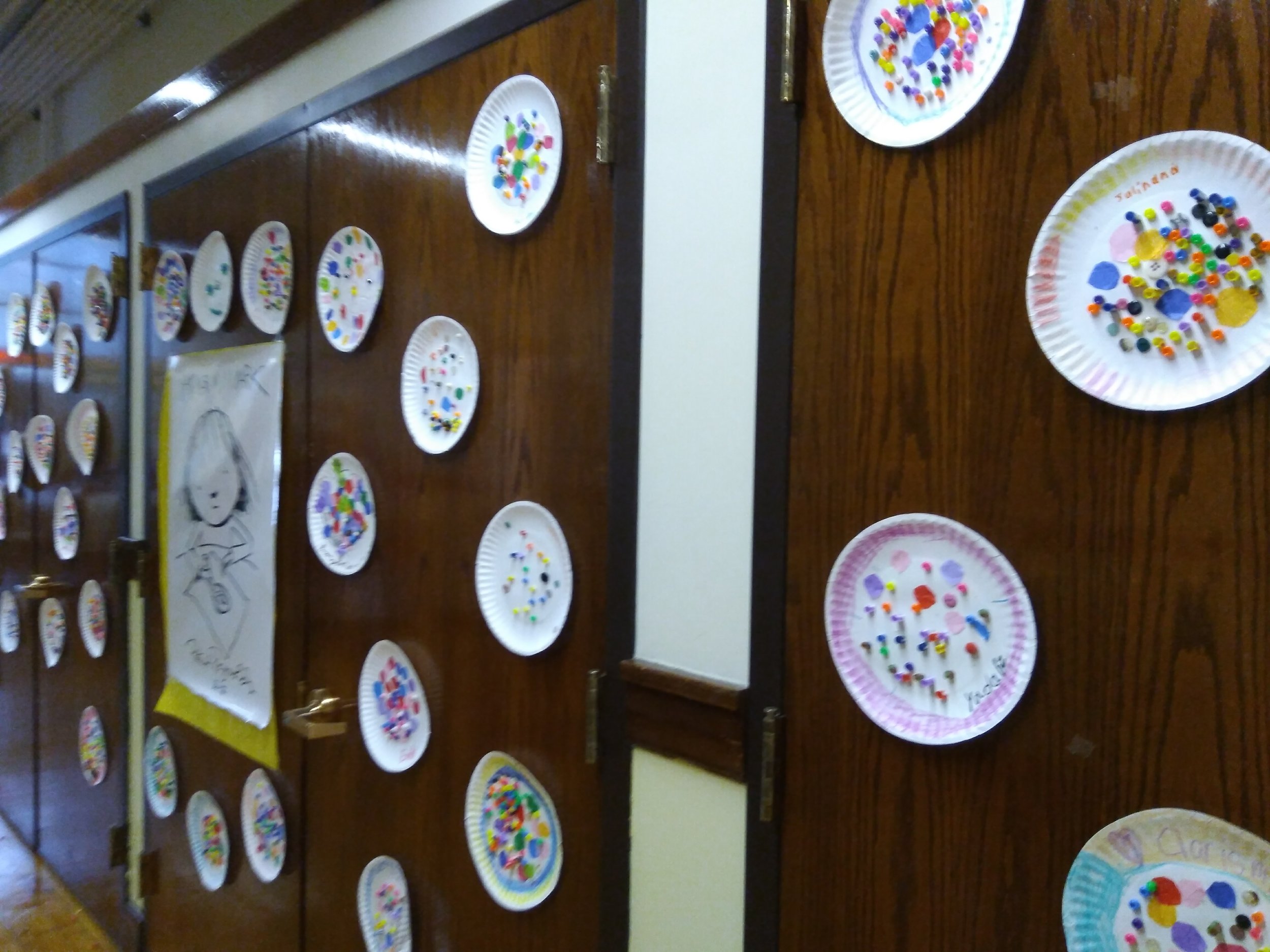
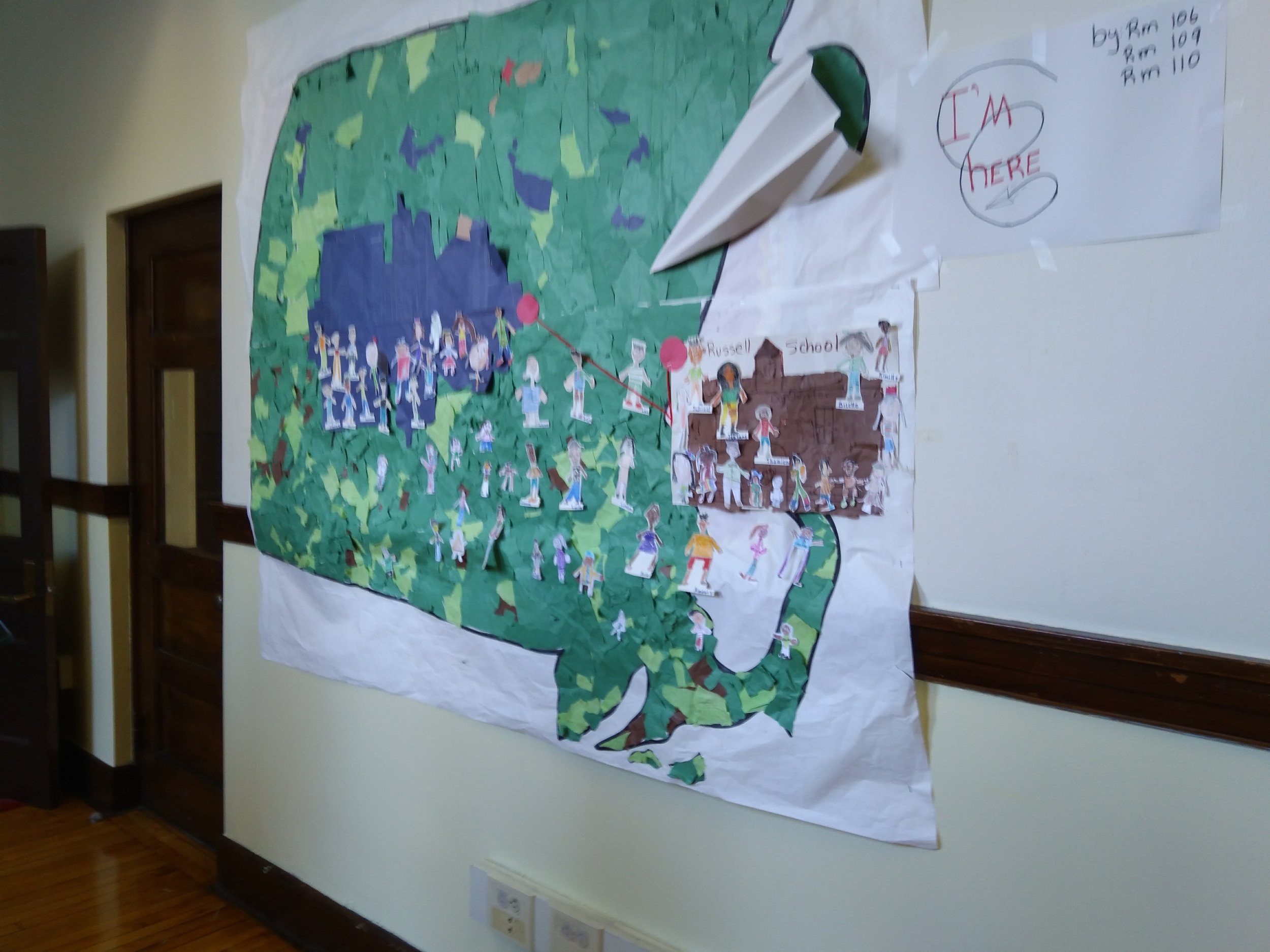
Paul and Peter H. Reynolds joined the students at the Russell Elementary School for an amazing Dot Day Celebration. Here are a few of the highlights:


Mapping the World by Heart on Dot Day

There are 169 countries celebrating International Dot Day on September 15 — but where in the world are they all? One way to connect the dots this Dot Day is to map out the world from memory using David Smith's Mapping the World by Heart, paying special attention to the celebrating 169 countries!
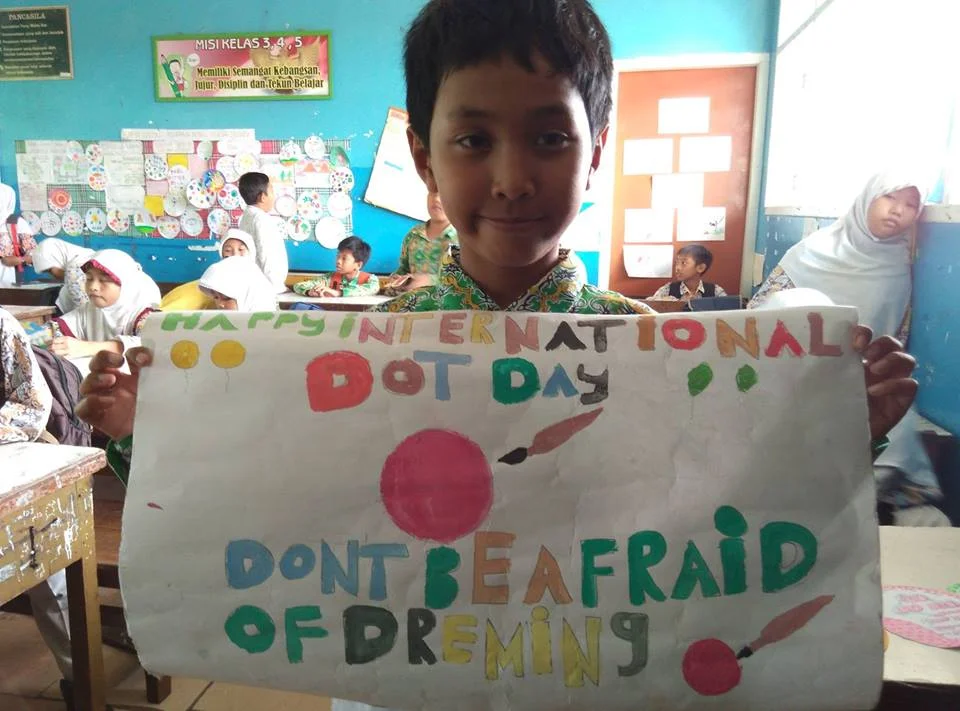


To get you started on your International Dot Day mapping journey, here are 50 of the countries celebrating this year. Feel free to keep going and map the whole world though!
Can you map:
- Algeria
- Australia
- Bahrain
- Brazil
- Cambodia
- Canada
- China
- Democratic Republic of Congo
- Dominican Republic
- Egypt
- El Salvador
- Fiji
- France
- Germany
- Ghana
- Honduras
- Hungary
- India
- Iraq
- Ireland
- Israel
- Italy
- Jamaica
- Japan
- Kenya
- South Korea
- Laos
- Lebanon
- Libya
- Malaysia
- Mexico
- Morocco
- Netherlands
- New Zealand
- Norway
- Oman
- Pakistan
- Poland
- Qatar
- Russia
- Rwanda
- Saudi Arabia
- Spain
- Thailand
- Turkey
- United Kingdom
- United States of America
- Venezuela
- Vietnam
- Zambia

The award-winning curriculum is the creation of David J. Smith, a teacher with over 25 years' experience in the middle school classroom. Mapping the World by Heart is an innovative geography curriculum designed to inspire students to study - and love - geography. Through a combination of memorization and the real use of knowledge, practice, mnemonics, large and small group activities, and games, Mapping the World by Heart helps students thoroughly understand essential world geography.
Still want to learn more about exploring geography and joining the International Dot Day festivities? Click here to learn more about Mapping the World by Heart and click here to register for International Dot Day on September 15-ish!