

FableVision Learning Spotlight Blog
Categories
- Animation-ish 42
- Books 21
- Civics! 2
- Classroom Spotlight 17
- Conferences and Events 20
- Creative Educator 3
- Creativity 25
- Distance Learning 13
- Dot Day 22
- FabClassroom 28
- FabFriday 19
- FabMaker Studio 66
- FabMaker Studio Classroom 13
- FableFive 7
- FableVision Games 3
- Free Educator Resources 36
- HUTCH 1
- Home Activities 5
- In the Classroom 34
- In the News 11
- International Dot Day 23
- Ish 1
- Library 1
- Mapping the World by Heart 7
- Paul Reynolds 10
- Peter H. Reynolds 54
- Professional Development 9
- STEM/STEAM 20
- Storybook Academy 2
- Teacher Spotlight 14
- The Dot 17
- The North Star 2
- Words and Their Stories 1
- Zoombinis 3

Highlights from the #DotDay #FableLearnChat
On Sept. 7, 2017 #DotDay educators and fans gathered for the first #FableLearnChat hosted by John Long, Technology Program Specialist at School District of Palm Beach County, and Terry Shay, Dot Day Founder and music teacher at North Tama High School in Iowa. Didn't make it to the chat? Not a problem! Follow the feed on twitter: #FableLearnChat. Here are a few of the highlights.

Peter H. Reynolds and The Dot Rolls Into Dorchester on Sept. 15
On Friday, Sept. 15, millions of people in 169 countries will celebrate International Dot Day, and among them will be students and faculty members at William E. Russell Elementary School in Dorchester, Massachusetts — a historic neighborhood of Boston known locally as “Dot.”
Inspired by Peter H. Reynolds’s acclaimed picture book The Dot, in 2009 Iowa educator Terry Shay and his students decided to celebrate creativity and courage on Sept. 15. The Dot is the heartwarming story of a perceptive and caring teacher and a reluctant student who thinks she can’t draw. Vashti’s teacher encourages her to trust in her own abilities and be brave enough to “just make a mark and see where it takes you.”
Exploring the themes of creativity, bravery, and self-expression, The Dot has been translated into many languages, including Portuguese, Chinese, Korean, French, Spanish, and even braille. Since International Dot Day’s founding, over 9.5 million educators, schoolchildren, celebrities, and everyday readers have spread Reynolds’s message by creating their own dots and sharing them via Pinterest, Twitter, and classroom walls, among other outlets.
This year, Reynolds himself will celebrate Dot Day at Russell Elementary School with 375 students in kindergarten through fifth grade.
“Picture books can change lives, and The Dot is doing it around the world with children and adults who are being encouraged to make their mark. We’re proud to be able to take care of these awesome students right here in our own backyard,” said Karen Lotz, president of Candlewick Press, the publisher of The Dot.
Reynolds is expected to be joined by Boston Public Schools Superintendent of Schools, Tommy Chang. The guests will tour the school and enjoy presentations of the students’ work.
"We are very grateful for the gift of literacy, which Peter is providing to our students," said Russell Elementary Principal Tamara Blake-Canty. "We are incredibly proud of the rigorous academic scholarship we pursue at the Russell, and celebrating International Dot Day here not only gives us another occasion to highlight our students’ pursuits, it also fuels our teachers’ and students’ ingenuity to reach further heights."
Reynolds says he is especially pleased to be sharing his message in Dorchester, Boston’s largest neighborhood, often locally referred to as “Dot.”
“I like to choose a significant physical location to celebrate Dot Day each year,” Reynolds explains. “Besides, its an awesome nickname. Dorchester is just minutes from my educational media studio based in Boston’s Innovation District, where I hope Russell Elementary School students will one day be using their creativity to make their mark as innovators in tomorrow’s workforce.”
The Dot Day Celebration Continues

Where: at the Blue Bunny Bookstore in Dedham, Massachusetts
When: 10 a.m.- 6 p.m.
Children and adults can stop by to create their own DOTS! (Paper and art supplies provided)
Enter to win a Dot Day basket, drawing at 6 p.m. – you do not have to be present to win!
The first 50 people who purchase The Dot book get an art supply goody bag.
Dot cookies by Ginger Betty and Dot Chocolate will be available for sale.
Peter H. Reynolds joins the festivities in the afternoon.
Make Your Mark
#DotDay is right around the diameter (because dots don’t have corners). Sept. 15th is the day to celebrate. If you haven’t done so yet, register, and join the growing community and share your mark using #MakeYourMark and #DotDay!
Travel around the World on Dot Day
This blog post was written by Adrienne Poon, FableVision Learning Marketing Intern.

One of the best things about International Dot Day is just how international it truly is! Over 9 million people across 169 different countries have already registered their Dot Day participation, making it a truly global celebration of creativity, courage, and collaboration. In the spirit of this global International Dot Day community, here’s a sampling of ideas from around the world for how to #MakeYourMark.
Nepal
To kick off this International Dot Day tour, here’s a video of a small group of Nepalese students wishing you a happy Dot Day on the International Dot Day Facebook page!
United Kingdom
Dot Day love is palpable. Our friends in England at the Lammas Independent School know how to celebrate.
International @DotClubConnect #DotDay2017 in England! pic.twitter.com/l9EbQmblIu
— Lammas Indep School (@LammasSchool) September 15, 2017
Poland
Now take a look at one of the most dot-happy countries in the world! Poland absolutely loves International Dot Day - there is an entire Polish blog dedicated to Dot Day, which includes a very populated map of Polish schools participating in Dot Day this year. These photos are from a school in Studzionka, which celebrated with painted dots, Quiver dots, and even dotty photoshoots! Poland even has their own Dot Day song, with an impressive accordion cover by Michał Sawicki.
Denmark
Students in Denmark also celebrated Dot Day, creating vibrant dots in all colors, sizes, and mediums with their art teacher Tatjana Knudsen.

Lithuania
In nearby Lithuania, Kedainiai special school students celebrated Dot Day last year by creating dots with markers, collage, and more!
Canada
Not be outdone on the other side of the Atlantic, the Summerside Rotary Library of Prince Edward Island is preparing a special 2017 Dot Day Family Storytime and is inviting every visitor to make their mark through stories, drawings, and a community painting!

Puerto Rico
Further south, students at the Academia San Jorge in Puerto Rico celebrated Dot Day in their computers class. This video not only shows off the students’ drawn dots, but it also includes photographs they took related to dots!
Dominican Republic
In Santo Domingo, Pekepolis EduPark hosted a Dot Day bonanza with artists, a storytime, and a medley of dot-making materials available for everyone to make their mark!

Italy
Back in Europe at Atelierstorytime’s school in Milan, students celebrated Dot Day with fun activities that also reinforced their English language skills through learning numbers, sizes, colors, and action verbs! This year, they will be celebrating Dot Day again with a storytime and workshop.
Spain
Teacher and pedagogical advisor Jenny Silvente painted dots in Spain - but not with paintbrushes. Instead, she used spin painting and elbow grease!

Invited by Jenny Silvente to participate in Dot Day and also located in Spain, promoter of play Yessica used many tiny bead dots to make a single big dot in yet another creative example of how to make your mark!

Malaysia
Across an entire continent over in Malaysia, Tadika Impian Kita had a wonderful Dot Day celebration full of classroom activities - and they uploaded video to share with all of you!
Indonesia
Last but not least, from the jungles of Borneo, here's a video of a large group of creative students wishing everyone a happy International Dot Day!
Ready to join in on the international fun? If you haven’t already, register at The Dot Club and share your mark across social media with #MakeYourMark and #DotDay. Stay connected on twitter @DotClubConnect and Facebook!
13 Days and 13 Ways to Celebrate Dot Day
Join million students, teachers, and librarians this International Dot Day, celebrating creativity and courage in 186 countries on or around September 15th-ish! To support your International Dot Day festivities, we assembled this handy list of 15 ways in 15 days to celebrate Dot Day.
1) Discover The Dot
Read The Dot by Peter H. Reynolds to see where all of this started - you can grab a copy over at The Dot Central.
2) Register Your Class
Join the growing community celebrating International Dot Day by registering over at The Dot Club! You can also download our FREE Educator’s Handbook for Dot Day, which features student handouts by Peter H. Reynolds and Dot Day activities by creative educators.
3) Get Inspired by the First Dot Day Class
Learn what Dot Day means to the students of the first class to ever participate in Dot Day, straight from the students themselves. In this video, seniors from Traer, Iowa, who first celebrated Dot Day as fourth graders in 2009, reflect on the history and growth of this creativity movement.
4) Check Out Celebri-dots
Head over to the Celebri-dots website to check out dots created by a variety of individuals, from authors and illustrators to actors and astronauts! Packed with dots from all walks of life - paint dots, pie dots, and even Earth dots - you’ll be sure to find inspiration there.

5) Dot Day Song
Listen, sing, and move to "The Dot Song" with kidlit singer/songwriter Emily Arrow!
6) Gear Up
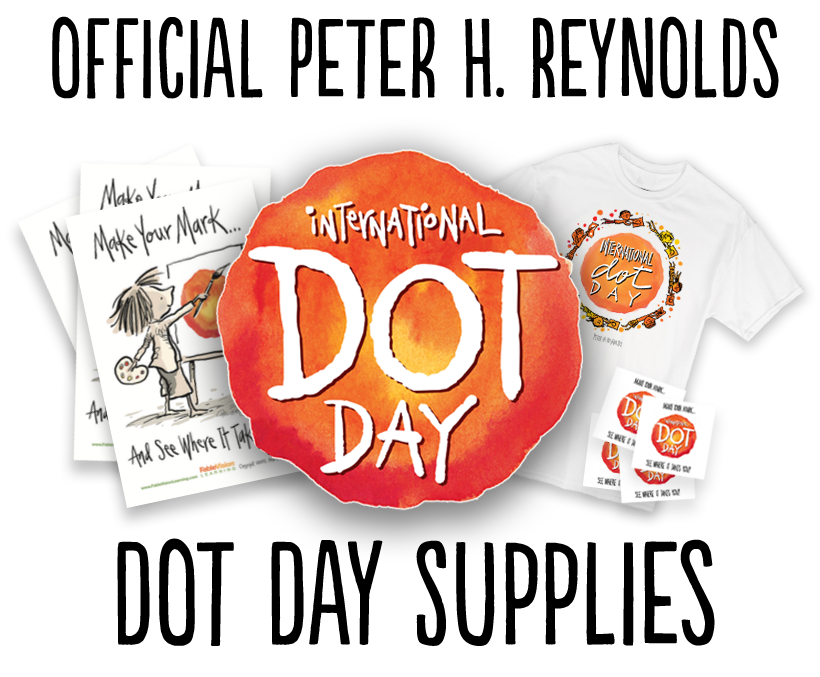
Stock up on official International Dot Day gear by visiting The Dot Central for materials such as an autographed copy of The Dot by Peter H. Reynolds, sticker packs, t-shirts, and posters! If you want even more Dot Day gear, you can also download free multi-language Dot Day posters.
7) Poke Around Pinterest
Still don’t have enough dots in your day for Dot Day? Visit our International Dot Day Pinterest board to see how others celebrate Dot Day with activities, resources, and more!
8) Download Quiver
Quiver brings your 2D art to life through 3D augmented reality so you can interact with your Dot Day artwork in exciting new ways! Download the free Quiver - 3D Coloring App and print out this template to get started.
9) Connect the Dots with Other Teachers
Looking to "connect the dots" with other classrooms nationally and internationally on Dot Day? Whether it's through email or web-based video connection, use the Dot Day Google Doc to make connections. Thanks to creative librarian/educators Shannon McClintock Miller @shannonmmiller, Andy Plemmons @plemmonsa, and Matthew Winner @matthewwinner for overseeing this effort!
10) Fabricate Your Dot
Fab@School Maker Studio is a perfect tool for cultivating your inventive spirit! With this paper prototyping and fabrication software, flex your design muscles and create 2D, Pop-up, and 3D paper models inspired by The Dot. It’s easy to get your design mind rolling when you start small - you can always try again and again! Try fabricating dots that fold, roll, spin, or transform!
11) Make Your Mark Move
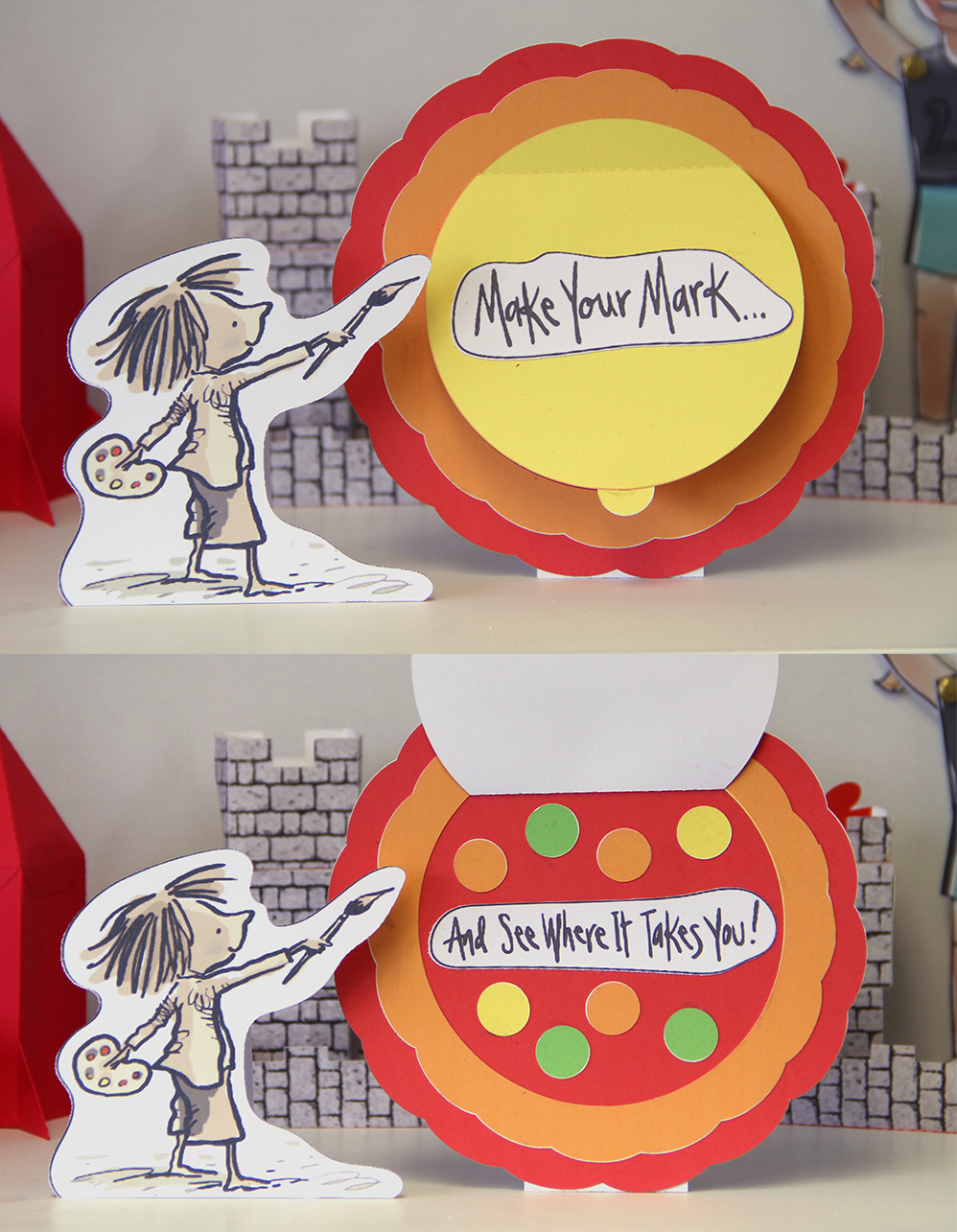
With Animation-ish it’s never been easier to bring your drawings to life. Three distinct levels let you practice and animation motion techniques by making your dots roll, bounce, squish, grow, morph, and much more. What can your dots do? Just make your mark and see where it take you!
12) Find Your Ramon
Just like Vashti’s teacher encouraged her to “make her mark,” Vashti later used what she learned to encourage Ramon to make his own mark. Now’s your chance - go out and find your Ramon and encourage them to make their mark too!
13) Share Your Mark
Share your mark and connect with the International Dot Day community through social media! There are over 8 million individuals from 168 countries participating in International Dot Day, so make sure to share your mark with all of them across social media with #MakeYourMark and with the official Dot Club Twitter feed @DotClubConnect!

Sydney & Simon Blast Off in Their Latest Adventure: To The Moon!

They’ve used STEAM-thinking to save Greenie, revive flowers for the art show, and now Sydney & Simon are embarking on their next adventure that is truly out of this world.
In To The Moon, the twin mice flex their creative and collaborative muscles to create a STEAM-inspired project about the Earth’s Moon, all for a chance to meet astronaut Kris Kornfield!
To The Moon is the third installment in the STEAM-powered Sydney & Simon series, which includes Full Steam Ahead and Go Green, written by real-life twins Peter H. and Paul Reynolds. To The Moon is available now from Peter H. Reynolds’ own book store, The Blue Bunny Books & Toys.
To celebrate the book’s release, we put on our own STEAM-powered hats to develop a few activities for our paper prototyping and fabrication tool, Fab@School Maker Studio:
Inspired by Simon’s moon-matching game, you can test your skills with the Fab@School Maker Studio 2D Moon Phase Puzzle. Try adding an extra challenge by filling in each Moon phase name yourself!
Join Kris Kornfeild on her mission and blast off with an animated Rocket Launch pop-up that slides up and down!
Or cruise through space with the Rocket Flight Path pop-up. Try making new tracks for the rocket to trace for an extra creative challenge!
Finally, test your FAB skills with the 3D Rocket Ship. Can you change the shape or size of the design? Can you put yourself and Commander Kris Kornfield inside the rocket?
The FableVision Learning team is excited to see what your students are fabricating, animating, and writing! Share your Moon-inspired Fab@School Maker Studio creations by emailing Patrick@FableVisionLearning.com. You may even get the chance to be featured in a future blog post!
But wait! Did you know that our Moon is going to pass directly between the Earth and the Sun on Monday, Aug. 21, 2017? This solar eclipse is a very rare event, and a great opportunity to use STEAM to learn and teach others about our position in the solar system. Check out NASA’s Solar Eclipse resource here.

FABClassroom: Sir Charles Tupper School in Nova Scotia

The following FABClassroom post was written by Laura Kennedy, a third-grade teacher at the Sir Charles Tupper School in Halifax, Nova Scotia. From geometry to storytelling, she says that Fab@School Maker Studio has become a game-changer in her classroom.
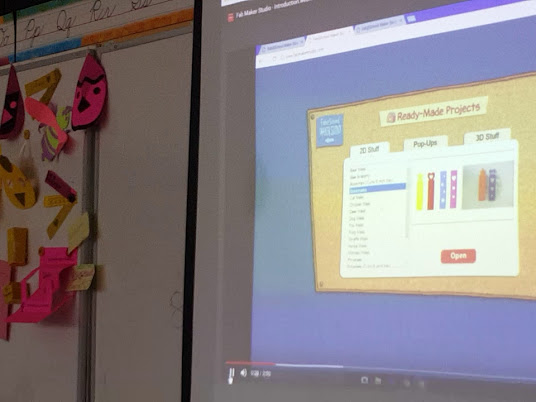
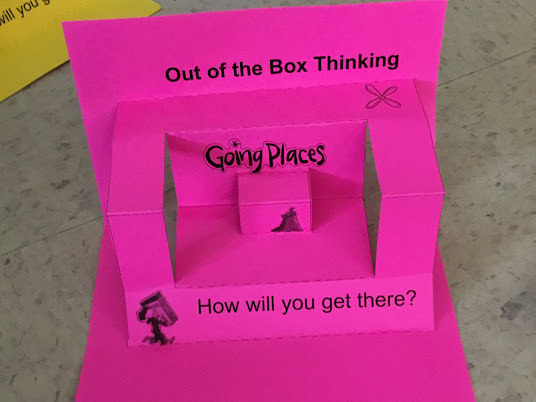
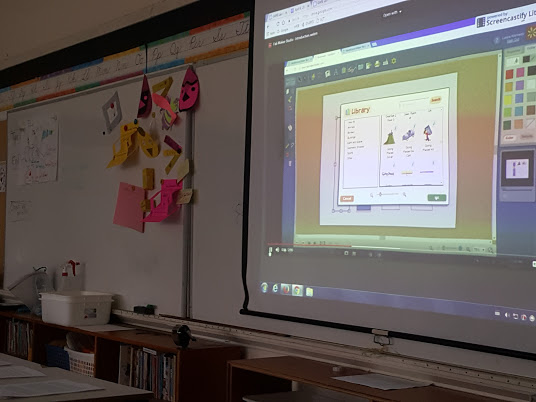
Fab@School Maker Studio is a hit in our class! I fiddled and tinkered with it a bit before showing it to my class and appreciated the “Ready-to-Go” options. I was intrigued and brave enough to tackle the automaton.
The students were all eyes when I showed them what I made. What I didn’t know at the time was that the quietest of all the students in class was making mental notes of the design. She came to class the next day with a close replica of the automaton to share with the class. Not only was the feat of making one without the specific outline and instruction page incredible, even more so was that she asked to present it to the class. Being shyer than others she stepped out of her comfort zone and stood in the spotlight. She was beginning to find her voice and it was the act of creating and feeling proud of her accomplishment that helped her on her way.
In this way, Fab@School Maker Studio was more than a fun way to represent ideas, it became a game changer.
After attending the one-day FabMakerSummit in Boston, I was even more excited to share ideas with the class in creating, imagining and dreaming.
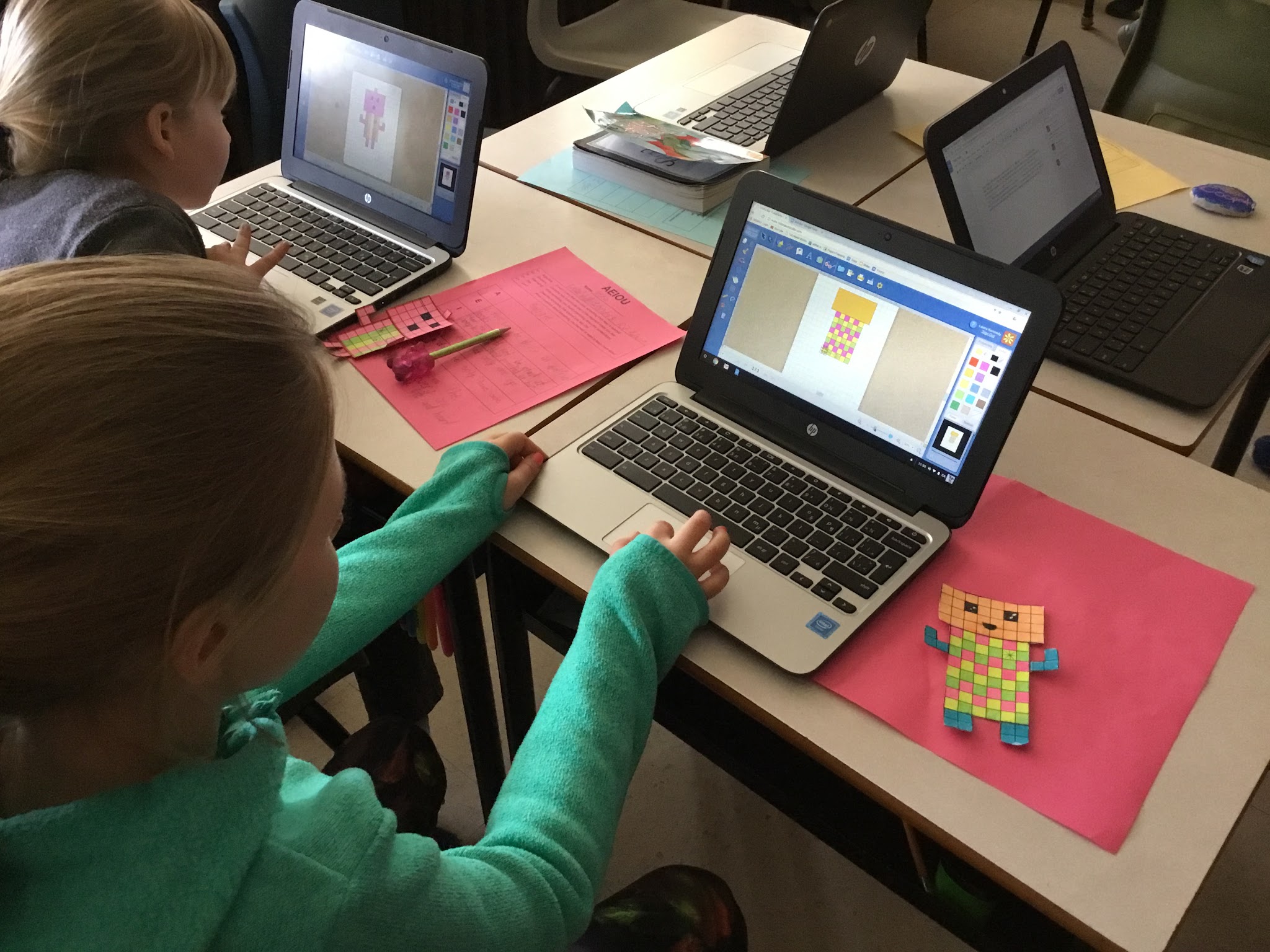
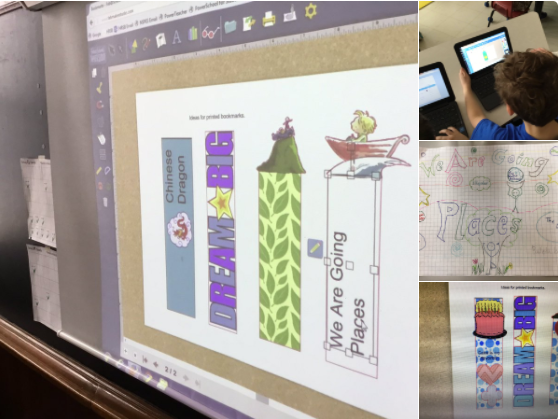
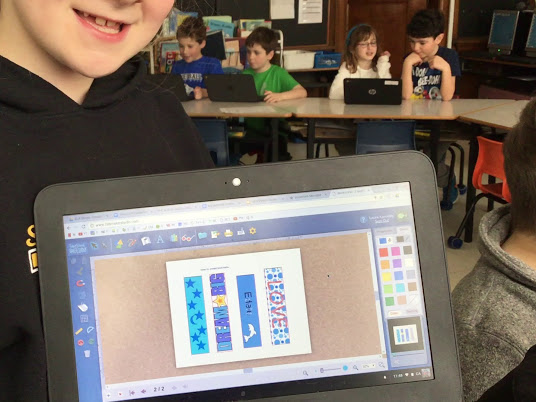
Beginning with customizing bookmarks, students became familiar with the different elements to choose. What was most interesting in this case was not the instant communication and collaboration of ideas and peer helping but how another particular student rose to the occasion. This student usually requires various supports in the classroom. In this case though, the student independently worked diligently changing the color, texture and adding stamps. Each new element was proudly displayed and shared with others. Bookmarks might have been the task but confidence was the result.
After I learned more about the different elements such as welding shapes and the 3-D viewer, I showed the class who picked up on these skills quickly. I remember mentioning how even how the teachers at the summit worked as a group to problem solve how to unweld shapes. To my surprise, in the time it took to share the story, the student next to me had figured it out and had an example to show our class.
It was the natural discussions that were heard as the students were engaged in creating and learning on the go. We took this a step further and share our items with our Learning Buddy class of grade 1 students. The grade 3-4 students became the teachers when they took the younger students through the process of customizing their own bookmarks.
Connecting the Fab@School to geometry outcomes, students created 2-D shapes. They were modeled after our “Perimi-bot’ robots. Using multiple ways to demonstrate their knowledge benefits student learning and development of their ideas. Since Fab@School has a built in ‘intrigue’ factor, students are drawn to the program and spend productive time creating items. Storytelling to poetry to nonfiction facts of their design process add another element that expands the learning.
Is your classroom a FabClassroom? We would love to feature your school in an blog post! To be featured in an upcoming post, send an email to info@fablevisionlearning.com. You can also tweet your photos with the hashtag #FabMakerStudio! For more posts featuring Fab@School Maker Studio, click here.

FABClassroom: Tiny House Revolution at Stem Launch K-8

The sixth graders at Stem Launch K-8 in Thornton, Colorado started a revolution - a Tiny House Revolution. Every year, students engage in a Problem-Based Learning (PBL) model and are motivated by inquiry-based, hands-on learning.

Best Model-Group 22 Ms. York
Katherine Klaver, STEM coordinator at the school explained that the students, "are immersed in authentic problem solving and they present their learning to expert panels made up of community experts multiple times throughout the year. "
This year, about 170 sixth graders used Fab@School Maker Studio to tackle the Tiny House Challenge. We asked Katherine to share a bit more about the program and how the school is applying the digital design and fabrication software into their curriculum.
Can you share a bit about the Tiny House Revolution and the Sixth Grade Math PBL Panel?
Our sixth graders’ math PBL was called, "Living Small: The Tiny House Revolution." Check out the link to the site, here. Students were asked to consider the following
Context: The cost of housing is skyrocketing. This is causing people to lose their homes or not able to afford them in the first place. There is currently an affordable housing shortage in the Denver Metro area and alternative solutions are necessary.
Problem: How do you create housing that is both affordable and sustainable for a family of four using the specific parameters of the tiny house model (250-1,000 square feet)?
Task: Students will design a tiny home that is cost effective, energy efficient, and can fit a family of 4.
This PBL was rooted in math. Here are some of the standards that were taught:
Geometry plays a role in our everyday life.
Mathematical models can be used to solve real-life problems.
Students are able to reason about relationships among shapes to determine area, surface area, and volume.
At the end of March, we brought 170 sixth graders to the Denver Home Show. Deek Diedricksen from HGTV's Tiny House Builders talked to us and we got to tour about 12 tiny houses.
The kids researched the current housing situation in the Denver Metro area and the need for more affordable options. They utilized their math skills to create tiny house designs that they then created in Fab@School and used the fabricator. Students also build physical models.


Can you share an “aha moment” working with your students Fab@School?
I think the best way for me to answer this question is with some direct quotes from sixth grade students!
"FabMaker Studio is easy to use and understand. It's one of the best websites I've used for 3D printing! I love how if I needed a shape I could just grab it and move it. TinkerCad is too sensitive for me." ~Logan S.
"It's easy to see and to run this program. I love how you could see what it would look like before you folded it." ~Dejanae W.
"This program helped us figure out the measurements and we determined how to scale it down by a third. We really liked the visual that the program gave us." ~Eric D.
"I love the magnet tool. It really helped us construct our physical model." ~Jeff D.
Is your classroom a FabClassroom? We would love to feature your school in an blog post! To be featured in an upcoming post, send an email to info@fablevisionlearning.com. You can also tweet your photos with the hashtag #FabMakerStudio! For more posts featuring Fab@School Maker Studio, click here.
FableFive with Matthew Beyranevand, K-12 Mathematics & Science Department Coordinator at Chelmsford Public Schools, MA

Dr. Matthew Beyranevand is the K-12 Mathematics and Science Department Coordinator for the Chelmsford Public Schools in Massachusetts
Matthew is an ambassador for the Global Math Project, supporter for the With Math I Can campaign, and a member of the Massachusetts STEM Advisory Council. He also serves as an adjunct professor of mathematics and education at the University of Massachusetts at Lowell and Fitchburg State University.

Through his website, mathwithmatthew.com, he provides visitors with his podcast, blog, math music videos, and more resources to help increase students’ interest and engagement in the learning of mathematics while building conceptual understanding.
FableVision Studio's Shelby Marshall was a guest on Matthew's podcast, Math With Matthew. Where he shared how the power of technology can enhance and support math education by developing mathematical thinking through concrete modeling, problem-solving, simulations, fluency through scaffolded practice, and applying understanding in real-world situations. Give a listen!

Matthew has been featured on WBZ news WBUR radio and the news magazine Chronicle. Finally, Matthew's first book Teach Math Like This, Not Like That: Four Critical Areas to Improve Student Learning will be published in July through Rowan & Littlefield.
Matthew recently chatted with FableVision Learning about his creative work in the classroom.
You work with students to create music videos about Math, how did this whole idea begin?
I started my own public access television show in Chelmsford five years ago to help inform the parents and community about all the wonderful things related to mathematics in the district. It was mostly interviews with teachers and students but after some time, we began to get creative and started making comedy skits and then music videos about math topics based on popular songs.
What is the process for creating the videos?
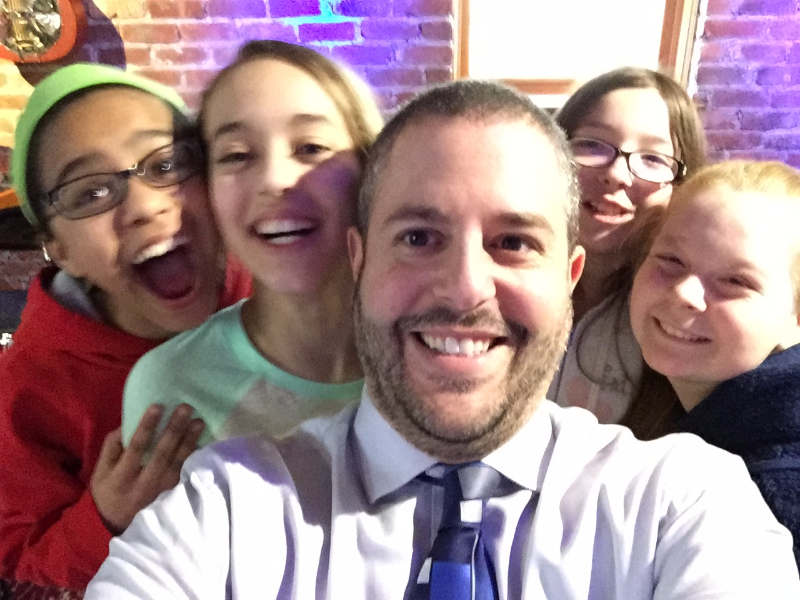
It is a collaborative effort of students, teachers, administrators, and the local public access television station, Chelmsford Telemedia. Each video takes about three months to put together. It begins with brainstorming sessions with students and teachers for the song and topic for the video. Next, we write the lyrics and record the song in a studio that one of my high school math teachers works at. Then the fun begins with making the music video. Many students participate in the shoot both on and off camera as it is a great learning experience. The final part is the video editing which takes place as part of a course at the High School with students.
Can you share some highlights from working on these videos?
Here is a sizzle reel of all the different music videos (at left) that we have done together. My favorite video to date is “Girls are all about that math” as it shares a very important message about the importance of girls entering the STEM field. Also, my nine-year-old daughter, who is an aspiring mathematician, helped write the lyrics for the song. The most popular song that we have done is “What is the value of Pi?” with almost 100,000 YouTube views.
What is your professional mission within math education?
I am working to help increase students conceptual understanding of mathematics, while learning in a joyful and engaging manner. Within the STEM field, the science, technology and engineering, students authentically enjoy learning. Mathematics is the ugly step sister that students are forced to take but rarely enjoy. We need to work to help increase students interest in math.
Did you have anything like this when you were in school that inspired you to do work like this?
Unfortunately, I did not and I did not have a wonderful experience learning math in school. I was very good at it but frequently bored and uninterested. Using the music videos as well as many other ideas, we can change this.
FableFive: David Smith, creator of Mapping the World by Heart

“When our children leave our classrooms, we need to make sure they have a sense of their own community, and also an appreciation of everyone else's,” explains David Smith, creator of Mapping the World By Heart.

His award-winning geography curriculum gives students a means to picture the world beyond shapes on a page. Mapping the World by Heart provides a way to bring the world closer, because we can’t all travel the globe, but we can take steps to learn more about it.
David was a classroom teacher with over 25 years' experience teaching English, geography, and social studies in grades 4-12 and used that experience of teaching 7th graders to draw maps of the entire world from memory, to create his highly successful curriculum, Mapping the World by Heart.
When it was first released, Mapping the World by Heart was awarded the “Breaking the Mold,” by the U.S. Department of Education and to match the ever-changing world, David has revised the curriculum nine times since.
David is a full-time consultant, providing lectures and workshops on geography and global issues, and on IT issues, to teachers, parents, student groups, and others in the United States, Europe, Africa, South America, Australia, and Asia.
For this FableFive post, we connected with David to learn more about Mapping the World By Heart and the stories from the journey.


How did you connect the dots with FableVision Learning?
When Mapping the World By Heart was first published in 1992 by Tom Snyder Productions, Peter Reynolds did the illustrations and we became friends; when Tom Snyder was bought by Scholastic and MTWBH needed a new publisher, I called Peter (H. Reynolds) and he jumped at the chance to publish it. He’s done some new illustrations, and helped with all the prepress issues.
Can you share the story behind the creation and development of Mapping the World by Heart?

My grade 7 students in Cambridge, MA were sadly unaware of world geography, or even local geography. I didn’t want to send them onto their next teachers without helping them master at least some human geography and locations.
You speak regularly at schools in the US and Canada, can you share a few highlights from these visits?
I’m always happy when kids know my books, and have questions about them – and some of the questions are very common, such as “where did you get the idea for…” or “do you have to revise often”, but some questions can be surprising; “do the details about children living in hunger make you sad”, “how many countries have you visited”, and sometimes “how old are you."


Where do you see Mapping the World by Heart’s place in the classroom?
I don’t see it as necessarily the central activity for a classroom for the year, but as a very useful tool. If a class is studying US or Canadian history, or Asian languages or cultures, or European history, then mapping that region by heart can be useful for so much of what students will learn – the thing that is easy to forget is that history actual always happens somewhere. And knowing the human and political geography of a place can help a student understand what happened there.
Do you have any Mapping the World by Heart stories to share?

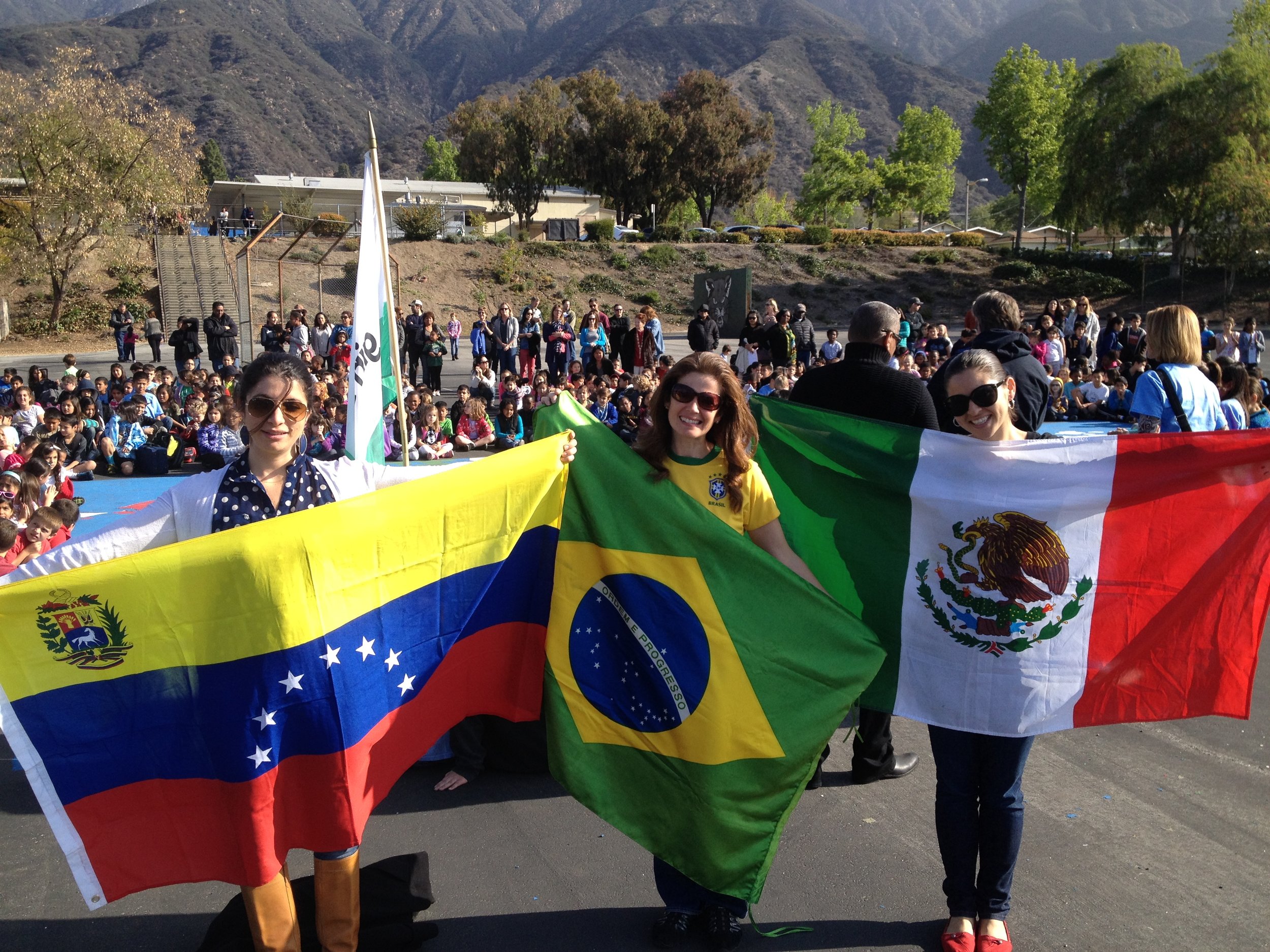
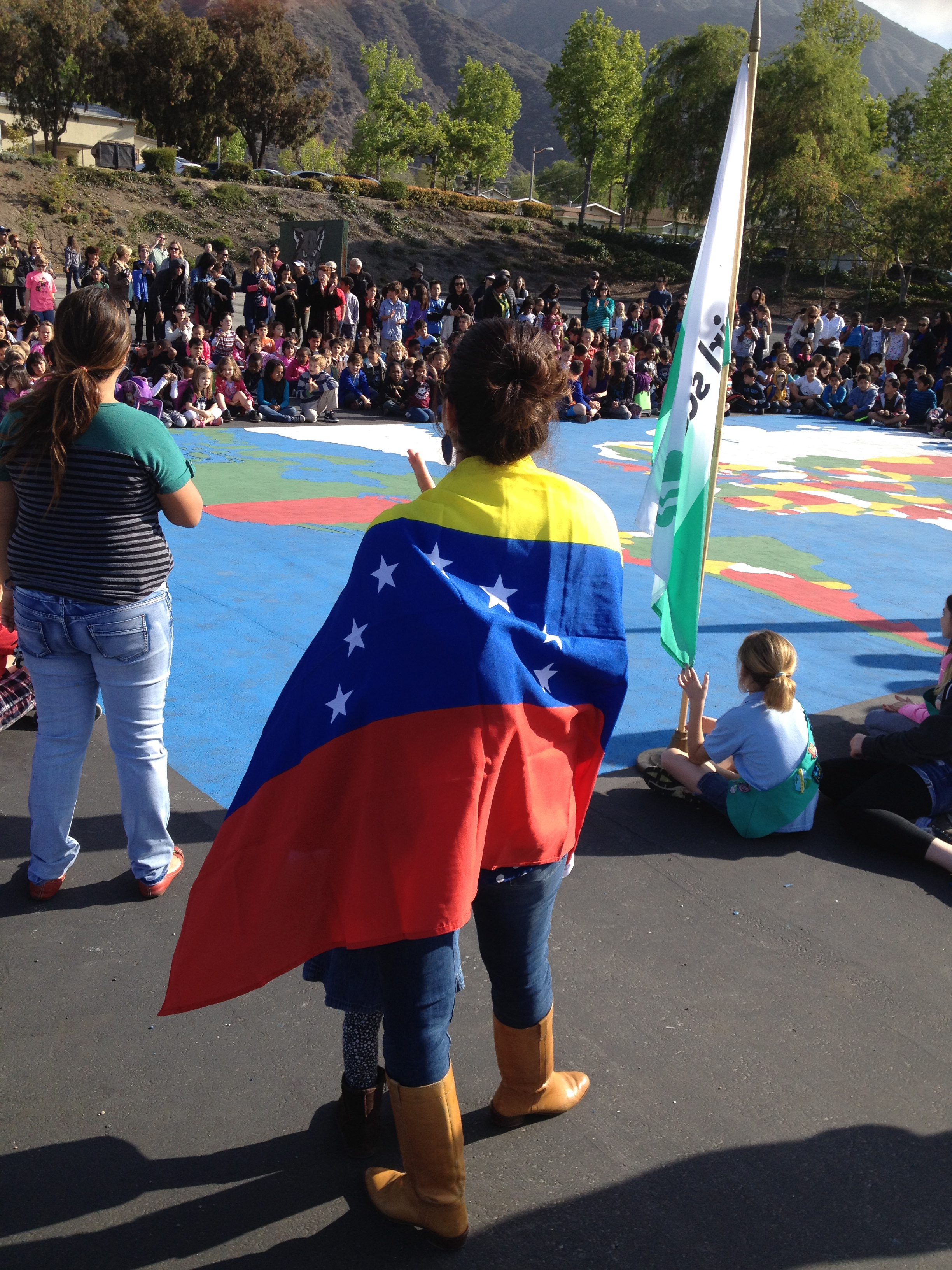
I’ve visited schools in 56 countries. At 10 of these schools, I’ve helped students prepare an outdoor playground map – of their country, their continent, or the world. At the International School of Windhoek, Namibia, the students created a map of Namibia in the entryway of the school; at the International School of Geneva, the youngest students, with their teachers and parents, created a world map in the main door to the playground – every time a student passes through that door, they have a chance to check out the world. The point is that the curriculum isn’t just about memorization, but it’s aimed at getting students to think about the world, about the world’s people and places.
Curious about how other schools are using Mapping the World by Heart? Check out these other posts!

FABClassroom Spotlight: Castle Rock Middle School & Yvonne Miller

Meet Yvonne Miller from Castle Rock Middle School in Castle Rock, Colorado. The school has a makerspace library filled with resources and tools for students and teachers to use. They recently added Fab@School Maker Studio, a digital design and fabrication program, to space. We asked Yvonne to share more about how they are applying this software into their school curriculum.
Can you share a bit about your library makerspace and programming?

For the past 3 and a half years, we have been on a mission to transform our traditional library to a dynamic space for students. Students will have access to world-class tools, innovative spaces, comprehensive resources, and 21st Century instructional support. We started our Library MakerSpace with donations of recycled and consumable materials. Today, we have 3D printers, littleBits and MakeyMakey products, robotics, a CNC machine, and a 2D fabricator. Recently, with the generous donation from the Morgridge Family Foundation, we were able to add the Fab@School Maker Studio software, four additional Silhouette machines, and receive training on the software as well. The space has supported students and staff in numerous projects, and it has been wonderful to witness excited and engaged students learn about the potential of a MakerSpace.
Our school has adopted the mindsets of Design Thinking as our constructivist model of instruction. Every student attends a class called InnoV8 where they learn about the Design Thinking Process and apply it to authentic problems and designs for human needs.
How are the students at Castle Rock Middle School using Fab@School Maker Studio?

Students use Fab@School Maker Studio as part of the prototyping process in their Design Thinking curriculum. Currently, all 8th grade students are engaging in a Sustainability Project in their Science classes. They are learning about sustainable living, energy transfer, natural resources, and human environment interactions. They have been challenged to design a tiny home in a specific location and for specific users. For example, an environmentalist who lives in a Portland, Maine, or a pet rescue family who lives in Buffalo, New York. Students will build spaces that must be proportionally correct and includes the amenities of a tiny home. They will be using Fab@School Maker Studio to design the interior of the tiny home, receive feedback about their designs, then iterate any components needed for the tiny home.
We are also using Fab@School Maker Studio in numerous different ways. We had a team of 7th graders use Fab@School Maker Studio to design a school during a Mars Challenge. They’ve also created a game incorporating math concepts for their Math Challenge activity. Our World Cultures teacher also used Fab@School Maker Studio during a study of a Japanese culture and paper folding.


What has been the “aha” moment working with Fab@School?

The spatial awareness and critical thinking necessary to design a 3D project is challenging to say the least. Students also found it challenging to mentally deconstruct a 3D object to a 2D design. Students with strong visual spatial skills have an easier time with the design, compared to those who think in pictures. There is definitely a lot of metacognition and visible thinking going on, and we appreciate the ready-made objects as a learning tool to take the designs even further. But the challenge is real.
What is next?
I hope our students make it a routine to use Fab@School Maker Studio while prototyping their designs. It fosters and promotes the mindset of rapid prototyping and helps build the maker culture, all while supporting instruction with Design Thinking.
Is your classroom a FabClassroom? We would love to feature your school in an blog post! To be featured in an upcoming post, send an email to info@fablevisionlearning.com. You can also tweet your photos with the hashtag #FabMakerStudio! For more posts featuring Fab@School Maker Studio, click here.

Mapping the World by Heart Teacher Spotlight: Nikki McGuire
This week’s FableVision Learning Teacher Spotlight was written by Nikki McGuire, a teacher at Andrews Academy. In her 12-year career, she has taught at various schools in Missouri before settling at her current position. In this post, she shares just what makes David Smith's Mapping the World by Heart an invaluable tool in her classroom.

I was introduced to Mapping the World By Heart while teaching at the Forsyth School. My friend, Jim Dowd, fellow fourth grade teacher, coached me on how to bring mapping to life in my fourth grade social studies class. Forsyth had a memory mapping piece at the fourth, fifth, and sixth grade levels. Fourth grade learned to memory map the US, fifth grade mapped Europe/Africa I believe and sixth grade mapped the world by heart! I was amazed at how these students could learn to do this! It is incredible!

On the surface many people are quick to criticize Mapping the World by Heart as just memorization, but it is so much more. I have had many questions about what the use is, or maybe if it is just a waste of time. However, after mapping the US with 7 different fourth grade classes in two different settings, I can say it is one of the most rewarding teaching experiences! It is a wonderful process, but also an amazing product. Most of the kids frame them and hang them in their homes. They are a remarkable work of art! They will forever have those geographical ‘hooks’ to link future concepts of geography and history. It is well worth the time and effort it takes to teach and complete!

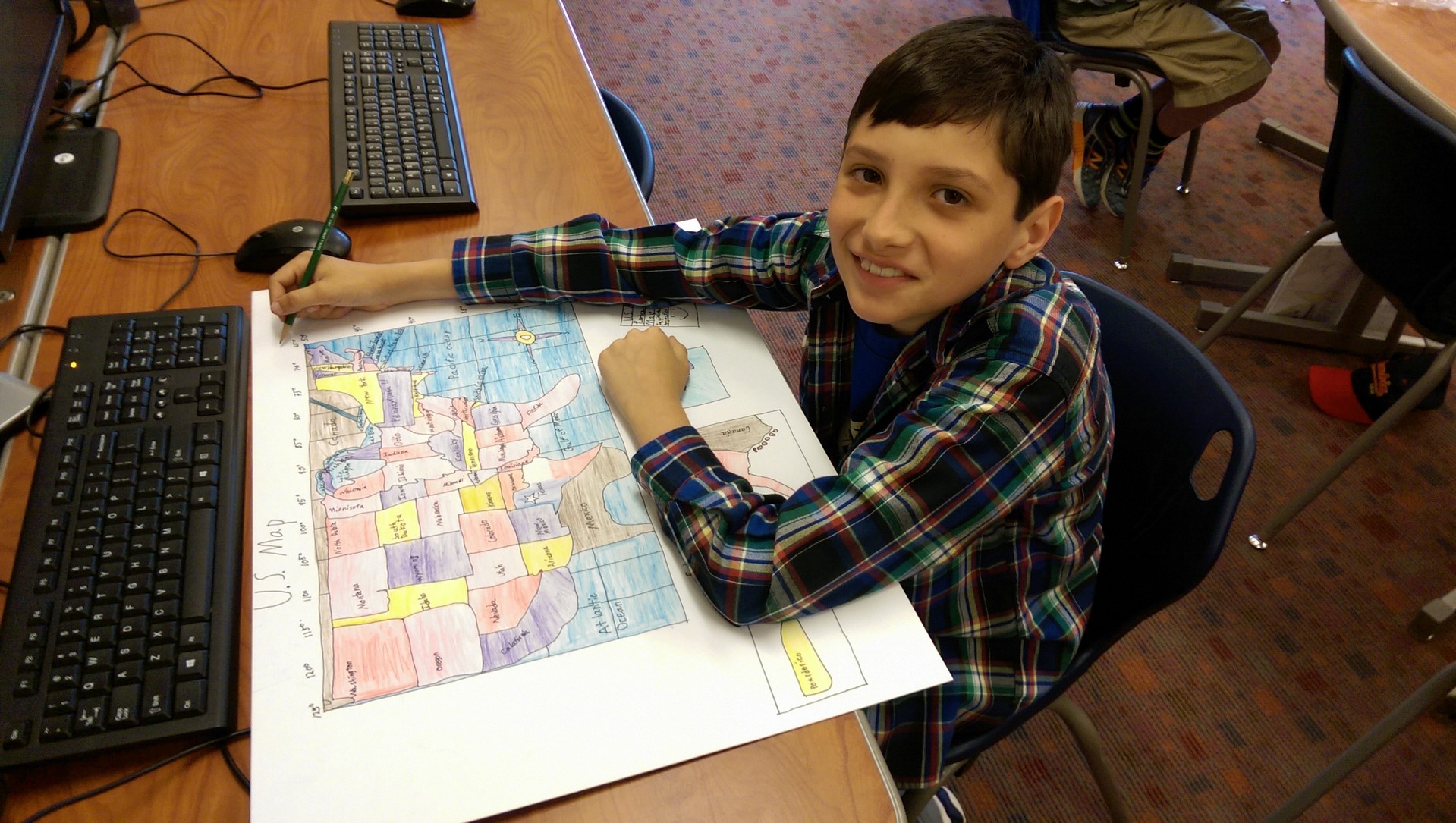
In my opinion, there are two types of memory mapping. One type is what I call "free drawing." That is where the shapes of states and countries are drawn in their proper location in relation to all the states or countries that border them, but it is not necessarily on the longitude and latitude grid system. The other is more precise and teaches the students to draw using the lines as guides, and really works to draw the countries and states in the "right" place. Both are beneficial. We use the grid system in tandem with free draw. The final map is done solely from memory, and takes place over 3-4 sessions, about an hour each. The students set goals and map to their goal. They are free to practice in between sessions or for homework, then continue on to their next goal.

I always begin the school year with a memory map which is usually really inaccurate! We save these maps and compare them to our final maps at the end of the year and then write about how it felt to draw from memory in August, versus in May. We spend several weeks working on map skills, memorizing the spellings or all the states and countries, and we complete many black line maps and test on the locations before we ever begin mapping lessons.
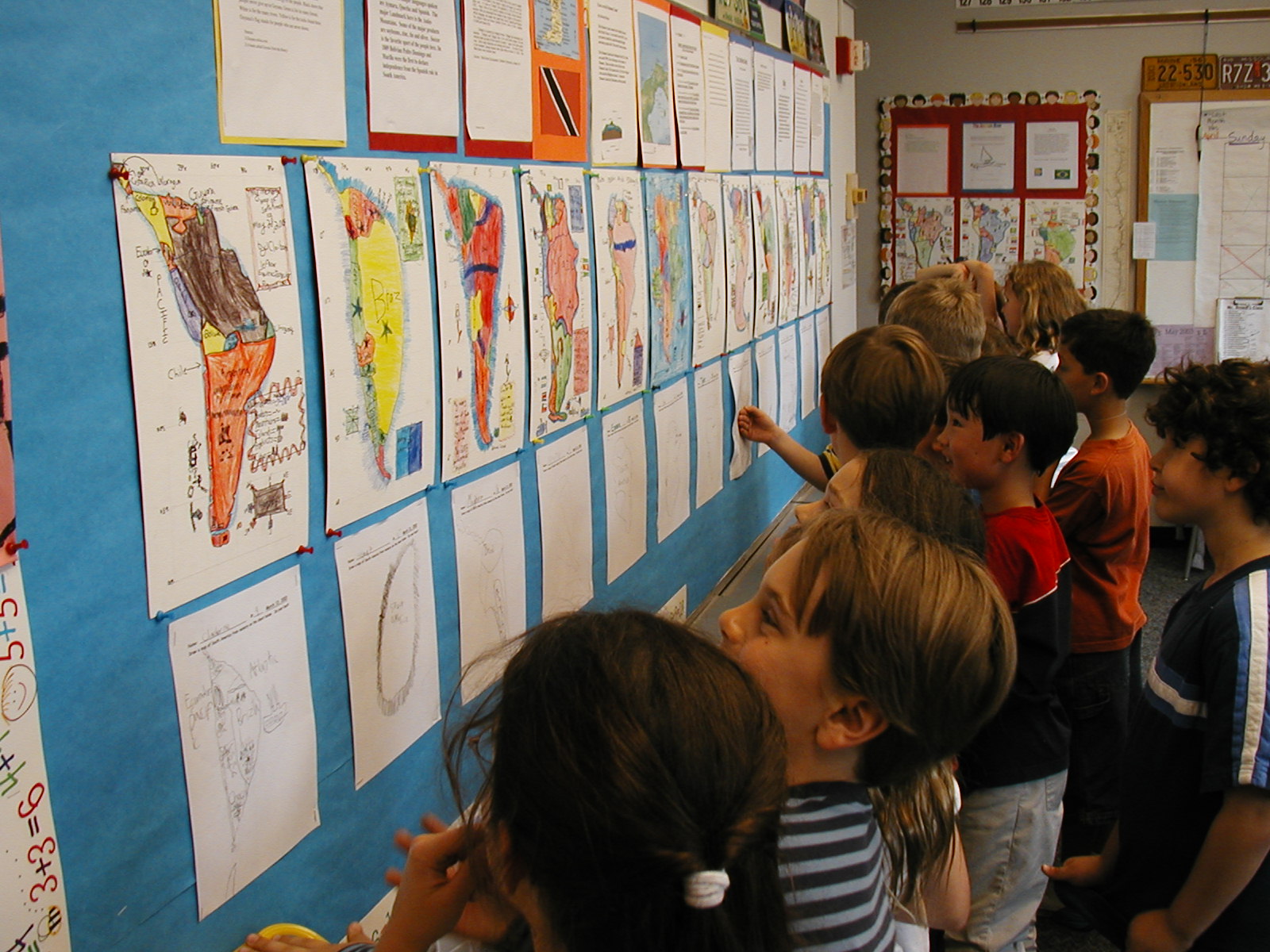
We talk a lot about different projections and how projections change the look of the map. Because I had never taught mapping Latin America, I did not have a longitude and latitude projection grid drawn out to use, so I decided to let my students plan one of their own after studying different projections. I played around with it and had a decent idea of a grid that would work, but one of my students figured out a great one, and it is the one we are all using! A lot of thinking, trial and error, and reasoning go into finding the right intervals, spaces, shape of rectangles, number of lines, etc. I was really proud of all the efforts made by my students. It really helped them understand how different projections can make your countries look long and thin, or short and fat, or too tiny, or too huge!

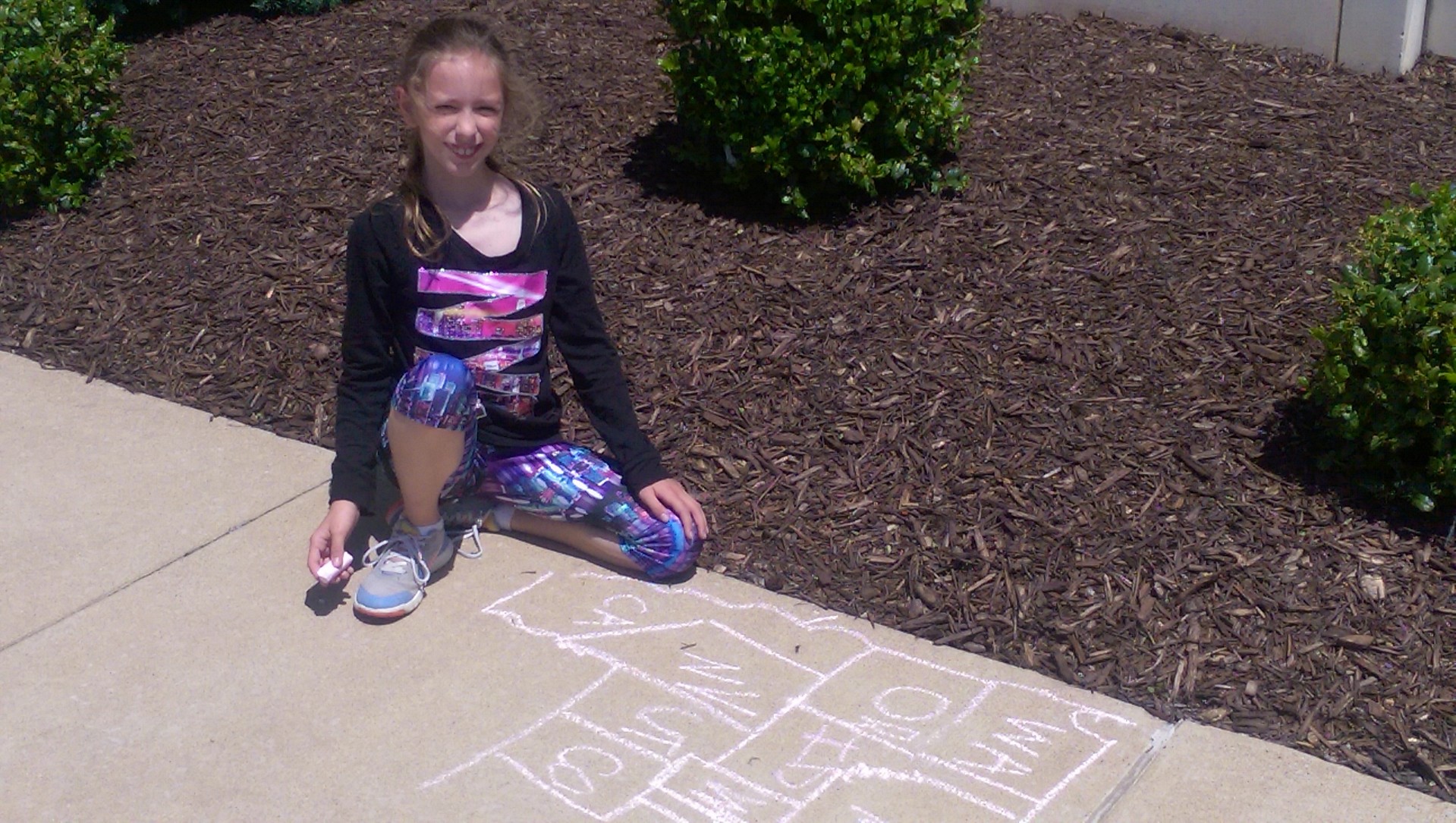
My biggest tip to anyone teaching memory mapping is to let go a little. Teach it in manageable chunks, and practice, practice, practice! Keep it fun, and don't be overly critical. Have the students take on the role of teacher. I also recommend that as you progress through the states, or countries, always draw them in the same order in the same way. In this way, it becomes almost rote. As you add chunks, always have them draw ALL the states up to the new chunk. For example, if you draw Washington, Oregon, Idaho...always start that way. When you add Montana, Nevada, California, always draw WA, OR and ID first, then add the next three, and so on.

I have found that the some of the most unlikely students will surprise you while mapping. Students with disabilities, little creativity or poor art skills often excel. Everyone can be successful with memory mapping!
Francis W. Parker School Wins Award for Collaborative Dot Day Program


Collaboration was the framework of Francis W. Parker’s award-winning Dot Day program. For their 2016 celebration, school librarians, educational technology specialists, and first-grade teachers combined technology and literature to support the messages in Peter H. Reynold’s book, The Dot.
The Chicago-based school received the 2017 American Association of School Librarians’ (AASL) Collaborative School Library Award for their unique project, “Dot Day: How Do We Work Together as Collaborators to Make Our Mark?” This award recognizes the beneficial collaboration between school librarians and teachers to truly make the most out of the library resources in a school curriculum system.
The award-winning team includes first-grade teachers Sarah Weitz, Bev Greenberg, and Tisha Johnson, librarian Mary Catherine Coleman, and educational technology specialist Sarah Beebe. To kick off their project, the teachers read the book, The Dot, and encouraged their students to reflect on ways they make their mark in their individual lives, their community, and in their first-grade class. Then, at the library, the students went on and really made their mark with the awesome ArtBot creation.
FableVision Learning reached out to Mary Catherine Coleman to learn more about the project and plans for Dot Day 2017.
How did you learn about International Dot Day? When was the first celebration?
I heard about Dot Day a couple a years ago from School Library Journal, blogs, and library circles. At the library we have always celebrated Dot Day with reading the book and doing Dot-inspired art projects, but this is the first year we collaborated and planned an extensive project around the day.
What themes from the book The Dot did you use in your school’s celebration and how did you implement them into your program?


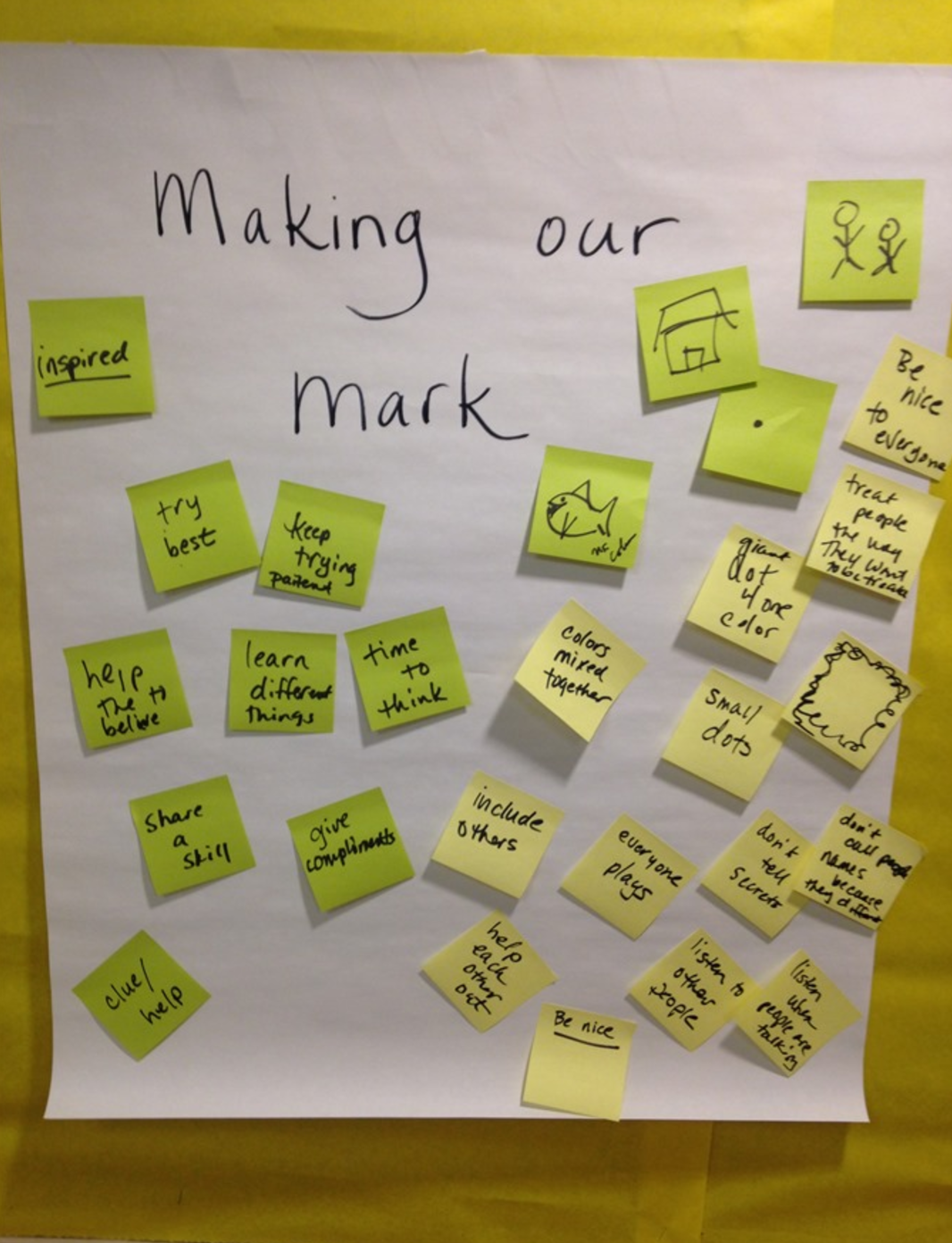

Students focused on the themes of art and creativity as well as growth mindset, risk taking and learning new skills. Students focused on the ideas of how we make and create art. We talked about different ways we “make our mark” and students shared different ways they create art. We also talked about being open to trying new things and continuing to to try a new skill even if we are not “good” at it to start. Students talked about how Vashti changed from the beginning of the story till the end. They brainstormed words to describe how Vashti was feeling at the beginning and words they would use to describe her feelings at the end of the story. Students focused on how important and rewarding it can be to try something new and to keep trying something even if you are not perfect at it to start.
We then combined those themes in a culminating project where students were tasked with designing and building a robot that created a unique piece of artwork.

Can you tell us a bit about ArtBot 2016 and how it connected to Dot Day?
The ArtBot 2016 project was a way to connect Dot Day with literacy, the first grade curriculum of community, design and maker building together. Students focused on the idea from the book of making your mark with art and also how we make our mark on other people’s hearts by how we treat others. This idea connected with the first grade curriculum of community and how are we a good and helpful member of our classroom, school, and larger community. We focused on how we work with others when we collaborate. Students brainstormed and thought about a time they created something with someone else and what made that an enjoyable experience. They shared their ideas and we sorted them into themes. Students realized there were four important qualities that contribute to being a good collaborator: listen, compromise, work together, and everyone is included.

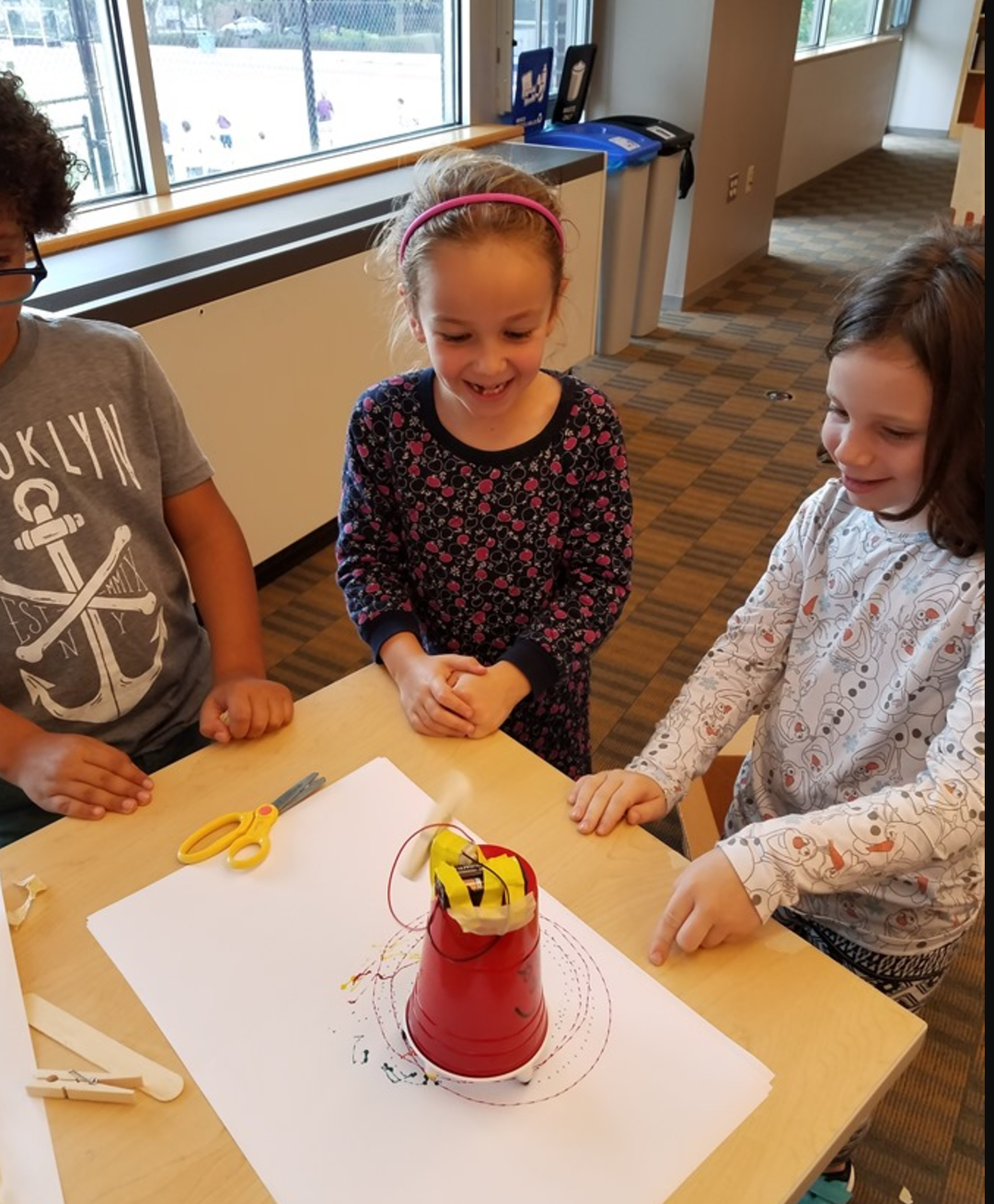


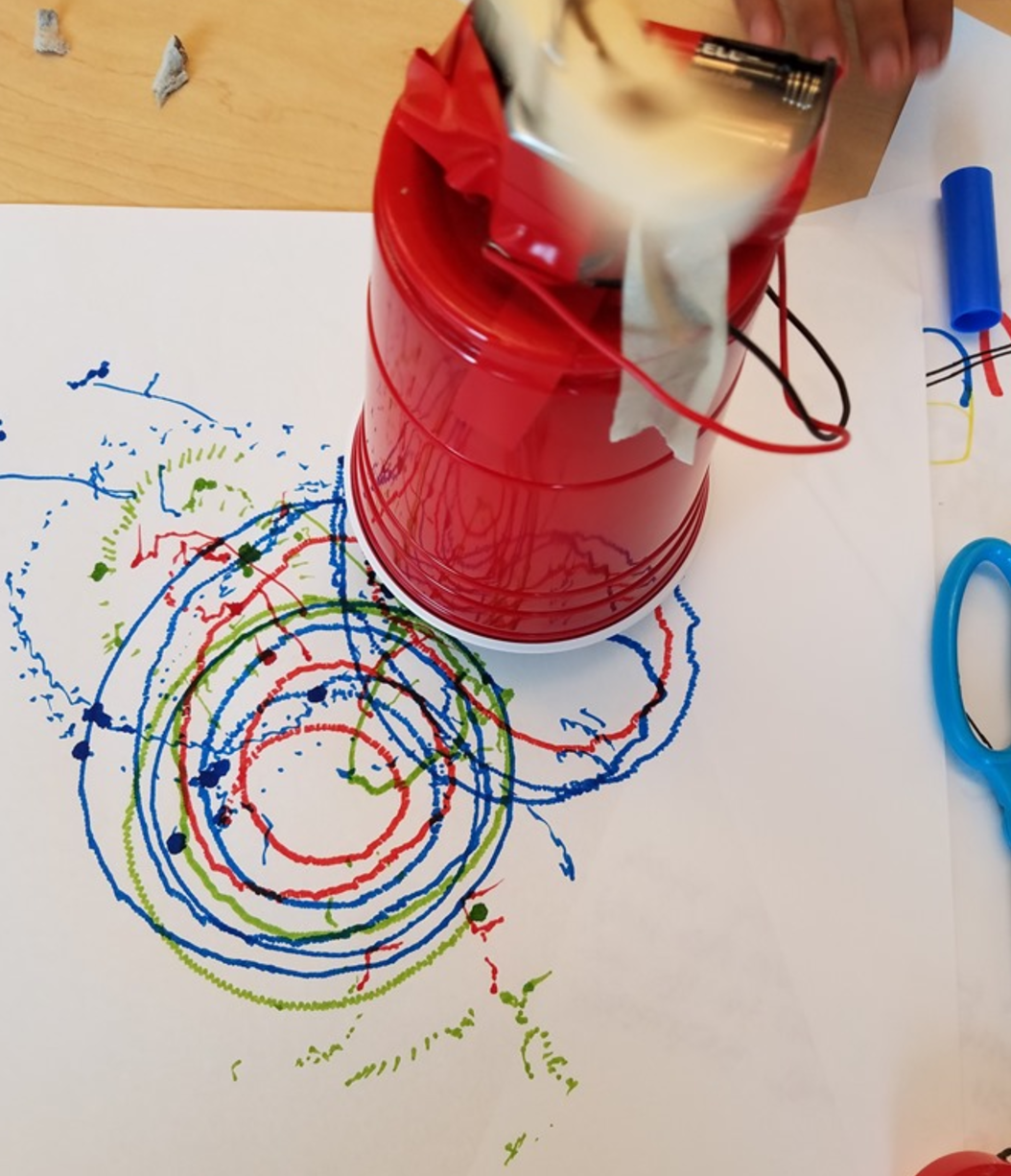

Next, students were put into small groups and given the challenge to design and build a working robot that would create unique works of art. First students set the norms for their group, what would be the rules they would follow to make sure that they were being good collaborators based on the collaborator qualities. Some of the ideas included going around the group for everyone to share their design ideas first to ensure everyone was able to share, to prevent interrupting, students putting a thumb up when someone was speaking to illustrate they wanted to talk next, and making sure at least one idea from each team member was included in the robot design. Next, students designed their robots and starting building. During this process there were many connections with The Dot theme of continuing to try something even if you are not successful the first time. Many of the first designs students had for the robots did not work. They worked with their groups to talk about what went wrong and try new ideas to get the robot working. Finally, every groups produced a working ArtBot and created unique pieces of art that were displayed in our Dot Day art gallery in the school. This was inspired by the Dot art show that Vashti had at the end of the book.


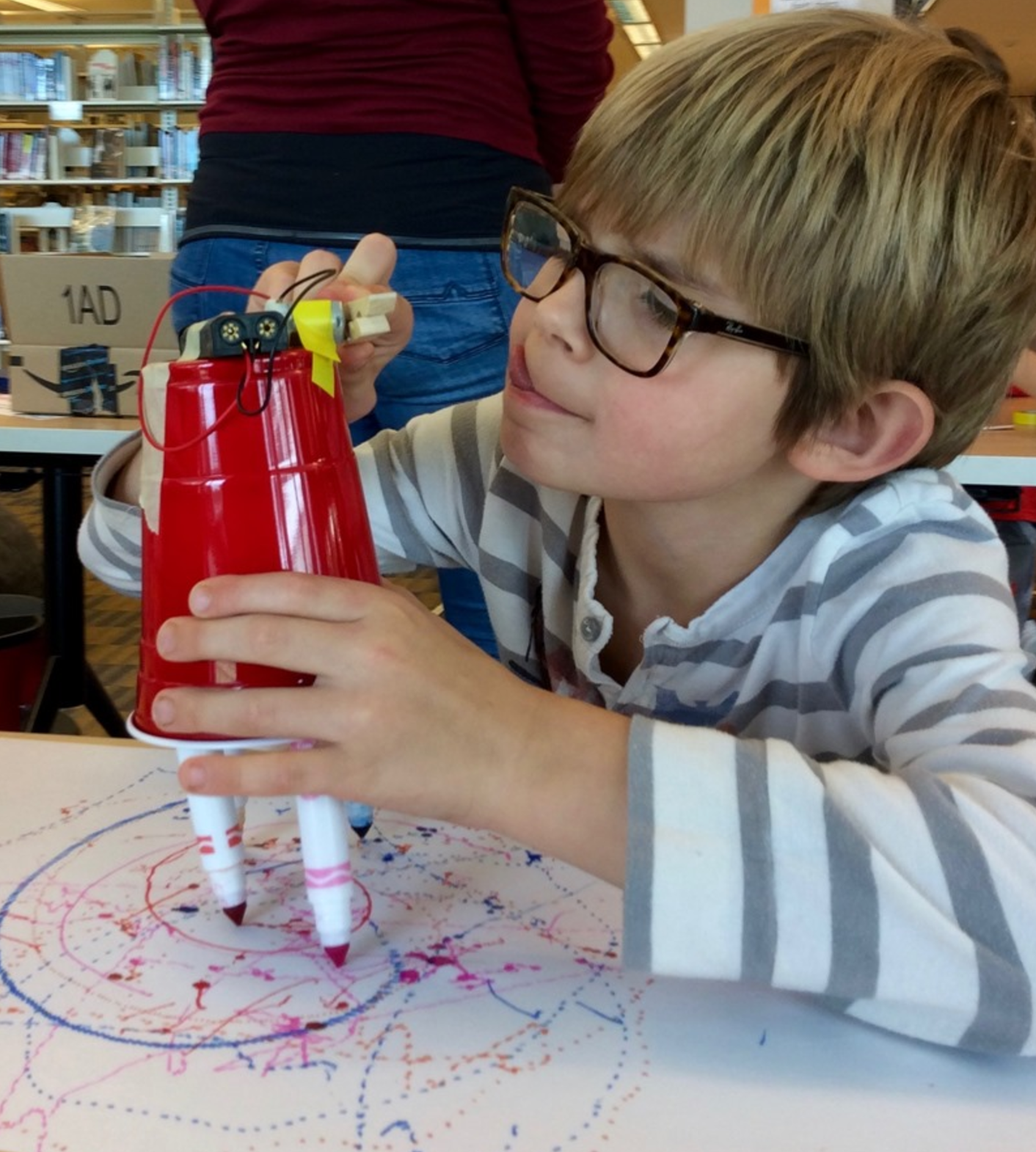

The collaborator qualities that the first grade students came up with have been used throughout the school year in their classrooms and in the library in other collaborative projects and activities that we have done. Students use the protocol developed during the ArtBot project to help them be good collaborators.
*Click here to see some amazing videos of the ArtBots in action!
Francis W. Parker School recently received the 2017 American Association of School Librarians’ (AASL) Collaborative School Library Award that recognizes and emphasizes school librarian and teacher collaboration while implementing library resources. What is the dynamic of this relationship in your school, and what sorts of activities do you collaborate on/with?
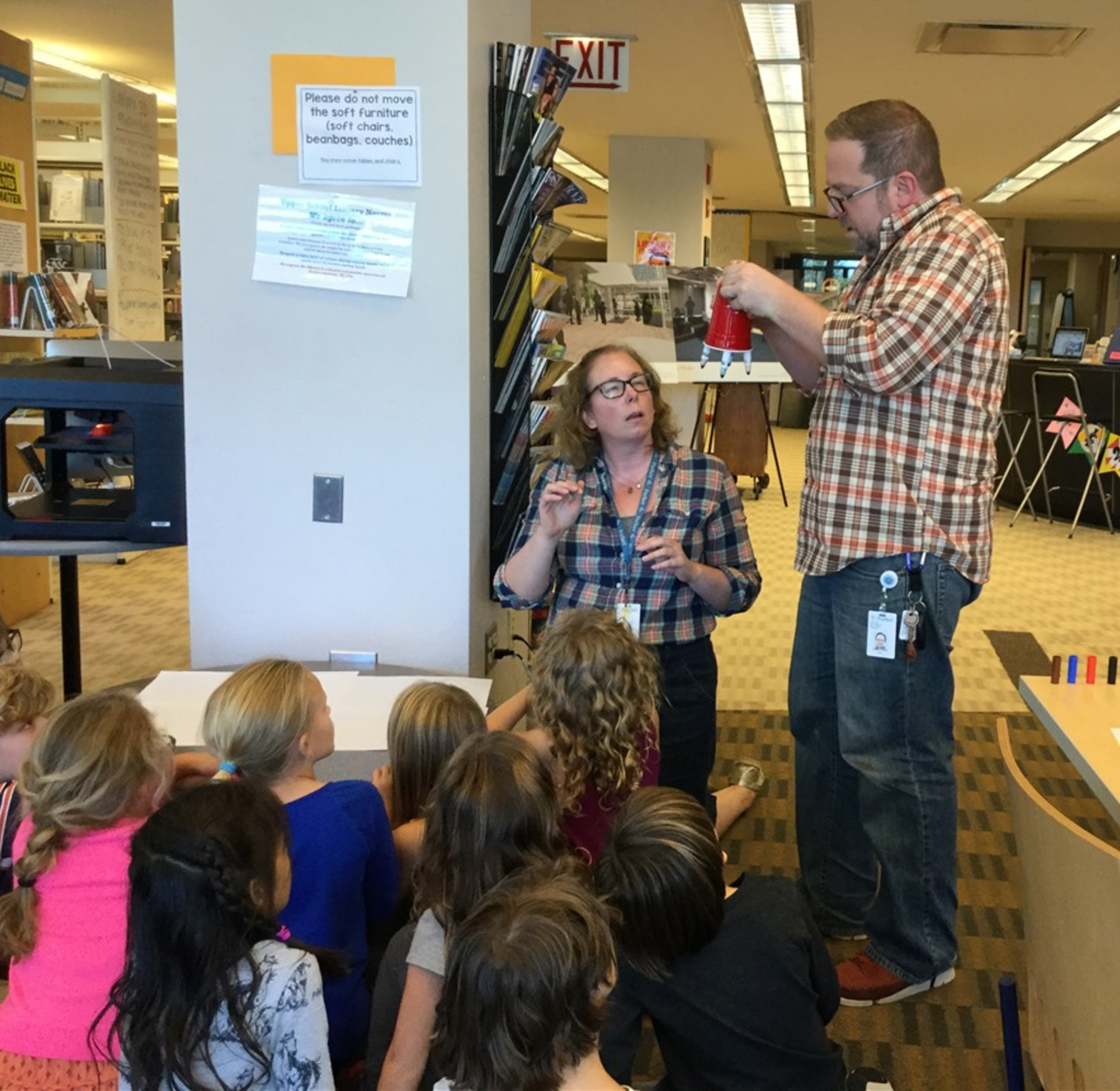
We make every effort to cultivate a culture of collaboration at Francis W. Parker. We combined the library and Tech Ed departments and created a collaborative project time so that we were able to do more projects like the ArtBot project. Our administration is very supportive and gives teachers time to plan and work together to design lessons and projects that combine the curriculum of the classroom and the library and Tech Ed department so that students have deeper learning opportunities.
We have collaborated with third grade classroom teachers and the science teacher on a zoo animal project. The unit combined the informative writing curriculum, scientific study of animals in the wild, zoos and conservation, technology skills including green screen video, research skills, and a design component that included designing a zoo habitat that was in the best interest of the animal based on research about the animal’s habitat, food source and behavior.
We did an in-depth fourth grade project around fairy tales from around the world and literature themes in the book The Tale of Despereaux. Students were challenged with reading and identifying themes in different fairy tales from cultures from around the world. Students then illustrated scenes from the fairy tale that best highlighted a theme and used LittleBits circuits to make their scenes interactive with motion, light and sound.
We also did a design project with kindergarten classes. They read the story of Little Red Riding Hood and focused on different elements of a story including beginning, middle, and end, characters, problem and setting. Students then designed a safer way to get Little Red from her house to her grandmother’s house. Kindergarteners worked with teachers to design their solutions in Tinkercad and 3D printed their ideas. Ideas included a hot air balloon, a fence to protect the path, and a taxi to drive her to grandma’s house.
Our goal is to continue to expand the projects and lessons we collaborate on with our classroom and subject teachers so that students in every grade are doing 2-3 in-depth collaborative projects a year.
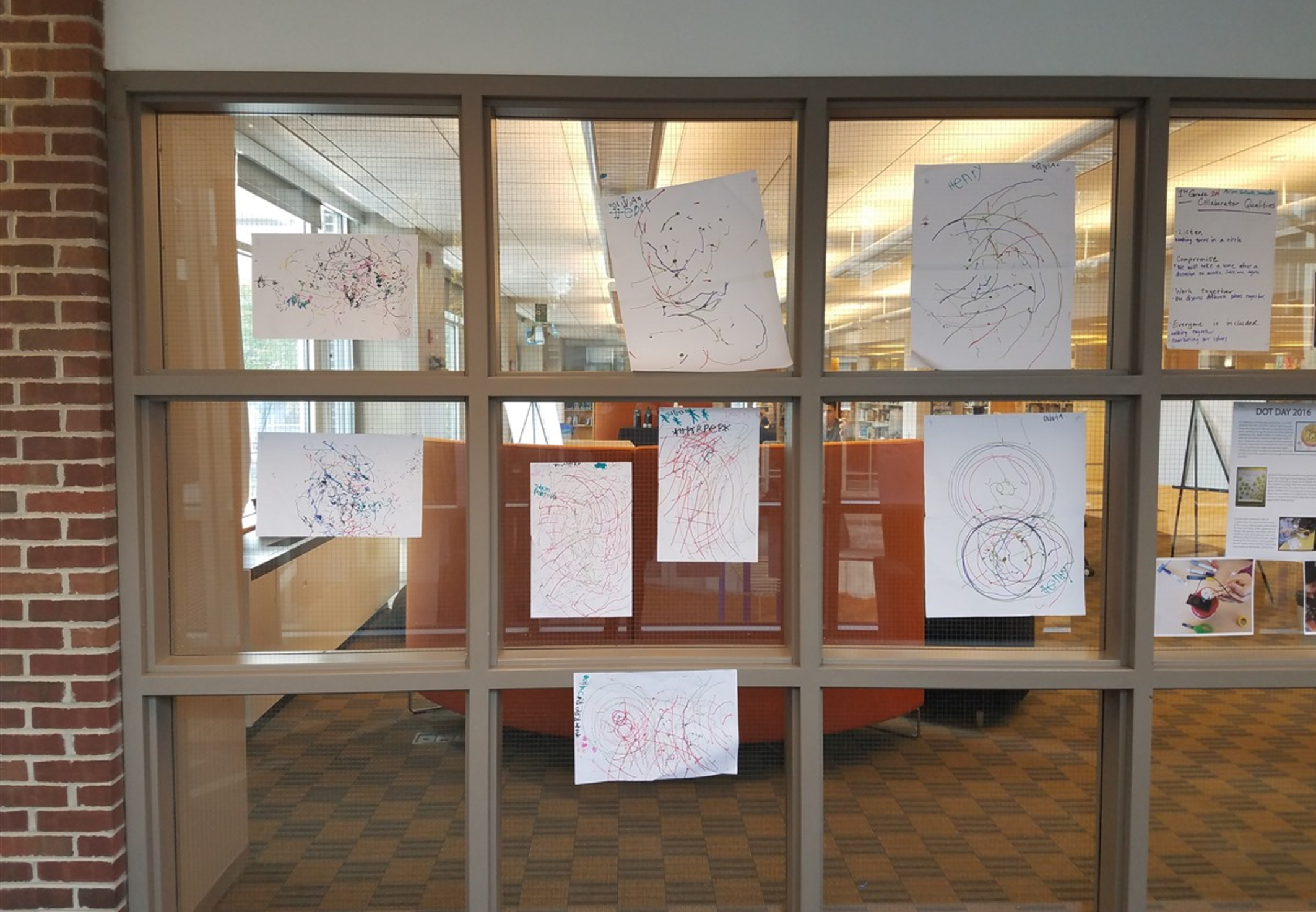

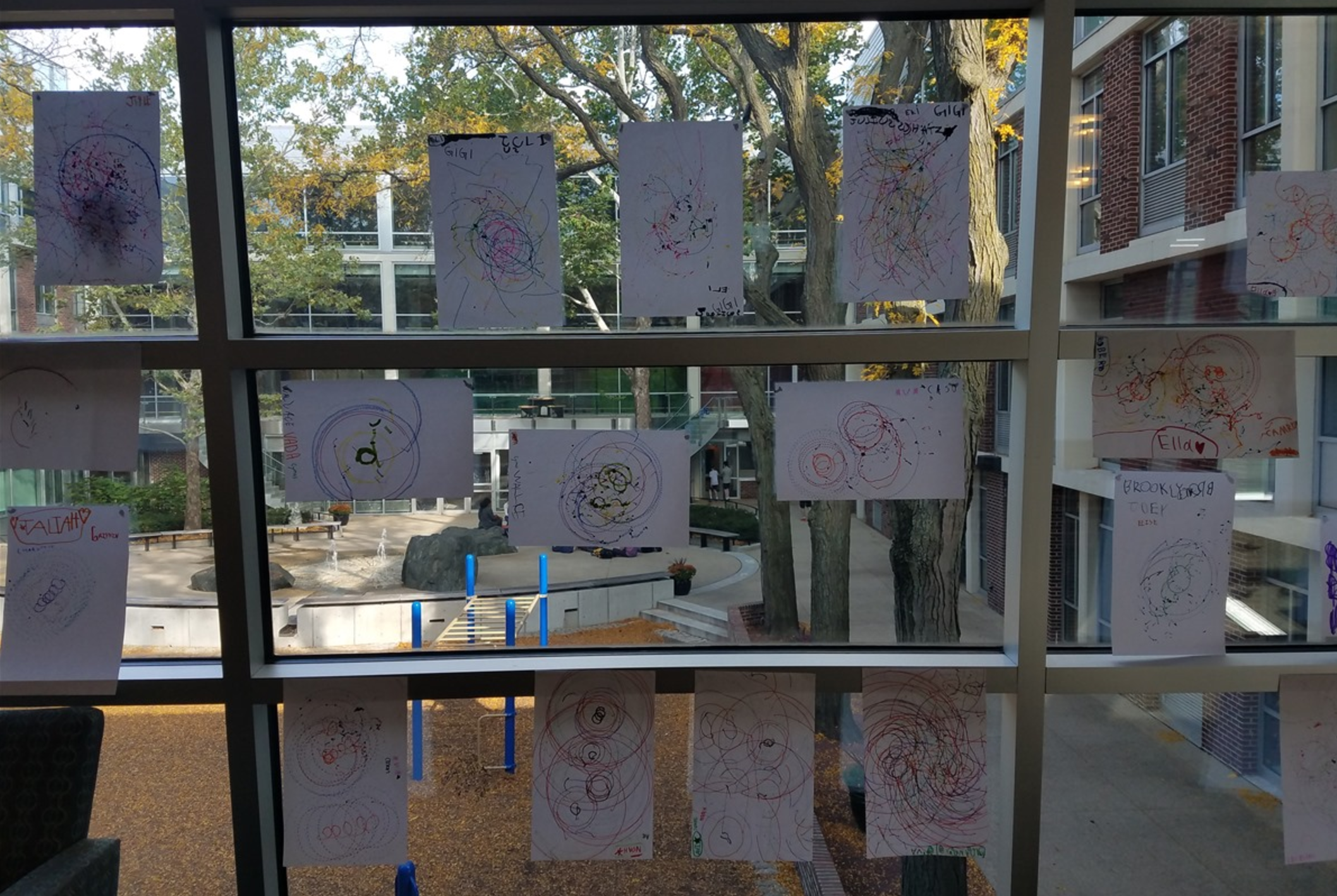
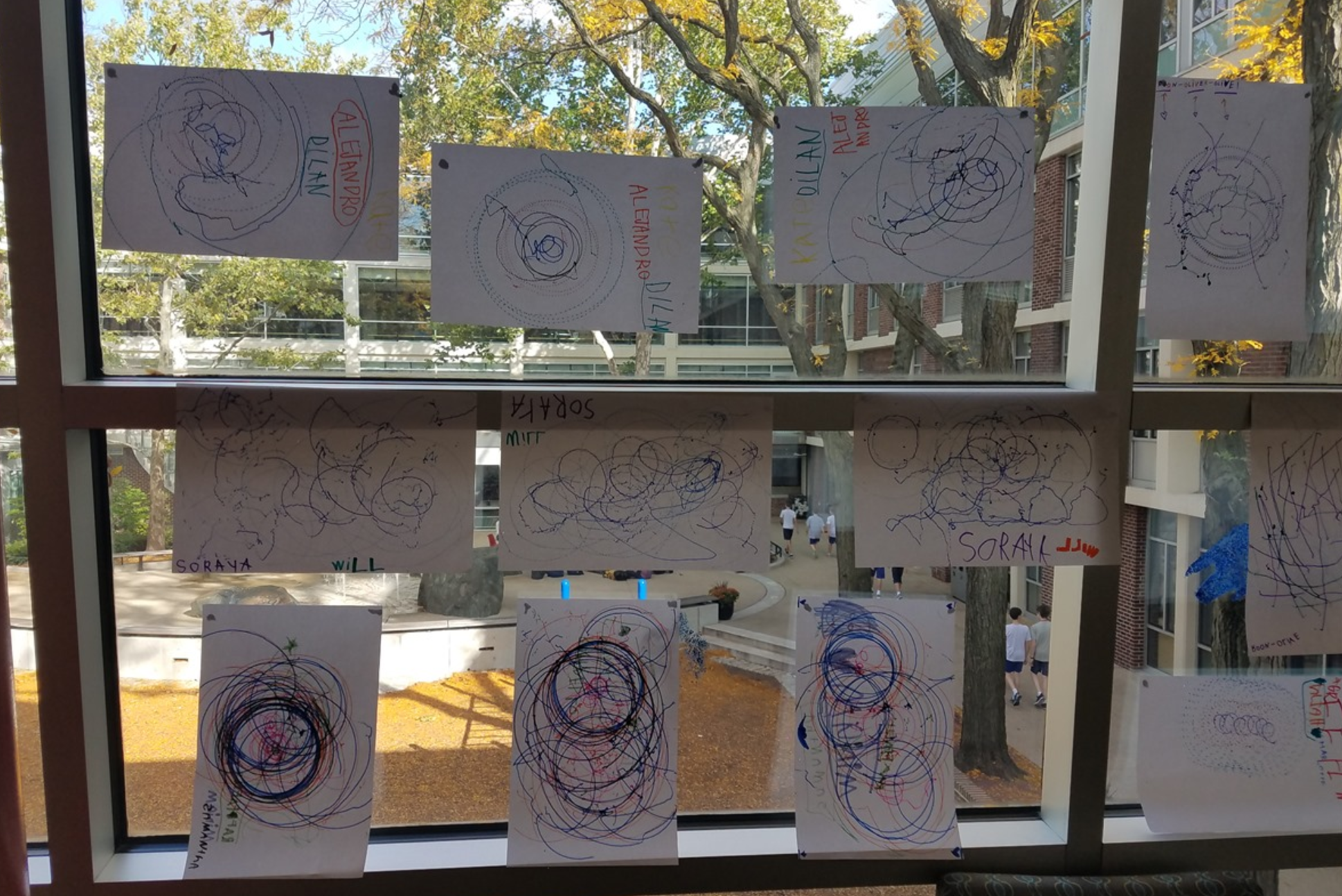
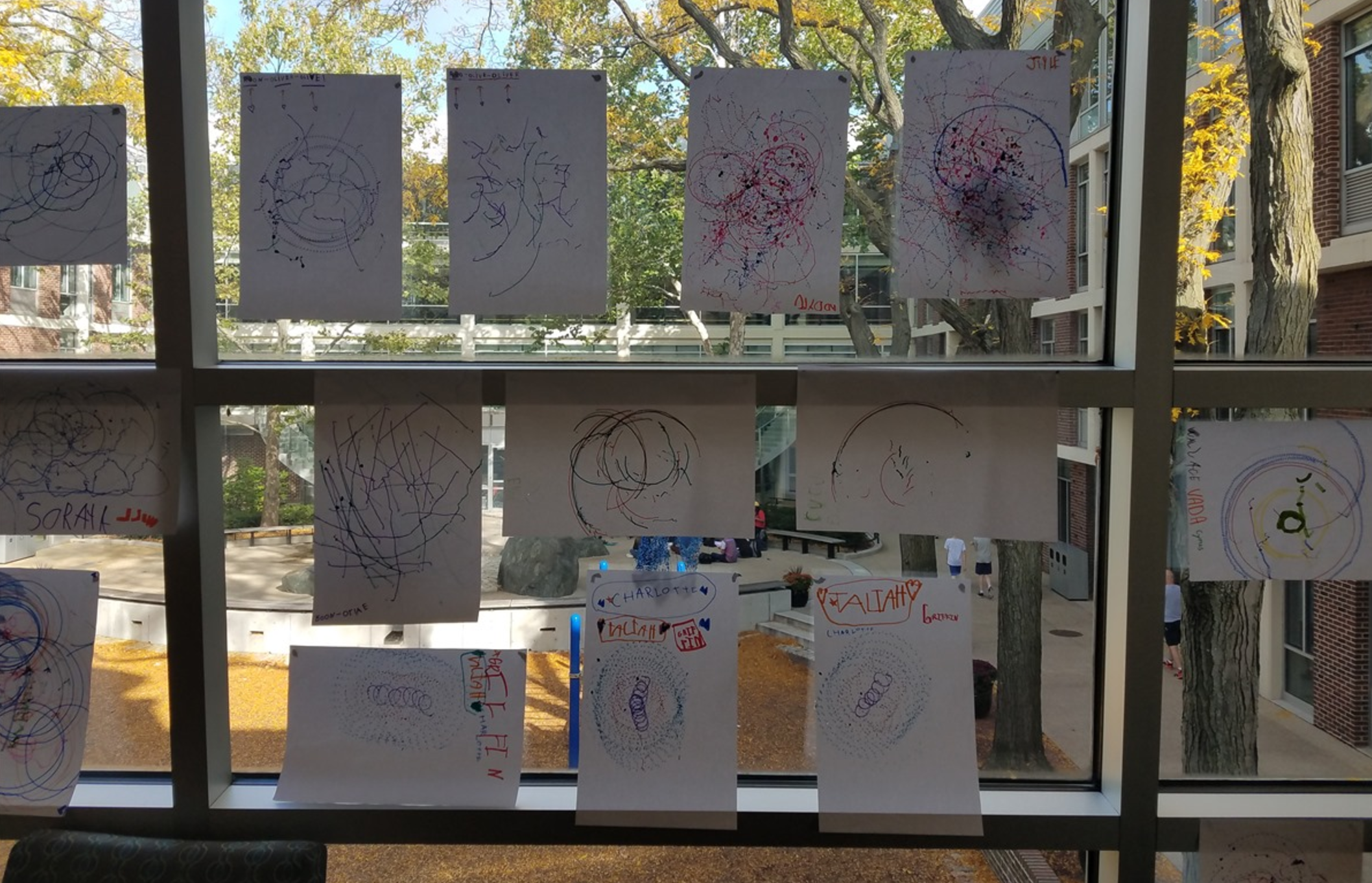

What are your plans for Dot Day 2017?
We will be using The Dot book again in the 2017 school year. It is a great book to launch our first collaborative project of the year with first graders. We will definitely be using the collaborator qualities protocol so that next year’s first graders will have ownership in the qualities of a collaborator that we will be using throughout the year. We will most likely change the project that they work on. We will have a planning day this summer with our whole collaborative team, including first grade classroom teachers, technology and library, to plan for the 2017-18 school year. Next year’s project will definitely include design, building and maker elements. We would love to include new technologies and building materials. We are always learning about new things and being inspired by so many great educators that we follow on twitter and meet at conferences. Whatever we end up doing, The Dot and Dot Day is always such an inspiration and provides a great foundation for our project.

Curious about Dot Day? International Dot Day, celebrated on September 15th-ish, is a global celebration of creativity, courage and collaboration, and began when teacher Terry Shay introduced his classroom to Peter H. Reynolds’ book The Dot. Last year, over 7 million students in 166 countries joined the celebration. You can join here!